Optimizing Shipbuilding Through Magnetic Crawler Robotic Systems
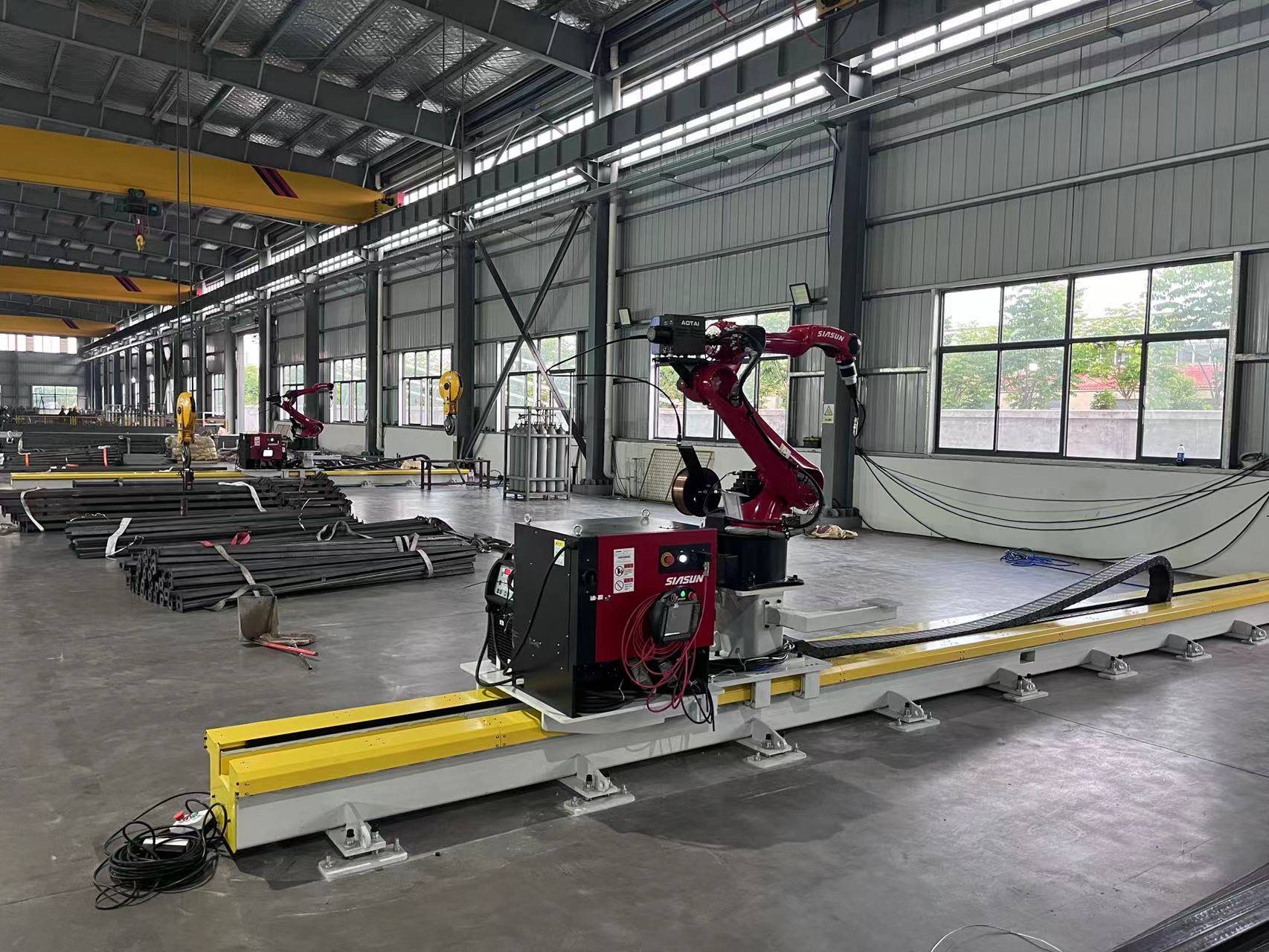
The shipbuilding industry faces a persistent challenge: the requirement for high-integrity welds across massive vertical and overhead steel surfaces. Traditional manual welding in these environments is physically demanding, prone to variability, and increasingly difficult to staff. The introduction of the Magnetic Crawler Welding Robot offers a scalable solution. These units utilize high-strength permanent magnets or electromagnets to adhere to the hull, allowing for continuous welding operations without the need for fixed tracking rails. This transition from manual to automated processes represents a shift toward data-driven production where throughput is governed by machine duty cycles rather than human fatigue.
Technical Integration of MAG Welding Processes
In shipbuilding, Metal Active Gas (MAG) welding is the preferred process due to its high deposition rates and adaptability. When integrated with a magnetic crawler, the MAG process benefits from stabilized torch positioning and consistent travel speeds. The robot’s control system manages the wire feed speed, voltage, and oscillation patterns to ensure deep penetration and excellent bead morphology, even in out-of-position welds.
Pulse-MAG and Gap Tracking
Modern crawler systems utilize advanced sensing to handle the irregularities common in large-scale ship blocks. Through-the-arc sensing (TASC) or tactile probes allow the robot to adjust the torch path in real-time to compensate for thermal distortion or fit-up variations. Pulse-MAG technology is particularly critical here; by pulsing the current, the system reduces heat input and minimizes spatter, which is essential for reducing post-weld cleaning labor. This technical precision ensures that the Shipbuilding Automation workflow remains uninterrupted by the rework cycles typically associated with manual stick or flux-cored welding.
Mechanical Reliability and Magnetic Adhesion
The core utility of the crawler lies in its mobility. High-traction magnetic wheels allow the unit to carry the weight of the welding torch, wire feeder, and cable loom while maintaining a safety factor of at least 3:1 against slippage. From an industrial engineering perspective, the weight-to-adhesion ratio is a primary KPI. If the unit is too heavy, it risks sliding on primed or oily surfaces; if the magnets are too strong, the motor torque required for movement increases, leading to premature drivetrain wear.
Industrial applications favor four-wheel drive configurations with independent suspension to navigate plate butt joints and slight surface curvatures. The integration of encoders on these wheels allows for precise measurement of the weld length, providing digital twin systems with accurate data on wire consumption and project progress.
Maintenance Protocols for High-Availability Operations
To maximize the return on high-capital equipment, a rigorous preventative maintenance schedule must be enforced. Unlike manual torches, a robotic MAG system operates at a duty cycle often exceeding 70%. This puts significant stress on the consumables and the mechanical drive train.
Daily and Weekly Maintenance Tasks
- Nozzle and Contact Tip Inspection: Automated reaming stations should be used to clear spatter every 30 to 60 minutes of arc-on time. Contact tips must be replaced based on wire throughput to prevent arc instability.
- Magnetic Surface Cleaning: The crawler wheels or tracks accumulate metallic dust and spatter during operation. Failure to clean these surfaces results in loss of traction and potential damage to the ship’s protective coatings.
- Wire Feed System: The drive rolls must be checked for alignment and tension. Any slippage in the wire feed directly translates to porosity or lack of fusion in the weld bead.
- Cable Management: In shipbuilding, the robot often operates 15-30 meters away from the power source. Cables must be inspected for insulation nicks and connector tightness to prevent voltage drops.
Economic Analysis: Calculating Labor ROI
The primary driver for adopting magnetic crawlers is the Labor ROI. In a traditional manual welding setup, the “arc-on time”—the actual time spent depositing metal—rarely exceeds 25% to 30% due to repositioning, breaks, and equipment setup. A robotic crawler can sustain arc-on times of 75% or higher.
Comparative Cost Breakdown
When calculating the ROI, industrial engineers must look beyond the initial purchase price. The total cost of ownership (TCO) includes the robot, training, and maintenance versus the fully burdened cost of manual welders. A single operator can often oversee two or three crawlers simultaneously, effectively tripling their productivity.
Furthermore, the reduction in weld defects is a significant cost saver. In shipbuilding, the cost of repairing a subsurface defect found via X-ray or ultrasonic testing is often ten times the cost of the original weld. The MAG Welding consistency provided by a robot ensures that once the Welding Procedure Specification (WPS) is qualified, the output remains uniform across kilometers of weld seams, nearly eliminating the financial drain of secondary repairs.
Safety and Human Factors
Automating the welding process significantly improves the safety profile of the shipyard. By removing the welder from the immediate vicinity of the arc, the robot reduces exposure to hexavalent chromium fumes, intense UV radiation, and ergonomic strain. In the context of “Intelligent” systems, these robots can be equipped with cameras that allow the operator to monitor the weld pool from a safe distance or even a remote cabin. This shift doesn’t eliminate jobs; rather, it transitions the workforce from manual labor to “Robot Technicians,” who are responsible for programming, setup, and quality assurance.
Conclusion: The Path Forward for Industrial Marine Construction
The implementation of magnetic crawler welding robots is no longer an experimental luxury but a necessity for competitive shipbuilding. The ability to perform high-quality MAG welding on vertical and overhead sections with minimal human intervention addresses the core bottlenecks of modern marine construction. By focusing on mechanical reliability, strict maintenance, and a clear understanding of the ROI through increased duty cycles, shipyards can ensure a sustainable and profitable production environment. As global shipping demands increase, the reliance on these intelligent automated systems will only deepen, marking the end of the era of manual-dominant heavy fabrication.
-


LT240S tube laser cutting machine
-
LT120S tube laser cutting machine
-
Sale

Tank Fillet Welding Machine
Original price was: $1,000.00.$900.00Current price is: $900.00. -
Sale

MAK100 tube laser cutting machine
Original price was: $5,500.00.$5,000.00Current price is: $5,000.00. -

portable plasma air cutting machine
$1,200.00 -

2in1 fiber laser cutting machine
-

Air cooling Laser welding machine
-

HF h beam laser cutting machine
-

LT240 laser cutting machine
-

Laser welding machine
-


Cobotic Welding Station
-

Gantry welding robot solution
-

Tracked Wheeled AGV Welding robot
-

LFH6020 Fiber laser cutting machine
-
LFP6020
-

robotic welidng machine
