Mechanical Integration of Magnetic Crawlers in Ship Hull Fabrication
Shipbuilding involves the assembly of massive steel sections, often requiring vertical, horizontal, and overhead welding in environments that are difficult for human operators to access. The Robotic Welding system utilizing a magnetic crawler addresses these logistical constraints by providing a mobile, stable platform that adheres directly to ferromagnetic surfaces. Unlike stationary gantry systems, magnetic crawlers utilize high-strength neodymium permanent magnets or switchable electromagnets to generate sufficient holding force to counteract the weight of the robotic arm, the wire feeder, and the welding torch.
From an industrial engineering perspective, the crawler must manage a specific torque-to-weight ratio to ensure fluid motion along curved hull plates. Traction is maintained through high-friction tread materials that prevent slippage while the magnetic flux keeps the unit locked to the plate. This mobility eliminates the need for expensive, time-consuming scaffolding and specialized rigging. The integration of encoders and inertial measurement units (IMUs) allows the robot to calculate its position in real-time, ensuring that the weld path adheres strictly to the pre-programmed coordinates or sensor-detected grooves.
Advanced MAG Welding Process Optimization
The primary application for these robotic crawlers is Metal Active Gas (MAG) welding, which is the industry standard for Shipbuilding due to its high deposition rates and deep penetration capabilities. To maximize the efficiency of the robotic system, the welding power source must be fully integrated with the crawler’s control unit. This allows for synergic control where wire feed speed, voltage, and pulse frequency are automatically adjusted based on the crawler’s travel speed.
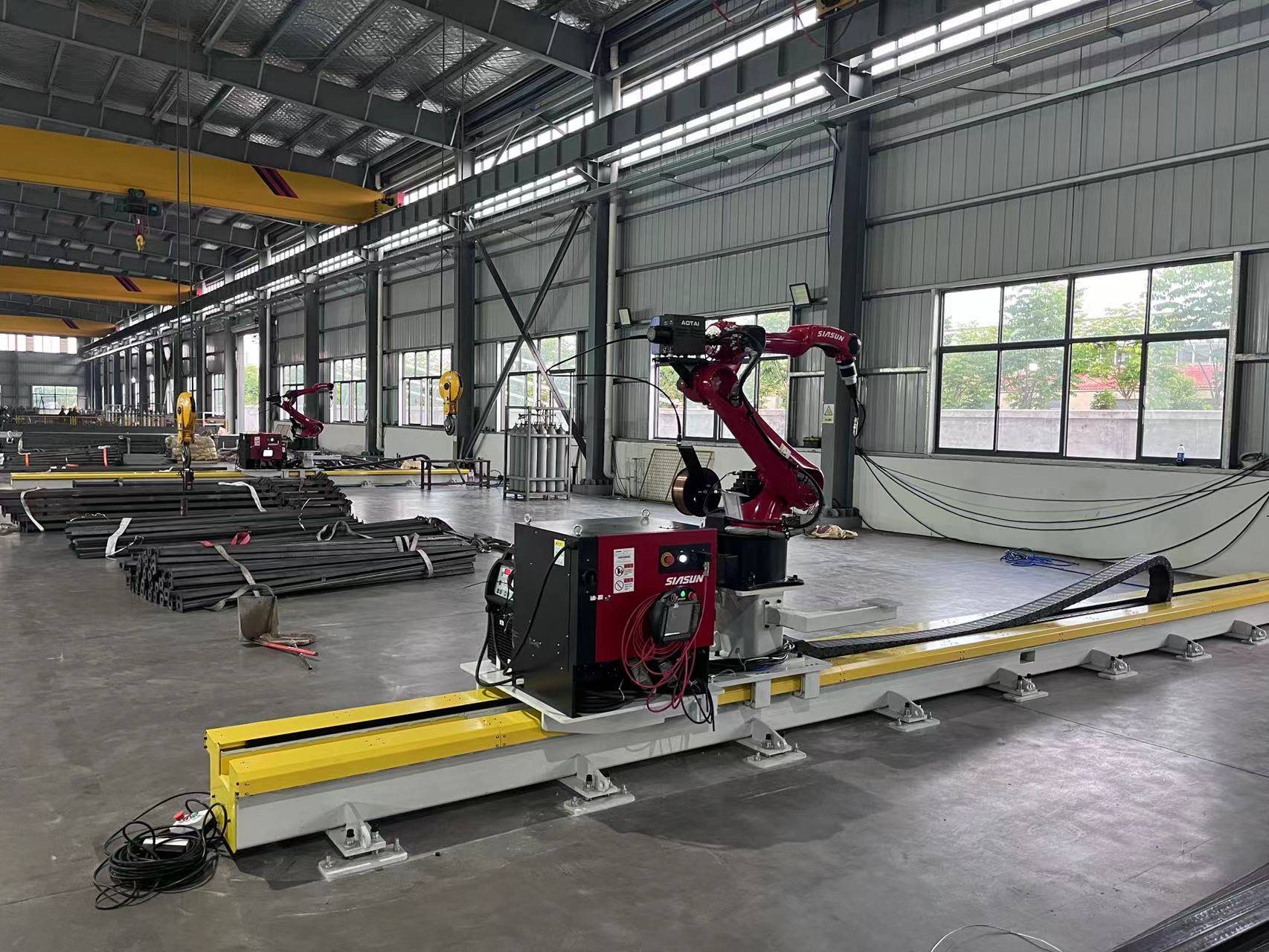
One critical advantage of the robotic approach is the stabilization of the arc. In manual MAG welding, consistency fluctuates due to operator fatigue and varying torch angles. The robotic crawler maintains a constant contact-to-work distance (CTWD) and a precise travel angle, which are vital for mitigating defects like undercut or lack of fusion. By using pulse-on-pulse or spray transfer modes, the system can deposit metal at rates exceeding 5 kilograms per hour, significantly outperforming manual stick or flux-cored processes in heavy-thickness plate joining.
Real Time Tracking and Quality Assurance
To ensure structural integrity in marine vessels, the crawler is equipped with through-the-arc sensing or laser-based seam tracking (specifically for path correction, not cutting). These sensors monitor the electrical characteristics of the arc to adjust the torch position dynamically. If the crawler encounters a slight misalignment in the plate fit-up, the software recalibrates the oscillation width and dwell time to ensure the weld bead fully fills the joint geometry. This reduces the requirement for post-weld rework, which is one of the most significant cost drivers in shipyards.
Maintenance Protocols for Robotic Welding Crawlers
Reliability is the cornerstone of any automated system. In a shipyard, robots are exposed to metal dust, humidity, and high-intensity thermal radiation. A proactive maintenance schedule is mandatory to prevent unplanned downtime. The primary maintenance focus areas for a magnetic crawler system include:
- Crawler Drive System: Inspecting the magnetic treads for metallic debris buildup which can compromise traction or damage the plate surface.
- Wire Feed Consistency: Replacing liners and contact tips at set intervals to prevent “bird-nesting” or erratic arc behavior.
- Thermal Management: Ensuring the cooling fans and heatsinks for the drive motors are clear of obstructions, as the high duty cycle of MAG welding generates significant ambient heat.
- Cable Management: Monitoring the umbilical cord that supplies power, shielding gas, and wire. Continuous movement can lead to internal fatigue in the copper leads or kinks in the gas lines.
Predictive maintenance is facilitated by the robot’s onboard diagnostics. By monitoring the current draw of the drive motors, the system can detect increased friction in the mechanical drivetrain before a component failure occurs. Similarly, monitoring the wire feeder motor torque can indicate a worn liner or a tangled wire spool, allowing for intervention during scheduled shift changes rather than during active production hours.
Labor ROI and Economic Impact Analysis
The transition from manual labor to automated crawling systems is driven by a comprehensive welding ROI analysis. Shipyards face a chronic shortage of certified high-grade welders capable of working in 6G positions for extended periods. The robotic crawler acts as a force multiplier, allowing one operator to oversee three or even four robotic units simultaneously. This shift changes the labor dynamic from physical execution to system supervision and quality auditing.
When calculating ROI, the primary metrics are Arc-On time and deposition efficiency. Manual welders typically achieve an Arc-On time of 20% to 30% due to the need for repositioning, breaks, and environmental adjustments. A robotic crawler can achieve an Arc-On time of 75% to 85%. This three-fold increase in productivity directly impacts the vessel’s delivery timeline. For a standard bulk carrier or tanker, reducing the hull assembly time by even 10% translates to millions of dollars in saved overhead and earlier revenue generation for the shipowner.
Reduction in Rework and Consumable Waste
Financial gains are further realized through the reduction of scrap and consumables. Manual welding often results in over-welding, where the operator deposits more metal than the WPS (Weld Procedure Specification) requires to ensure a safety margin. The robotic system deposits the exact volume required, reducing wire consumption by up to 15%. Furthermore, the precision of the robotic MAG process significantly lowers the incidence of radiographic failures. In shipbuilding, the cost of grinding out a rejected weld and re-welding is estimated to be 4 to 5 times the cost of the initial weld. By achieving a “first-time-right” rate of over 98%, the robotic crawler secures its own capital expenditure payback within 12 to 18 months of operation.
Operational Safety and Risk Mitigation
Beyond the direct financial metrics, the ROI includes a reduction in workplace injury claims and insurance premiums. Removing human welders from confined spaces and heights reduces the risk of falls and exposure to hexavalent chromium fumes. The crawler handles the heavy lifting and the hazardous proximity to the arc, leading to a healthier workforce and lower turnover rates. This improved safety profile is a qualitative benefit that supports the long-term sustainability of the shipyard’s operational model.
Strategic Implementation for Modern Shipyards
Integrating magnetic crawler technology into a shipyard requires a phased approach. Initial deployment should focus on long, continuous fillet and butt welds on the hull exterior where the robot can demonstrate its speed. As the technical team gains proficiency in programming and maintaining the units, the scope can expand to internal stiffener welding and more complex geometries. The data collected by these intelligent systems—including total wire consumed, arc-on time per shift, and error logs—provides management with the granular insights needed for continuous process improvement and leaner manufacturing cycles.
-


LT240S tube laser cutting machine
-
LT120S tube laser cutting machine
-
Sale

Tank Fillet Welding Machine
Original price was: $1,000.00.$900.00Current price is: $900.00. -
Sale

MAK100 tube laser cutting machine
Original price was: $5,500.00.$5,000.00Current price is: $5,000.00. -

portable plasma air cutting machine
$1,200.00 -

2in1 fiber laser cutting machine
-

Air cooling Laser welding machine
-

HF h beam laser cutting machine
-

LT240 laser cutting machine
-

Laser welding machine
-


Cobotic Welding Station
-

Gantry welding robot solution
-

Tracked Wheeled AGV Welding robot
-

LFH6020 Fiber laser cutting machine
-
LFP6020
-

robotic welidng machine
