Optimizing Pressure Vessel Fabrication with Magnetic Crawler Robotics
In the heavy fabrication industry, the assembly of pressure vessels represents a significant bottleneck due to the stringent quality requirements and the physical scale of the workpieces. Traditional methods rely heavily on manual welders or large-scale fixed gantries. However, the emergence of the magnetic crawler welding system has introduced a paradigm shift. This mobile robotic platform adheres directly to the ferromagnetic surface of the vessel, allowing for continuous, high-quality welding without the logistical constraints of massive external infrastructure.
For industrial engineers, the primary objective is the maximization of the “arc-on” time while maintaining the integrity of the Heat Affected Zone (HAZ). By utilizing an intelligent crawler, the fabrication process transitions from a labor-intensive craft to a controlled, data-driven industrial process. This shift is critical for meeting ASME Section VIII standards and other international pressure vessel codes.
The MAG Welding Process in Robotic Integration
The core of the robotic crawler’s utility lies in its integration with the Gas Metal Arc Welding (GMAW/MAG) process. Unlike manual applications where the welder must manage torch angle, travel speed, and wire stick-out simultaneously, the robotic system utilizes closed-loop feedback to maintain these variables within precise tolerances.
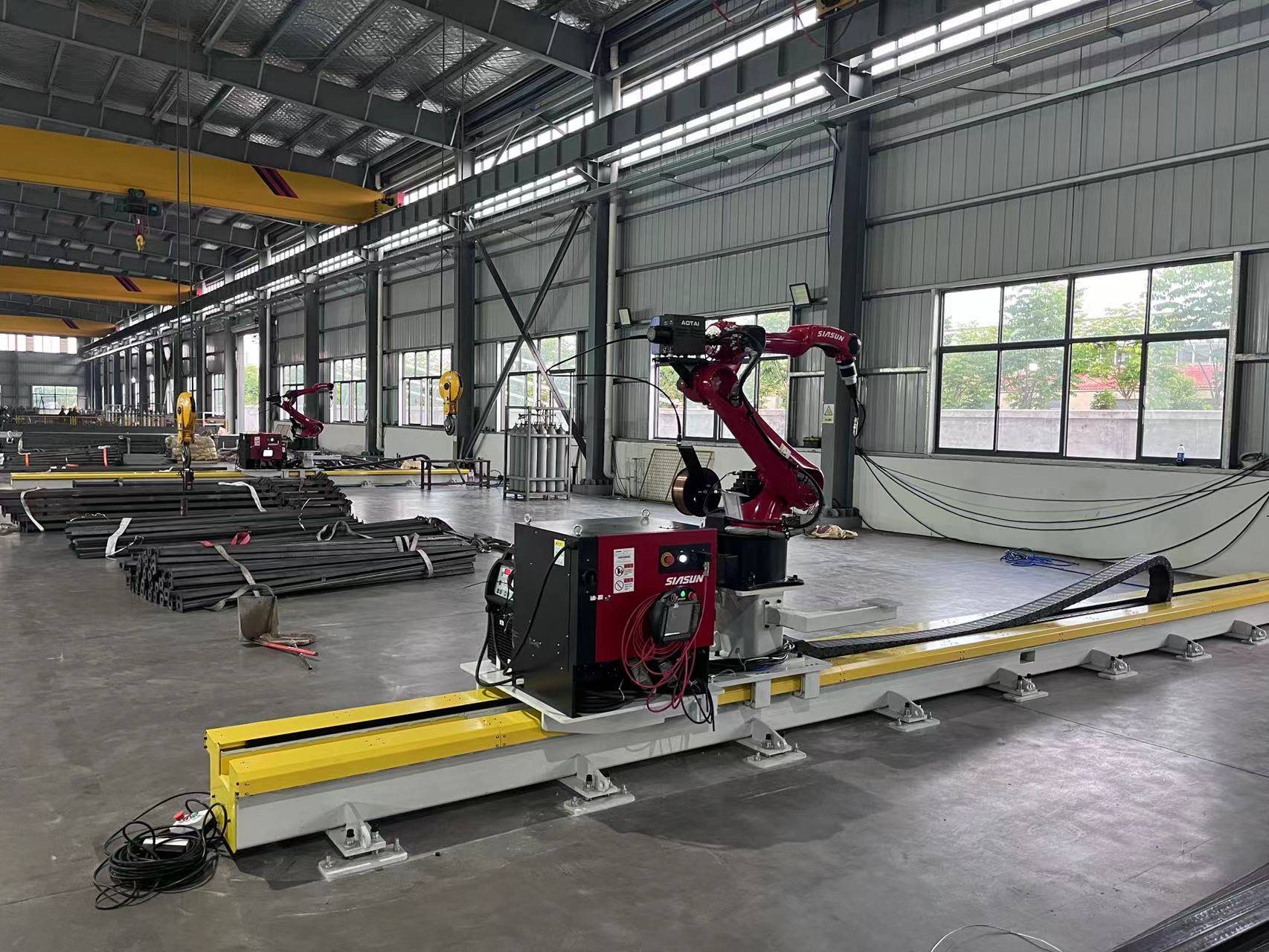
Pulse-Spray Transfer and Gap Bridging
Intelligent crawlers are typically paired with advanced power sources capable of pulsed-MAG welding. This is particularly advantageous for Pressure Vessels where out-of-position welding (vertical-up or overhead) is often required. The pulse-spray transfer mode allows for high deposition rates with lower average heat input, reducing the risk of burn-through and minimizing distortion in the cylindrical shells.
Furthermore, the robotic system can be programmed to handle variations in joint fit-up. Using high-speed sensing, the crawler adjusts its oscillation width and travel speed in real-time to bridge gaps that would typically require manual intervention or rework.
Intelligent Seam Tracking and Sensing
A magnetic crawler is only as effective as its ability to stay on course. Automated seam tracking is the technological pillar that enables “lights-out” or semi-autonomous operation. These systems use either through-the-arc sensing (TASE) or laser-based vision sensors to detect the groove geometry.
Through-the-Arc Sensing (TASE)
TASE monitors changes in welding current and voltage as the torch oscillates across the joint. If the torch moves away from the center of the groove, the electrical characteristics change, and the crawler’s control logic issues a corrective steering command. This method is highly robust as it is unaffected by the intense light or smoke generated during the MAG process.
Visual and Tactile Feedback
Advanced units may also incorporate specialized cameras to provide the operator with a remote view of the weld pool. This allows a single technician to oversee multiple crawler units simultaneously, drastically increasing the output per man-hour.
Maintenance Protocols for Robotic Uptime
From an engineering management perspective, the reliability of the crawler system is paramount. Maintenance for magnetic crawlers focuses on three primary areas: the drive mechanism, the welding consumables, and the magnetic adhesion system.
The drive wheels or tracks must be inspected weekly for metallic debris. Because the crawler is magnetic, it naturally attracts grinding dust and slag, which can interfere with the drive gears if not cleared. The use of high-strength rare-earth magnets ensures a constant pull-force, but the protective housing around these magnets must be checked for wear to prevent direct contact with the vessel wall, which could lead to scratching or reduced mobility.
Regarding the MAG system, the contact tip and liner remain the most frequent points of failure. Implementing a scheduled replacement cycle based on wire throughput—rather than waiting for a failure—ensures consistent arc stability. Automated torch cleaning stations can also be integrated into the workflow to remove spatter buildup from the nozzle without human intervention.
Economic Analysis: Labor ROI and Efficiency
The financial justification for adopting magnetic crawler technology is found in the Return on Investment (ROI) calculations regarding labor and throughput. Manual welding of large-diameter pressure vessels is plagued by low duty cycles. A manual welder typically achieves a 20% to 30% duty cycle, as they must stop frequently to reposition themselves, change electrodes, or rest due to physical fatigue.
Duty Cycle Comparison
The robotic crawler can sustain a duty cycle of 70% to 80%. In a standard 8-hour shift, this translates to significantly more linear meters of completed weld. When factoring in the reduction of weld defects—such as porosity or lack of fusion caused by human error—the cost savings extend into the post-weld inspection and repair phases.
Labor Redistribution
It is a misconception that robotics simply replace labor. In a pressure vessel shop, the crawler allows “upskilling.” Highly skilled welders transition into robotic technicians who manage the parameters and quality control, while the robot handles the repetitive, ergonomically hazardous tasks. This reduces turnover and workers’ compensation claims related to heat stress and repetitive motion injuries.
Conclusion: The Future of Vessel Fabrication
The integration of intelligent magnetic crawlers into the pressure vessel production line represents a necessary evolution for manufacturers facing global competition and a shrinking pool of skilled manual welders. By focusing on the MAG process and the precision of robotic mobility, firms can achieve a level of consistency that manual processes cannot match.
As control algorithms become more sophisticated, the ability of these crawlers to perform multi-pass welds on thick-walled vessels with minimal supervision will only increase. For the industrial engineer, the goal remains clear: optimize the intersection of mechanical reliability and process control to deliver safer, more cost-effective pressure vessels.
-


LT240S tube laser cutting machine
-
LT120S tube laser cutting machine
-
Sale

Tank Fillet Welding Machine
Original price was: $1,000.00.$900.00Current price is: $900.00. -
Sale

MAK100 tube laser cutting machine
Original price was: $5,500.00.$5,000.00Current price is: $5,000.00. -

portable plasma air cutting machine
$1,200.00 -

2in1 fiber laser cutting machine
-

Air cooling Laser welding machine
-

HF h beam laser cutting machine
-

LT240 laser cutting machine
-

Laser welding machine
-


Cobotic Welding Station
-

Gantry welding robot solution
-

Tracked Wheeled AGV Welding robot
-

LFH6020 Fiber laser cutting machine
-
LFP6020
-

robotic welidng machine
