Engineering the Transition to Automated LNG Tank Fabrication
The construction of Liquefied Natural Gas (LNG) storage tanks represents one of the most demanding environments for structural engineering. These vessels, often composed of 9% nickel steel or specialized stainless alloys, require high-integrity welds to withstand cryogenic temperatures. Traditional manual welding methods are increasingly insufficient due to the scale of these projects and the tightening labor market for certified high-pressure welders. The implementation of an Intelligent Robotic Welder offers a standardized solution to these variables, ensuring that metallurgical integrity is maintained across thousands of linear meters of weld seams.
From an industrial engineering perspective, the transition is not merely about replacing a human operator but about redesigning the workflow for continuous throughput. An automated system eliminates the fatigue-related fluctuations in travel speed and torch angle that characterize manual operation, leading to a significant reduction in Non-Destructive Testing (NDT) failures.
Mechanical Stability through the Magnetic Crawler System
A primary challenge in LNG tank construction is the necessity for welding on vertical and curved surfaces at significant heights. The Magnetic Crawler utilizes high-flux permanent magnets or switchable electromagnets to generate sufficient attractive force to overcome gravity while carrying the welding payload. This crawler serves as the mobile platform for the robotic arm and wire-feed system.
Traction and Surface Adhesion
The engineering of the crawler focuses on the coefficient of friction between the drive wheels and the steel substrate. In LNG applications, the surface may be primed or contain minor oxidation. The crawler’s drive system must provide constant torque to ensure a steady travel speed, which is critical for consistent heat input. Sensors integrated into the crawler monitor the magnetic gap, providing real-time feedback to prevent decoupling. This stability is the foundation of achieving X-ray quality welds in the vertical-up (3G) and overhead (4G) positions.
Path Planning and Seam Tracking
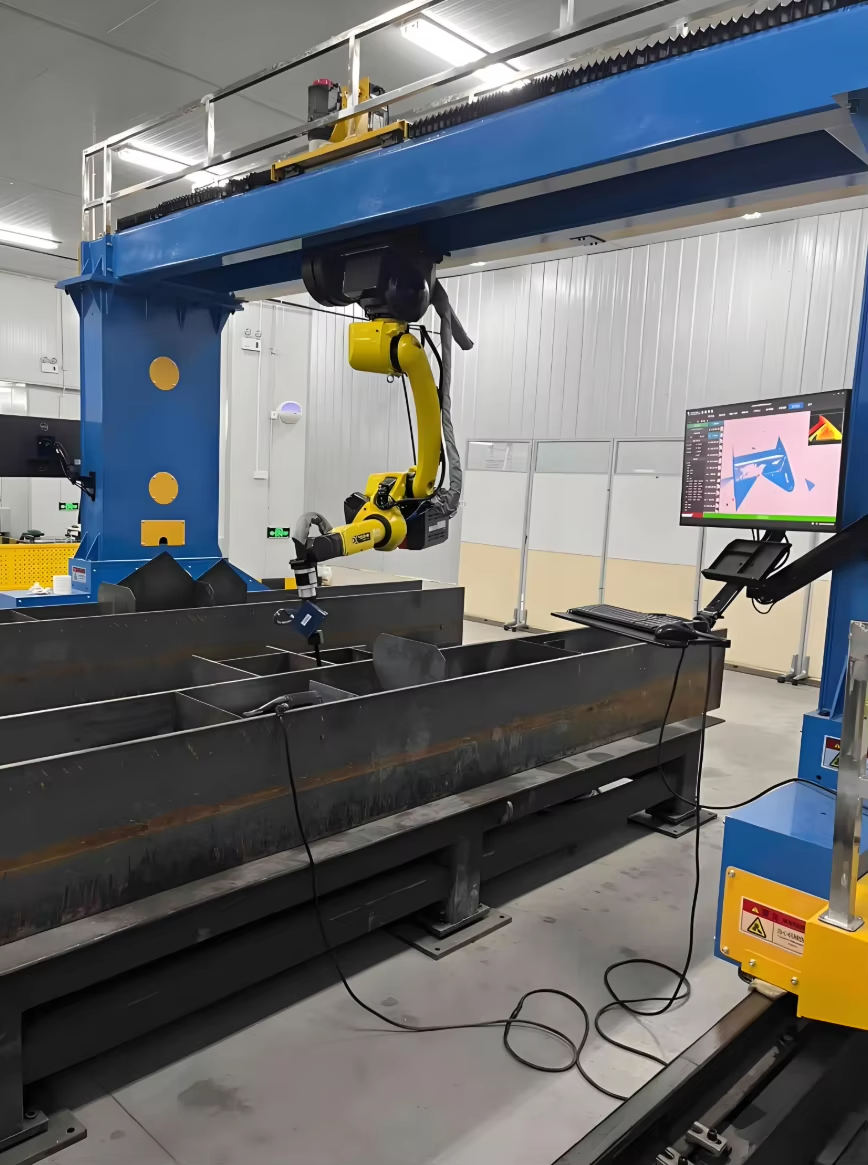
Intelligent systems utilize laser-based seam tracking to compensate for fit-up variations. Since large-scale plates often have slight misalignments or varying gap widths, the robotic welder must dynamically adjust its oscillation width and center-point position. This real-time adjustment ensures that the weld pool remains centered in the joint, maintaining the required throat thickness and fusion profiles without manual intervention.
Optimizing the MAG Welding Process for Productivity
The core of the robotic system is the MAG welding (Metal Active Gas) process. Unlike manual shielded metal arc welding (SMAW), MAG provides a continuous electrode feed, which eliminates the frequent stops and starts associated with rod changes. For industrial applications, this results in a duty cycle increase from approximately 30% to over 80%.
Gas Shielding and Metallurgical Control
In LNG projects, the shielding gas composition—typically a mix of Argon and CO2—must be precisely controlled to stabilize the arc and minimize spatter. The robotic system manages the flow rate in synchronization with the travel speed. Industrial engineers focus on the “deposition rate,” measured in kilograms per hour. By utilizing high-current density and optimized wire diameters, the robotic MAG process can deposit significantly more metal per hour than a manual welder, while maintaining a lower overall heat-affected zone (HAZ) due to higher travel speeds.
Heat Input Management
Controlling heat input is vital for the mechanical properties of 9% nickel steel. Excessive heat can degrade the toughness of the material at cryogenic temperatures. The robotic system logs every parameter—voltage, amperage, and travel speed—providing a digital “birth certificate” for every weld. This level of data acquisition is impossible with manual labor and provides a critical layer of quality assurance for project stakeholders.
System Maintenance and Operational Longevity
Maintenance of an intelligent robotic system follows a proactive engineering model. Because these machines operate in harsh construction environments, the maintenance schedule is dictated by “arc-on” time and environmental exposure.
Drive Train and Magnetic Module Care
The magnetic modules must be inspected for the accumulation of metallic dust and debris, which can bridge the magnetic gap and reduce adhesion force. Drive chains or gears require lubrication with high-viscosity synthetic oils that do not attract grit. Regular calibration of the encoder wheels ensures that the reported travel speed matches the physical distance covered, preventing deviations in heat input calculations.
Torch and Wire Feed Consumables
The contact tip and gas nozzle are the primary wear items. In a robotic MAG setup, an automated torch cleaning station can be integrated to remove spatter periodically. The wire feed rollers must be checked for alignment to prevent “bird-nesting” or inconsistent feeding, which would trigger a system fault. By standardizing these maintenance tasks, the downtime is predictable and can be scheduled during shift changes or tank repositioning phases.
Financial Analysis: Realizing Labor ROI
The justification for investing in Robotic Welding technology is found in the Labor ROI calculation. This calculation extends beyond simple hourly wage comparisons to include the total cost of quality and project duration.
Direct Labor Savings
While the initial capital expenditure for a magnetic crawler robotic system is high, the labor cost per meter of weld is significantly lower. One technician can often oversee two or three robotic units simultaneously. In high-wage regions or remote LNG sites where housing and transport for a large manual workforce are expensive, the reduction in headcount leads to immediate overhead savings.
Reduction in Rework and NDT Failures
In LNG construction, the cost of repairing a rejected weld is often five to ten times the cost of the initial weld. Repairing a fault involves grinding out the defect, re-welding, and re-testing. Robotic systems achieve a much higher first-pass yield. By reducing the defect rate from a typical manual average of 3-5% down to less than 0.5%, the project saves thousands of man-hours and avoids costly delays in the commissioning schedule.
Safety and Insurance Premiums
By removing the welder from the immediate vicinity of the arc and from dangerous heights, the project’s safety profile improves. Lowering the Total Recordable Incident Rate (TRIR) can lead to reduced insurance premiums and avoids the massive indirect costs associated with workplace accidents. From an industrial management perspective, this risk mitigation is a key component of the long-term ROI.
Implementation Strategy
Successful deployment requires a phased approach. First, the mechanical department must ensure the tank shell plates meet specific fit-up tolerances required for automation. Second, the welding engineers must develop and qualify Welding Procedure Specifications (WPS) specifically for the robotic MAG process. Finally, the workforce must be upskilled from manual welders to robotic operators, focusing on system calibration and troubleshooting rather than manual dexterity. This shift not only improves project efficiency but also elevates the technical capability of the organization’s human capital.
-


LT240S tube laser cutting machine
-
LT120S tube laser cutting machine
-
Sale

Tank Fillet Welding Machine
Original price was: $1,000.00.$900.00Current price is: $900.00. -
Sale

MAK100 tube laser cutting machine
Original price was: $5,500.00.$5,000.00Current price is: $5,000.00. -

portable plasma air cutting machine
$1,200.00 -

2in1 fiber laser cutting machine
-

Air cooling Laser welding machine
-

HF h beam laser cutting machine
-

LT240 laser cutting machine
-

Laser welding machine
-


Cobotic Welding Station
-

Gantry welding robot solution
-

Tracked Wheeled AGV Welding robot
-

LFH6020 Fiber laser cutting machine
-
LFP6020
-

robotic welidng machine
