Optimizing Heavy Machinery Fabrication with Magnetic Crawler MAG Systems
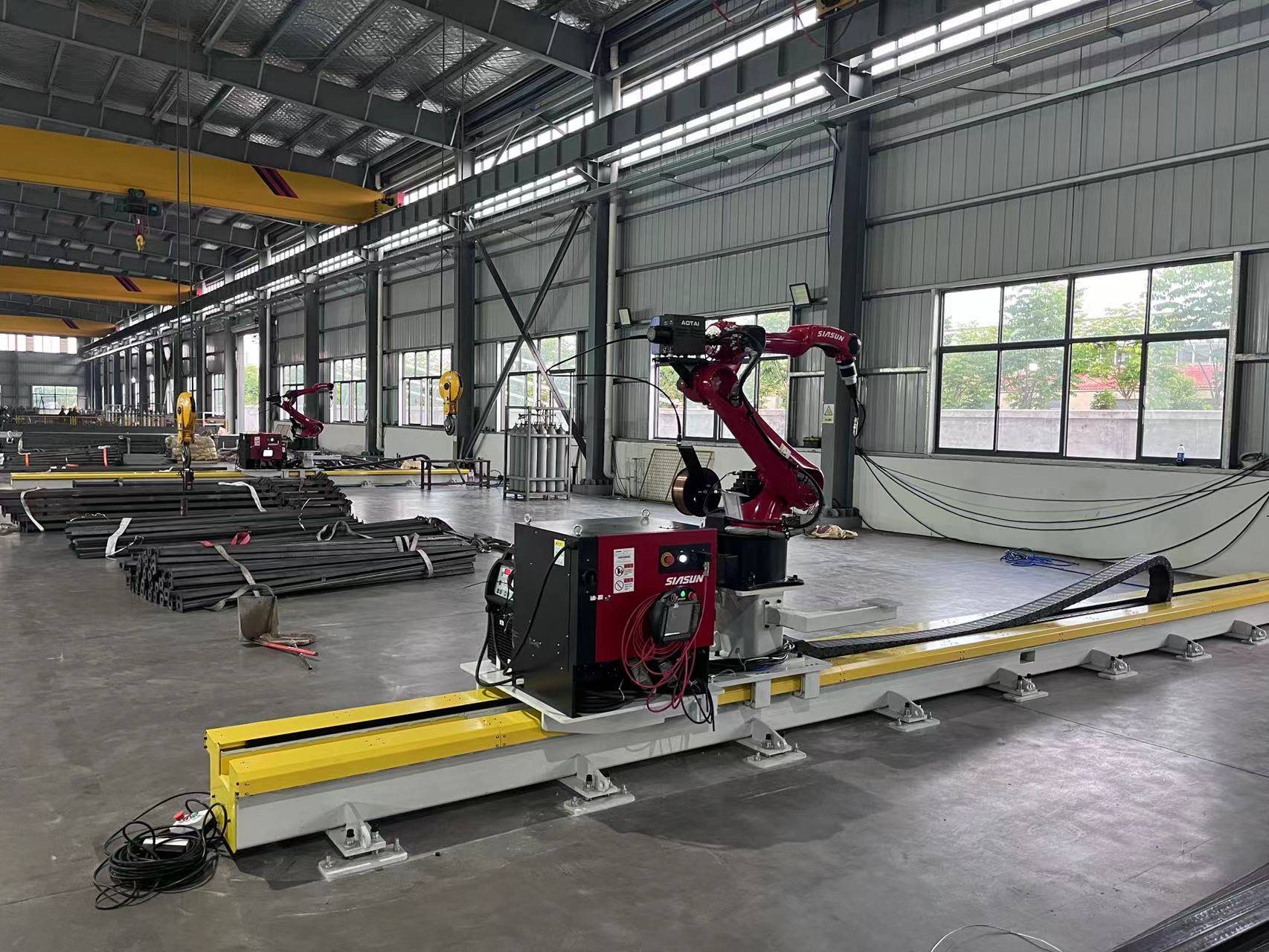
The manufacturing of construction machinery—such as excavators, cranes, and bulldozers—requires the joining of thick-gauge structural steel. Traditional manual welding in this sector faces three primary bottlenecks: low duty cycles due to operator fatigue, inconsistent weld quality in out-of-position joints, and a dwindling supply of certified high-pressure welders. The introduction of the Intelligent Robotic Welder equipped with a magnetic crawler chassis provides a scalable solution to these challenges. Unlike stationary robotic arms that are limited by a fixed reach, the magnetic crawler utilizes high-strength permanent magnets or electromagnets to adhere directly to the workpiece, allowing for continuous, long-distance welding on large-scale structures.
Technical Architecture of Magnetic Crawler MAG Welding
Metal Active Gas (MAG) welding is the preferred process for Construction Machinery due to its high deposition rate and efficiency in thick-plate applications. When integrated into a crawler system, the process is governed by a programmable logic controller (PLC) that synchronizes the crawler’s travel speed with the wire feed rate and oscillation parameters. The magnetic adhesion system is engineered to provide sufficient force to support the weight of the torch, wire feeder, and onboard sensors, even when climbing vertical walls or operating overhead.
The “intelligence” of these systems stems from real-time sensing. Through-the-arc sensing (TASC) or laser-based vision systems allow the crawler to compensate for fit-up variations. In heavy fabrication, plate gaps and bevel angles are rarely perfect. An intelligent system adjusts the torch position and weave width dynamically, ensuring full penetration and proper bead profile without manual intervention. This level of precision reduces the need for post-weld grinding and rework, directly impacting the throughput of the assembly line.
Labor ROI and Operational Efficiency
From an industrial engineering perspective, the primary metric for welding efficiency is arc-on time. Manual welders in heavy industry typically achieve an arc-on time of 20% to 30%, with the remainder of the shift spent on positioning, slag removal, and personal fatigue breaks. An automated welding crawler can push the duty cycle to 70% or higher. Because the robot does not suffer from ergonomic strain, it can maintain consistent travel speeds over 10-meter-long box girders, which would be impossible for a human operator to perform in a single pass.
The Return on Investment (ROI) is calculated by comparing the cost per kilogram of deposited weld metal. While the initial capital expenditure (CAPEX) for a crawler system is higher than a manual power source, the reduction in labor hours per unit is drastic. In many construction machinery plants, one operator can oversee two or three crawlers simultaneously. This labor arbitrage, combined with the reduction in filler metal waste and gas consumption, typically leads to a payback period of 12 to 18 months in high-volume production environments.
MAG Process Stability and Metallurgy
MAG welding in construction machinery often utilizes flux-cored wires or solid wires with CO2/Argon shielding gas mixes. The robotic crawler ensures a stable contact-to-work distance (CTWD), which is critical for maintaining arc stability and preventing porosity. For structural components like boom sections, the heat-affected zone (HAZ) must be carefully managed. The intelligent crawler’s ability to maintain a precise travel speed ensures that the heat input remains within the specified welding procedure specification (WPS) limits, preserving the mechanical properties of high-strength low-alloy (HSLA) steels.
Furthermore, multi-pass welding capability is a core feature of these systems. For thick joints requiring 5 to 10 passes, the crawler can be programmed to execute specific offset patterns. Each pass is laid down with identical parameters, eliminating the “stop-start” defects common in manual welding which are often the initiation points for structural fatigue cracks.
Maintenance Protocols for Robotic Crawlers
To ensure high uptime, a rigorous maintenance schedule is mandatory for heavy machinery fabrication equipment. Unlike stationary robots, crawlers are exposed to more intense spatter, dust, and physical vibration. The maintenance strategy should be divided into three categories: mechanical, electrical, and consumable management.
Mechanical and Magnetic Integrity
The crawler’s drive wheels or tracks must be inspected weekly for debris buildup. Since the system relies on magnetic adhesion, any metal shavings or spatter stuck to the magnets can reduce the holding force or cause the crawler to “crab” or drift from the intended path. Bearings and gearboxes should be lubricated according to the manufacturer’s cycle counts to prevent mechanical backlash, which would manifest as “jitter” in the weld bead.
Consumable Management
The MAG torch is the most vulnerable component. Automated systems should be equipped with torch cleaning stations or manual “reels” to ensure the nozzle remains free of spatter. Contact tip wear is another critical factor; as the tip erodes, the arc center shifts, which can lead to lack of fusion defects. Implementing a scheduled contact tip replacement policy—rather than waiting for failure—prevents unscheduled downtime.
Sensor Calibration
The intelligent seam tracking sensors (whether tactile or optical) require daily calibration checks. In the harsh environment of a fabrication shop, lenses can become clouded by fumes or pitted by spatter. Utilizing protective air knives or replaceable shields for the sensors is an engineering best practice that extends the life of the electronic components.
Integrating Robotic Crawlers into the Production Flow
The successful deployment of a magnetic crawler requires more than just the hardware; it requires a shift in upstream processes. Fit-up tolerances must be tightened. While the Robotic Welding ROI is high, it is maximized when the robot does not have to hunt for the seam or deal with gaps exceeding 3mm. Industrial engineers should focus on the precision of the plate cutting and tacking stages to ensure the crawler can operate at peak velocity.
Safety protocols also change with the introduction of mobile robotics. Since the crawler moves along the workpiece, “curtained” weld cells may need to be larger or modular. Operators must be trained in robot programming and basic troubleshooting, transitioning from manual laborers to “cell technicians.” This upskilling of the workforce is a secondary benefit, as it increases employee retention by reducing the physical toll of the job.
Conclusion on Systematic Automation
The implementation of an intelligent robotic welder with a magnetic crawler is a strategic necessity for construction machinery manufacturers aiming to scale production. By focusing on the MAG process’s core strengths—high deposition and reliability—and leveraging the mobility of the crawler, plants can overcome the physical limitations of manual welding. The result is a highly predictable, data-driven fabrication process that ensures structural integrity while significantly lowering the cost per meter of weld. As the industry moves toward further digitalization, these mobile units will serve as the foundational hardware for fully autonomous fabrication shipyards.
-


LT240S tube laser cutting machine
-
LT120S tube laser cutting machine
-
Sale

Tank Fillet Welding Machine
Original price was: $1,000.00.$900.00Current price is: $900.00. -
Sale

MAK100 tube laser cutting machine
Original price was: $5,500.00.$5,000.00Current price is: $5,000.00. -

portable plasma air cutting machine
$1,200.00 -

2in1 fiber laser cutting machine
-

Air cooling Laser welding machine
-

HF h beam laser cutting machine
-

LT240 laser cutting machine
-

Laser welding machine
-


Cobotic Welding Station
-

Gantry welding robot solution
-

Tracked Wheeled AGV Welding robot
-

LFH6020 Fiber laser cutting machine
-
LFP6020
-

robotic welidng machine
