Optimizing Heavy Fabrication with Magnetic Crawler Robotics
In the production of construction machinery, such as excavator booms, crane chassis, and heavy-duty dumper frames, the welding phase is often the most significant bottleneck. Traditional manual welding in these environments faces challenges including ergonomic constraints, fluctuating weld quality due to operator fatigue, and the sheer scale of the workpieces which often require complex positioning. The introduction of the Intelligent Robotic Welder with a magnetic crawler base addresses these variables by bringing the automation directly to the workpiece, rather than moving the workpiece to a fixed robotic cell.
This localized automation strategy utilizes high-strength permanent magnets or electromagnets integrated into the crawler’s drive system. This allows the robot to maintain a constant distance and orientation relative to the weld seam, even when navigating vertical or inverted surfaces. From an industrial engineering perspective, this mobility eliminates the need for massive hydraulic positioners, thereby reducing the capital expenditure required for floor-space optimization and material handling infrastructure.
Metal Active Gas (MAG) Process Integration
The core of this robotic system is the Metal Active Gas (MAG) welding process. MAG welding is preferred in heavy construction machinery fabrication due to its high deposition rates and the ability to achieve deep penetration in thick-walled carbon steel. Unlike passive systems, the intelligent crawler utilizes advanced wire-feed controls and real-time voltage monitoring to maintain arc stability.
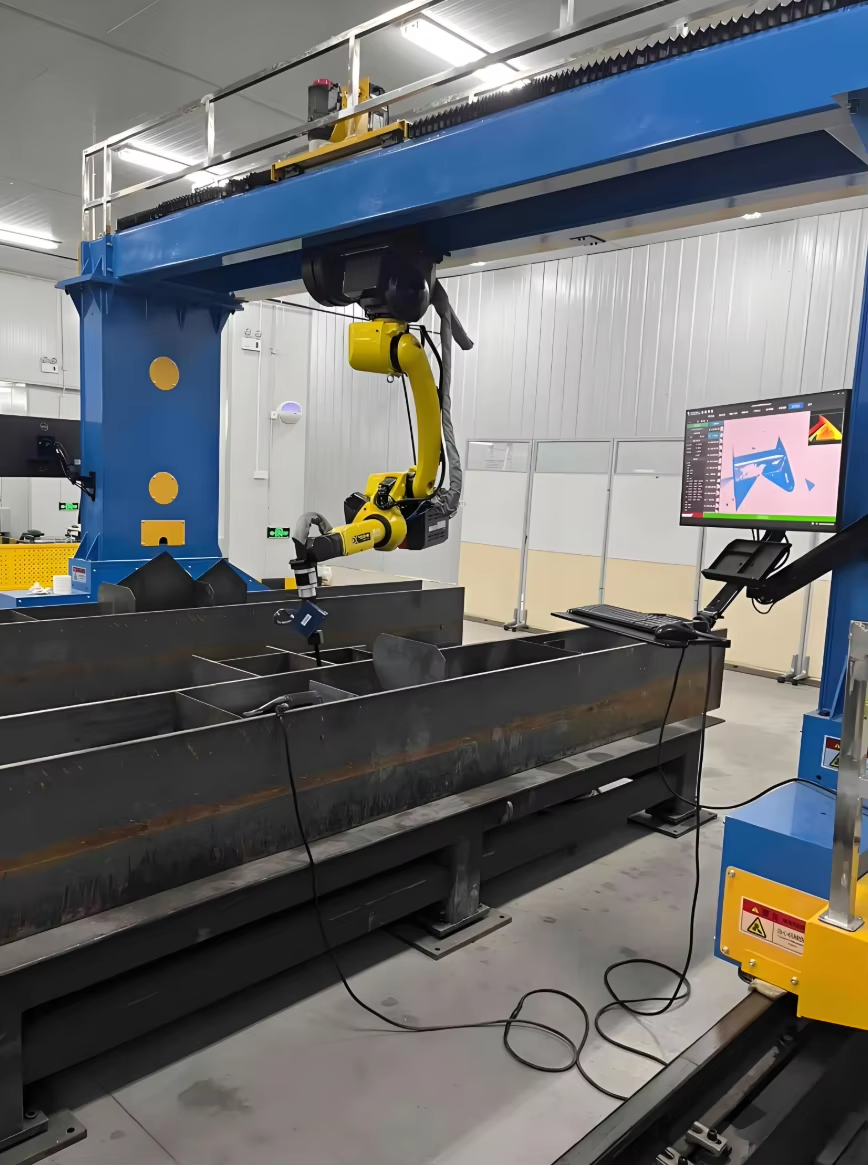
Parameter Control and Shielding Gas Dynamics
Effective robotic MAG welding requires precise synchronization between the crawler’s travel speed and the wire feed speed. Industrial engineers must calibrate the power source to handle the “spray transfer” mode, which is essential for high-productivity welding on plates exceeding 12mm in thickness. The use of mixed shielding gases—typically Argon and CO2—allows for a stable arc with minimal spatter, which significantly reduces post-weld cleaning time.
Intelligent crawlers are equipped with seam-tracking sensors, often utilizing through-the-arc sensing (TASE) or tactile probes. These sensors detect deviations in the joint geometry caused by thermal distortion or fit-up tolerances. By adjusting the torch position in real-time, the robot ensures that the weld bead remains centered, maintaining the structural integrity required for high-stress machinery components.
Labor ROI and Throughput Analysis
The economic justification for adopting magnetic crawler welders is primarily driven by the “Duty Cycle” improvement. A manual welder typically operates at a 20% to 30% arc-on time due to the need for repositioning, breaks, and equipment setup. In contrast, an autonomous crawler can achieve duty cycles exceeding 75%. This shift drastically lowers the cost per meter of weld metal deposited.
Calculating the Payback Period
When calculating Labor ROI, engineers must consider the current scarcity of certified 6G welders. The cost of recruiting, training, and retaining skilled labor is rising. By deploying a robotic crawler, a single technician can oversee multiple units, effectively tripling the output per man-hour. When factoring in the reduction in rework—often a hidden cost in manual fabrication—the typical payback period for a magnetic crawler system in a high-volume construction machinery plant ranges from 14 to 22 months.
System Maintenance and Reliability Engineering
For a robotic system to maintain its ROI, a rigorous Maintenance schedule is mandatory. Industrial environments for Construction Machinery are harsh, characterized by metallic dust, high temperatures, and electromagnetic interference. The maintenance protocol for a magnetic crawler focuses on three primary subsystems: the drive mechanism, the welding torch assembly, and the magnetic adhesion interface.
Drive and Adhesion Maintenance
The tracks or wheels of the crawler must be inspected weekly for the accumulation of ferromagnetic debris. Because the system relies on magnetic force to stay attached to the workpiece, any buildup of “swarf” or grinding dust can reduce the effective pull force, leading to slippage and potential catastrophic failure. Cleaning the magnetic modules with compressed air or specialized scrapers ensures consistent traction.
Welding Consumables and Torch Alignment
The MAG torch assembly requires daily checks. Contact tips must be replaced at set intervals to prevent “keyholing,” which causes arc instability. Furthermore, the wire liner must be blown out or replaced periodically to prevent friction-related feed issues. Because the crawler moves across the workpiece, the umbilical cable—carrying power, gas, and wire—is subject to constant flexing. Preventive maintenance must include an inspection of the cable jacket to prevent gas leaks or electrical shorts that could disrupt the intelligent control signals.
Quality Assurance and Digital Integration
Modern intelligent welders function as data nodes within the factory ecosystem. Every centimeter of the weld is logged, including parameters such as current, voltage, travel speed, and heat input. This “digital twin” of the welding process provides a level of traceability that manual welding cannot match. In the event of a structural failure in the field, engineers can retrieve the specific welding data for that machine’s serial number to determine if the weld was performed within the specified tolerances.
This data-driven approach also feeds into predictive maintenance. By analyzing the motor torque of the crawler, the system can alert operators if a bearing is beginning to fail or if the path is obstructed. This proactive stance minimizes unplanned downtime, which is critical in “just-in-time” manufacturing environments common in the heavy equipment industry.
Engineering Conclusion
The deployment of an intelligent robotic welder with a magnetic crawler is not merely a technological upgrade but a strategic process optimization. By focusing on the MAG process’s strengths and automating the most labor-intensive aspects of large-scale fabrication, manufacturers can stabilize their production costs. The combination of high-mobility adhesion, real-time seam tracking, and robust maintenance protocols ensures that construction machinery is built to the highest safety standards while maximizing the efficiency of the modern industrial floor.
-


LT240S tube laser cutting machine
-
LT120S tube laser cutting machine
-
Sale

Tank Fillet Welding Machine
Original price was: $1,000.00.$900.00Current price is: $900.00. -
Sale

MAK100 tube laser cutting machine
Original price was: $5,500.00.$5,000.00Current price is: $5,000.00. -

portable plasma air cutting machine
$1,200.00 -

2in1 fiber laser cutting machine
-

Air cooling Laser welding machine
-

HF h beam laser cutting machine
-

LT240 laser cutting machine
-

Laser welding machine
-


Cobotic Welding Station
-

Gantry welding robot solution
-

Tracked Wheeled AGV Welding robot
-

LFH6020 Fiber laser cutting machine
-
LFP6020
-

robotic welidng machine
