Optimizing Structural Integrity with Robotic MAG Systems
Structural bridge trusses present unique challenges for traditional welding methodologies. The sheer scale of the assemblies, combined with the necessity for high-strength, multi-pass joints, often leads to bottlenecks in the fabrication timeline. An intelligent robotic MAG welding system mounted on a magnetic crawler addresses these constraints by providing a mobile, high-precision platform capable of navigating vertical and inverted steel surfaces. Unlike fixed-cell robots, these crawlers offer the flexibility required for the non-linear geometries typical of infrastructure projects.
The transition to magnetic crawler system technology is driven by the need for consistency. In manual welding, welder fatigue contributes significantly to variability in penetration and bead aesthetics, particularly during long-duration vertical-up or overhead passes. A robotic crawler maintains a constant travel speed and torch angle, ensuring that the heat input remains within the specified Procedure Qualification Record (PQR) parameters. This level of control is essential for the high-yield structural steels used in modern bridge design, where heat-affected zone (HAZ) management is critical to long-term fatigue resistance.
Technical Specifications of Crawler-Integrated MAG Welding
The core of the system is the Metal Active Gas (MAG) process, utilizing a mixture of Argon and Carbon Dioxide to stabilize the arc and control spatter. For structural steel trusses, flux-cored or solid wire electrodes are selected based on the required mechanical properties. The robotic interface manages the wire feed speed and voltage synchronization in real-time, adjusting for slight variations in seam gap through integrated laser seam tracking or through-the-arc sensing.
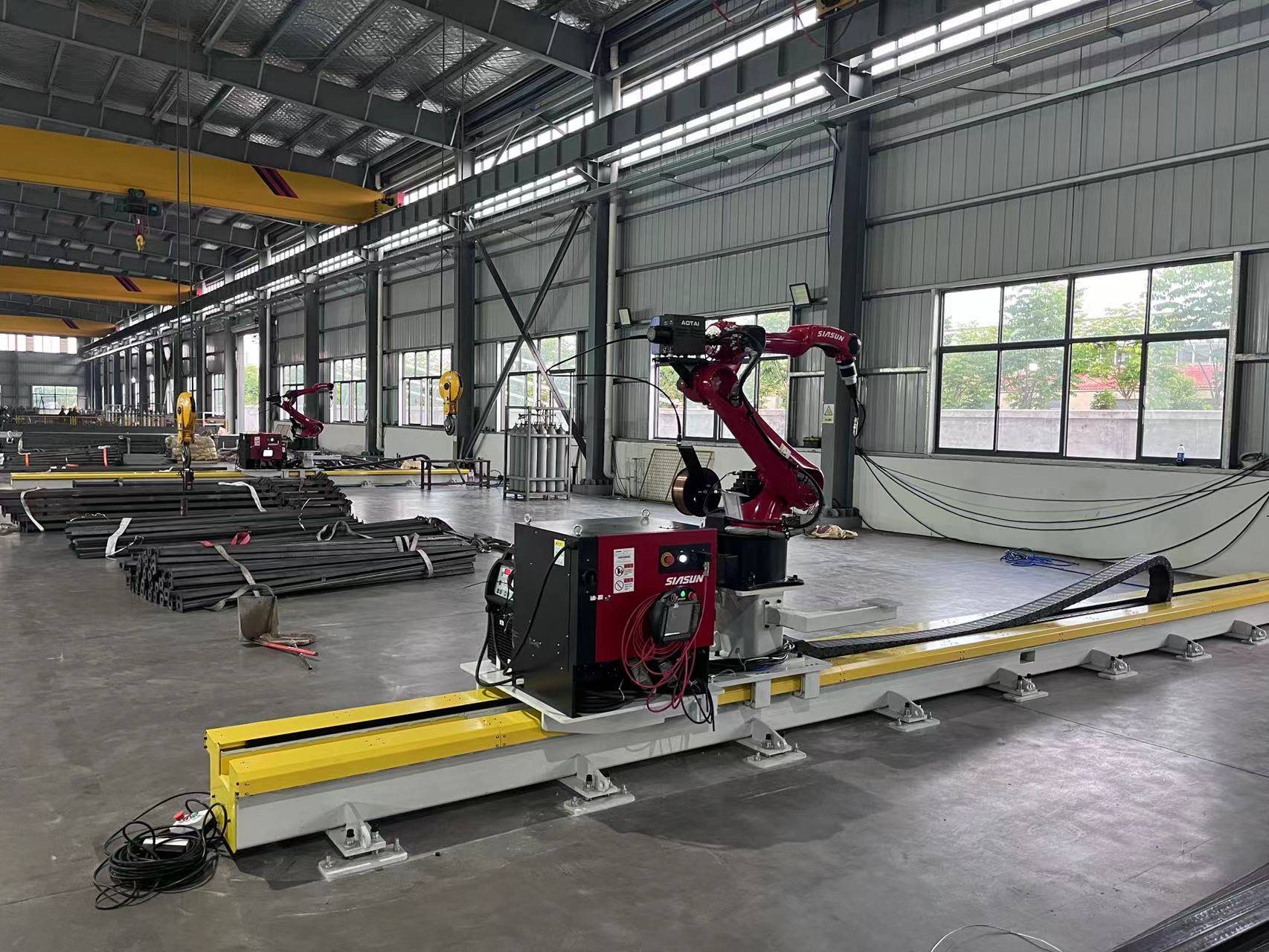
Magnetic Traction and Stability
The crawler employs high-flux permanent magnets or switchable electromagnets to generate the necessary clamping force against the steel substrate. This allows the unit to carry the weight of the welding torch, wire feeder, and cable loom without slipping. From an industrial engineering perspective, the traction-to-weight ratio is the most critical metric. A safety factor of at least 3:1 is typically required to prevent detachment in the event of a power fluctuation or surface contamination. The wheels or tracks are often coated with specialized polymers to prevent damage to the base metal while maintaining high friction coefficients.
Maintenance Schedules and Operational Reliability
System uptime is the primary driver of throughput in any automated fabrication environment. For a robotic crawler, maintenance is divided into three categories: the welding power source, the mechanical crawler chassis, and the consumable path. The weld deposition rate is directly impacted by how well these components are maintained. Industrial engineers must implement a Mean Time Between Failure (MTBF) tracking system to identify wear patterns in the crawler’s drive motors and the torch’s contact tips.
Consumable Management
Robotic torches are subject to high thermal loads. Automated tip cleaners and anti-spatter injection systems are integrated into the crawler’s workflow to extend the life of the shroud and contact tip. In a bridge truss application, where the crawler may be several meters away from the primary wire drum, the wire delivery system must utilize low-friction liners to prevent bird-nesting or erratic feeding. Periodic inspection of the magnetic tracks is also mandatory to remove metallic dust and spatter buildup, which can interfere with the magnetic circuit and cause travel irregularities.
Calibration and Sensor Alignment
The intelligent aspect of the welder relies on sensor fusion. Weekly calibration of the seam-tracking sensors ensures that the robot maintains the centerline of the joint within a tolerance of +/- 0.5mm. This is particularly important for multi-pass welds where the geometry changes with each successive layer. Maintaining the integrity of the feedback loop prevents rework, which is the single largest hidden cost in structural welding.
Labor ROI and Economic Impact Analysis
The decision to deploy a robotic magnetic crawler is rooted in a comprehensive Return on Investment (ROI) calculation. While the initial capital expenditure (CAPEX) is significantly higher than manual welding equipment, the operational expenditure (OPEX) reduction over the project lifecycle justifies the investment. The primary ROI drivers are labor redistribution, increased duty cycles, and the elimination of scaffolding costs.
Quantifiable Labor Savings
Manual welding on bridge trusses often involves a duty cycle of approximately 20-30% due to the need for repositioning, breaks, and weld cleaning. A robotic crawler operates at a duty cycle of 70-85%. By deploying one operator to oversee three or four crawlers, a fabrication shop can achieve a 300% increase in output per man-hour. This does not eliminate the need for skilled labor; rather, it shifts the welder’s role from manual execution to system programming and quality assurance (QA) oversight.
Reduction in Non-Destructive Testing (NDT) Failures
Weld rejection rates in manual structural welding can range from 3% to 8% depending on the complexity of the joint. Robotic systems typically bring this rate down to less than 1%. Given the cost of gouging out and repairing a rejected weld in thick plate steel—which can be five to ten times the cost of the initial weld—the savings in rework alone can pay for the robotic system within the first year of a major bridge project. Furthermore, the data logging capabilities of intelligent crawlers provide a “digital birth certificate” for every weld, simplifying the documentation required for government infrastructure audits.
Safety and Environmental Considerations
Deploying crawlers on bridge trusses removes human operators from high-risk environments. Working at height, often in windy or restricted-access areas, exposes manual welders to significant fall risks and ergonomic strain. By utilizing a remote-operated crawler, the technician remains on a stable platform or on the ground, monitoring the arc via high-dynamic-range (HDR) cameras. Additionally, the precision of the MAG process under robotic control reduces the volume of welding fumes and wasted consumables, contributing to a cleaner and more controlled workspace.
System Scalability in Infrastructure
As the demand for rapid infrastructure replacement grows, the modularity of crawler-based welding becomes a strategic advantage. These units can be transported easily between job sites and programmed for different truss configurations—from Warren to Pratt designs—without the need for custom-built jigs. The ability to standardize weld quality across multiple geographically dispersed projects ensures that the structural integrity of the national bridge inventory meets the highest engineering standards.
The integration of magnetic crawlers and robotic MAG welding represents a fundamental shift in how heavy civil engineering projects are executed. By focusing on the metrics of deposition rates, duty cycles, and defect reduction, industrial engineers can drive significant improvements in both the timeline and the fiscal health of large-scale bridge fabrication.
-


LT240S tube laser cutting machine
-
LT120S tube laser cutting machine
-
Sale

Tank Fillet Welding Machine
Original price was: $1,000.00.$900.00Current price is: $900.00. -
Sale

MAK100 tube laser cutting machine
Original price was: $5,500.00.$5,000.00Current price is: $5,000.00. -

portable plasma air cutting machine
$1,200.00 -

2in1 fiber laser cutting machine
-

Air cooling Laser welding machine
-

HF h beam laser cutting machine
-

LT240 laser cutting machine
-

Laser welding machine
-


Cobotic Welding Station
-

Gantry welding robot solution
-

Tracked Wheeled AGV Welding robot
-

LFH6020 Fiber laser cutting machine
-
LFP6020
-

robotic welidng machine
