Intelligent Robotic Welder with 5-Axis Beveling for Construction Machinery
In this article
Optimizing Heavy-Duty Fabrication via Intelligent Robotic MAG Welding
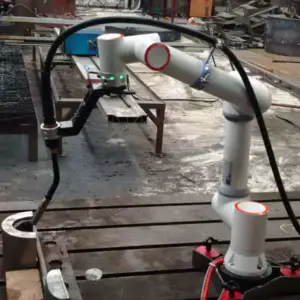
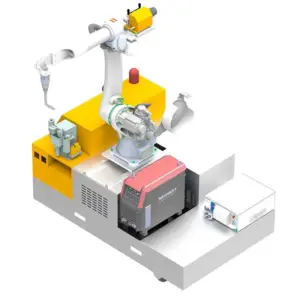
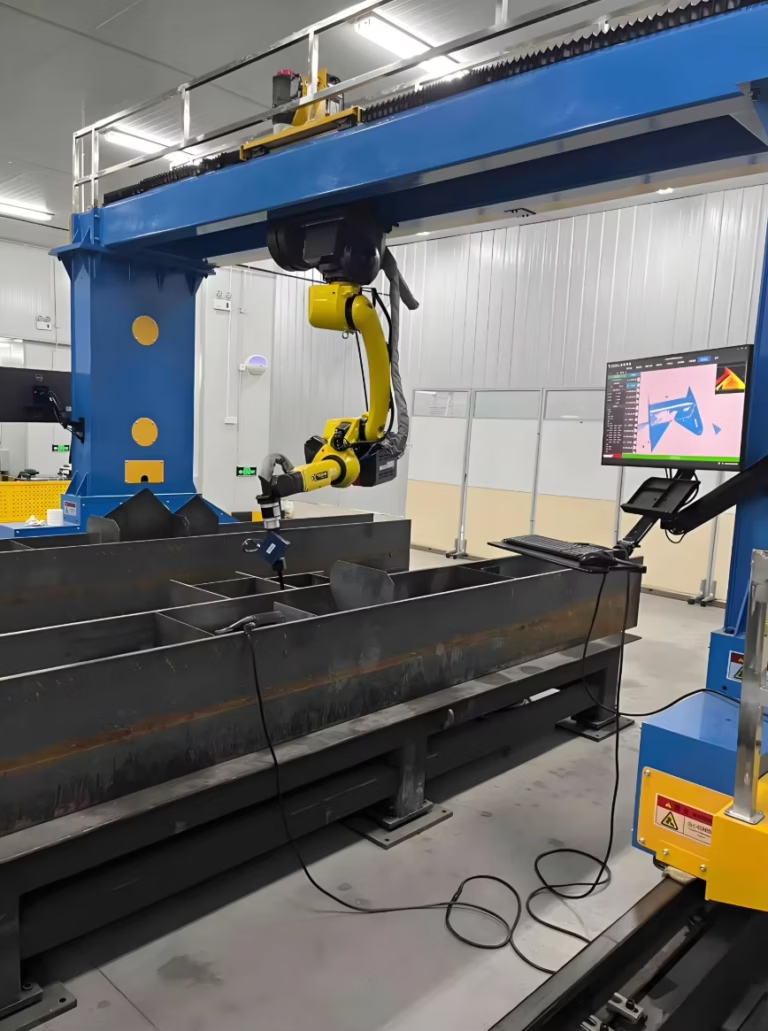
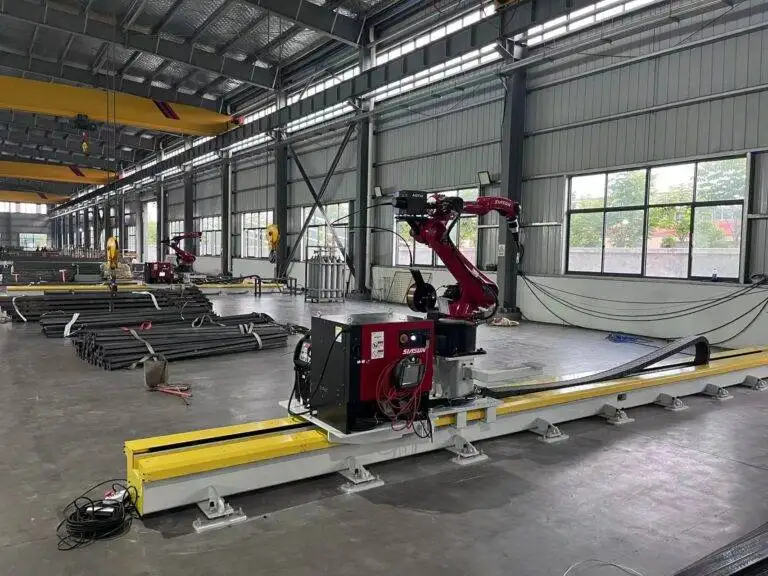
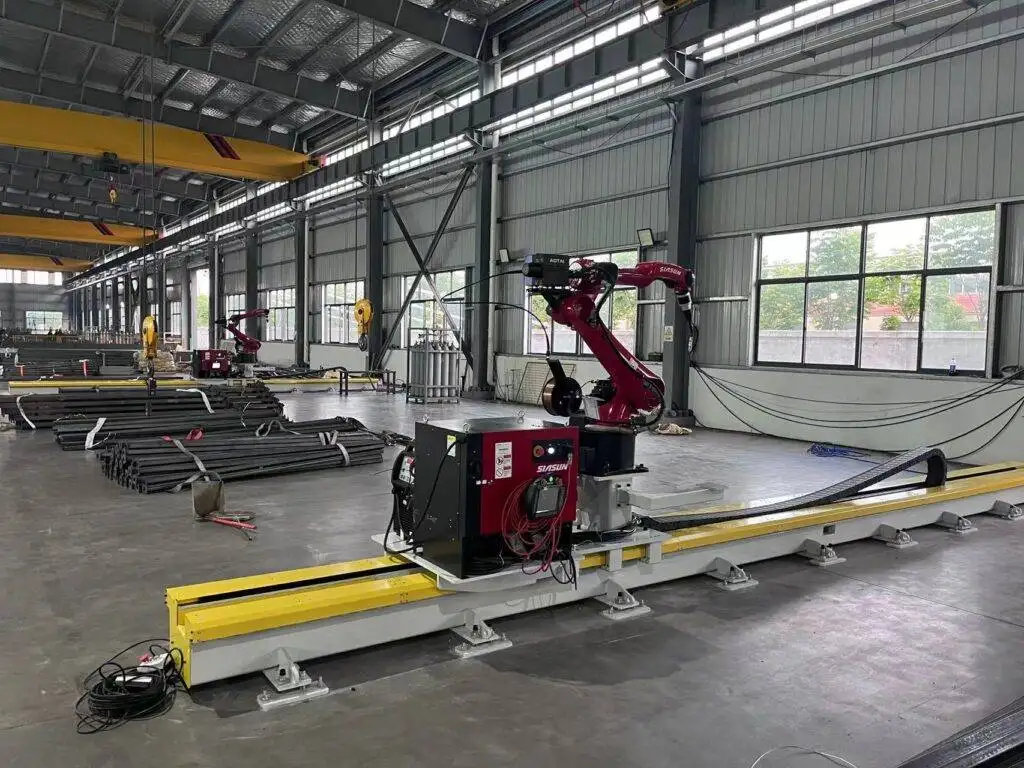
In the heavy machinery sector, including the production of excavators, loaders, and cranes, the structural integrity of thick-plate weldments is paramount. Conventional manual welding processes often struggle with the consistency required for deep-penetration joints, particularly when dealing with complex geometries. The transition to an Intelligent Robotic Welder equipped with 5-axis beveling capabilities represents a significant shift in industrial engineering methodology. This system does not merely automate the movement of the torch; it optimizes the entire metallurgical fusion process through precise angle adjustments and adaptive path planning.
The primary challenge in construction machinery is the sheer scale of the components. Chassis frames and boom arms require multi-pass welds on plates often exceeding 20mm in thickness. Achieving a full-penetration weld necessitates complex groove preparations. By integrating 5-axis movement directly into the welding robot’s kinematics, the system can maintain the ideal torch-to-workpiece orientation throughout the entire length of a contoured joint. This eliminates the “dead spots” often found in 3-axis systems where the torch angle becomes sub-optimal, leading to porosity or lack of fusion.
The Mechanics of 5-Axis Beveling in MAG Welding
Metal Active Gas (MAG) welding is the preferred process for construction equipment due to its high deposition rates and deep penetration characteristics. However, the efficiency of MAG is heavily dependent on the weld pool control. When a robot utilizes 5-axis beveling, it can execute V, Y, and K-type joints with varying root faces and opening angles in a single continuous operation. The two additional axes of the beveling head allow the torch to tilt and rotate independently of the robot’s main arm movements.
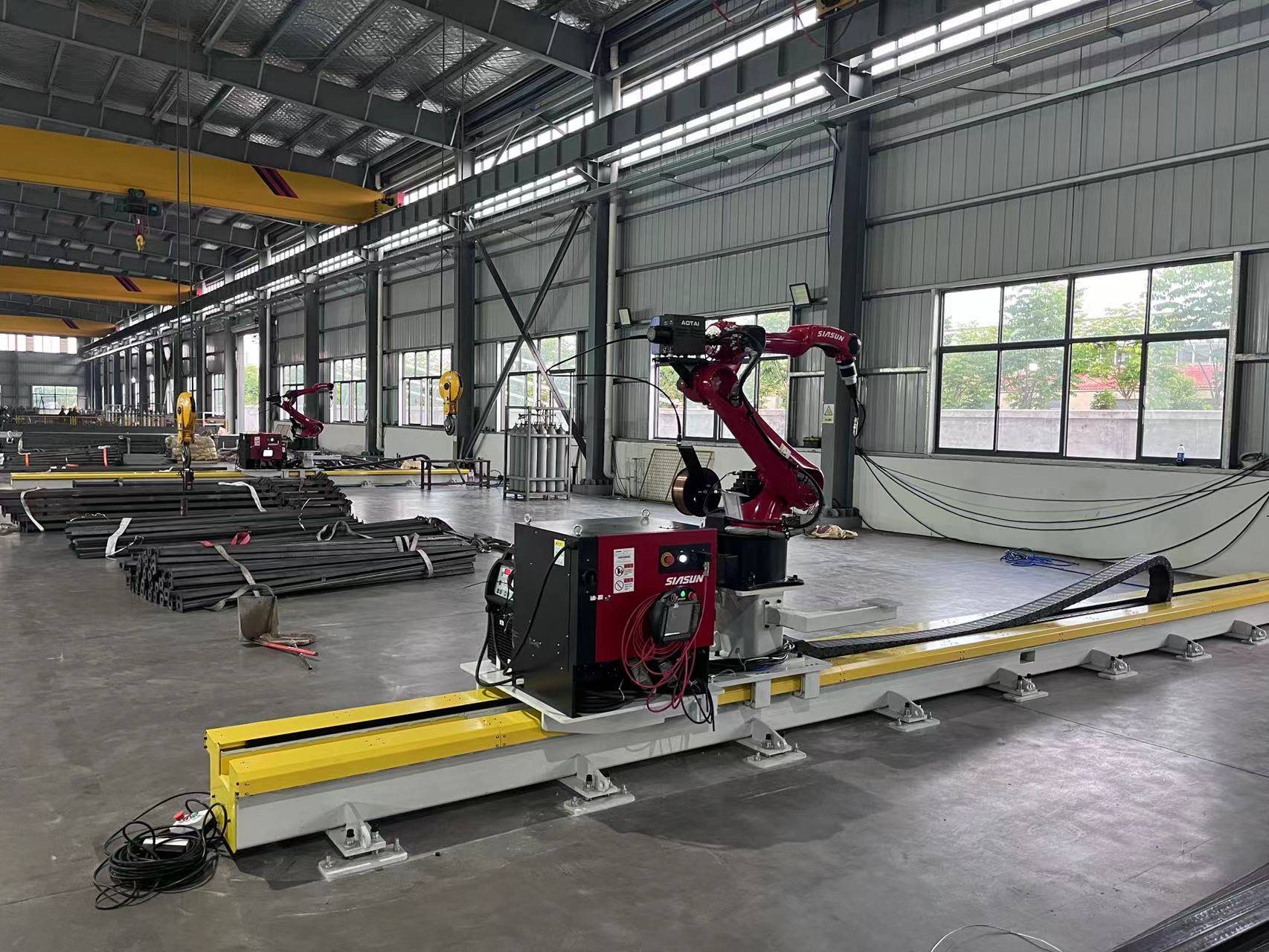
From an engineering standpoint, this flexibility allows for constant “push” or “pull” angles, which are critical for managing the arc force and fluid dynamics of the molten pool. In thick-plate MAG welding, maintaining a consistent arc length while navigating a 45-degree bevel requires micro-millisecond adjustments to the wire feed speed and voltage. Intelligent systems now use through-arc sensing to detect deviations in the groove geometry, allowing the robot to adjust its path in real-time to compensate for thermal distortion or fit-up tolerances.
Enhancing Deposition Rates through Advanced MAG Parameters
To maximize the ROI of a robotic cell, the deposition rate must exceed manual capabilities by a significant margin. This is achieved through the use of high-performance power sources that support pulse and double-pulse MAG welding. By pulsing the current, the system can achieve spray-transfer characteristics at lower average heat inputs, which reduces the Heat Affected Zone (HAZ) and minimizes the risk of structural warping in large frames.
Furthermore, robotic systems allow for the use of larger diameter wires (1.2mm to 1.6mm) that would be physically taxing for a human welder to manage over an eight-hour shift. The 5-axis head ensures that even with these high-energy arcs, the bead profile remains convex and well-fused to the sidewalls of the bevel. This precision reduces the need for post-weld grinding, which is a significant hidden cost in heavy fabrication shops.
Maintenance Protocols for High-Uptime Robotic Cells
For an industrial engineer, the success of a robotic installation is measured by its Mean Time Between Failures (MTBF) and its overall equipment effectiveness (OEE). Robotic MAG welding is a harsh process; the proximity of the torch to high-heat arcs and the constant expulsion of spatter necessitate a rigorous maintenance strategy. Without automated maintenance interventions, the system’s precision will degrade, leading to costly rework.
Automated Torch Cleaning Stations
Modern robotic cells must be equipped with integrated torch reaming stations. Every few cycles, the robot should automatically dock with a cleaning station that removes spatter from the gas nozzle and applies an anti-spatter compound. This ensures a laminar flow of shielding gas (typically an Argon/CO2 mix), which is vital for preventing oxidation in the weld metal. A clogged nozzle disrupts gas coverage, leading to atmospheric nitrogen contamination and embrittlement of the joint.
Contact Tip and Liner Lifecycle Management
The contact tip is the final point of electrical transfer to the welding wire. In high-duty cycle applications, the orifice of the contact tip will eventually “keyhole” or wear out, leading to arc instability. Industrial engineers should implement a predictive replacement schedule based on the number of meters of wire consumed. Similarly, the wire conduit liner must be cleared of debris regularly to prevent friction-induced wire nesting. By treating these components as scheduled consumables rather than reactive repairs, manufacturers can maintain a 95% or higher uptime for the welding cell.
Calculating Labor ROI and Throughput Gains
The most compelling argument for adopting an intelligent robotic welder with 5-axis capabilities is the Labor ROI. The construction machinery industry currently faces a critical shortage of certified welders capable of performing high-quality multi-pass welds on heavy plate. A robotic system does not replace the welder; it elevates the skilled worker to a “Robot Technician” or “Cell Supervisor” role, where they manage the output of two or three machines simultaneously.
When calculating ROI, engineers must look beyond simple hourly wage comparisons. Manual welding in heavy fab often has an “arc-on” time of only 25% to 30% due to fatigue, repositioning, and helmet-down preparation. In contrast, a robotic cell can maintain an arc-on time of 75% to 85%. Furthermore, the reduction in rework—which typically costs three to four times the original weld cost—provides a massive boost to the bottom line.
Quantitative Comparison: Manual vs. Robotic
Consider a heavy excavator boom requiring 50 meters of multi-pass welding. A manual welder may take 40 hours to complete the task, including positioning and cleaning. A 5-axis robotic system, capable of higher travel speeds and continuous movement, can often complete the same task in 10 to 12 hours. When factored over three shifts, the payback period for the welding automation capital expenditure is often less than 18 months, depending on the complexity of the parts and local labor rates.
System Integration and Future Scalability
Implementing a 5-axis beveling welder requires a holistic approach to the production line. Upstream processes, such as the preparation of the plates, must be held to tighter tolerances to ensure the robot can locate the seams accurately. However, with the advent of laser-based seam tracking (used for positioning, not cutting) and touch-sensing technology, the robot can now adapt to variations in the joint gap. This level of intelligence ensures that the structural integrity of the construction machinery is never compromised by human error or fatigue.
In conclusion, the deployment of intelligent robotic MAG welding systems is no longer a luxury for heavy equipment manufacturers; it is a technical necessity. By focusing on the precision of 5-axis beveling, the rigor of automated maintenance, and the clear metrics of labor ROI, industrial engineers can ensure their facilities remain competitive in a high-demand global market. The focus remains on metallurgical excellence and mechanical reliability, driving the industry toward a more efficient, data-driven future.