Optimization of LNG Infrastructure through Intelligent Robotic Welding
The construction of Liquefied Natural Gas (LNG) facilities, including storage tanks and complex piping networks, demands high-precision joints capable of withstanding cryogenic temperatures and extreme pressure. Traditionally, these projects relied heavily on manual labor, which introduces variability in weld quality and significant downtime. The transition to an Intelligent Robotic Welder represents a strategic shift in industrial engineering, prioritizing repeatability and structural integrity.
Unlike standard automation, intelligent systems leverage 3D vision positioning to navigate the structural irregularities common in large-scale LNG components. In the context of LNG projects, where 9% nickel steel or specialized stainless alloys are frequently utilized, the precision of the weld bead profile is non-negotiable. Robotic systems ensure that the thermal input is strictly controlled, preventing grain growth and maintaining the mechanical properties of the base material.
Technical Implementation of MAG Welding in Robotic Cells
Metal Active Gas (MAG) welding is the preferred process for heavy-duty LNG applications due to its high deposition rates and deep penetration capabilities. When integrated into a robotic cell, the MAG welding process is governed by digital power sources that communicate via high-speed Fieldbus protocols. This allows for real-time adjustment of voltage, wire feed speed, and gas flow rates.
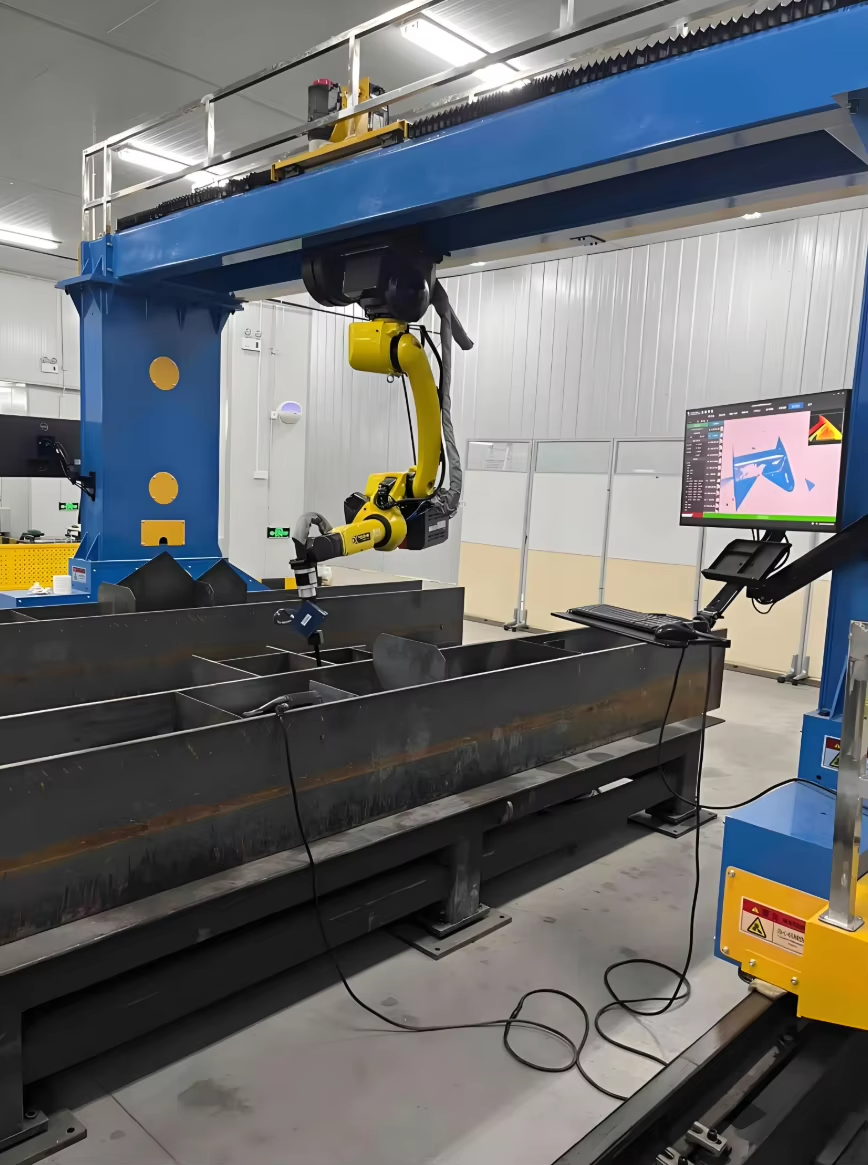
In LNG pipe spool fabrication, the robot manages multi-pass welding sequences. The 3D vision system scans the groove geometry before the arc ignition, calculating the exact volume required for the root, fill, and cap passes. This prevents over-welding, which reduces gas and wire consumption, and under-welding, which would lead to catastrophic failure in high-pressure gas environments. The active gas mixture—typically a combination of Argon and CO2—is regulated to stabilize the arc and minimize spatter, significantly reducing the post-weld cleaning requirements.
The Role of 3D Vision Positioning in Adaptive Control
One of the primary challenges in LNG construction is fit-up tolerance. Large diameter pipes and thick plates often exhibit slight deviations from the CAD model. 3D vision positioning solves this by providing the robot with “eyes.” Using structured light or laser triangulation, the vision sensor creates a high-resolution point cloud of the joint. The system then compares the real-world position to the programmed path and applies offsets in six degrees of freedom.
This adaptive control is critical for maintaining consistent torch angles and stand-off distances. During the welding process, the vision system can also perform “through-the-arc” sensing or real-time seam tracking to compensate for thermal distortion. As the metal heats up and expands, the robot dynamically adjusts its trajectory to stay centered in the groove. This level of autonomy eliminates the need for constant human intervention, allowing one operator to oversee multiple robotic stations.
Labor ROI and Productivity Metrics
The financial justification for deploying robotic welders in the LNG sector is centered on the labor ROI. Manual welding in this industry is constrained by the duty cycle of the human welder, which often hovers between 15% and 25% due to fatigue, positioning challenges, and environmental factors. In contrast, a robotic system can maintain a duty cycle exceeding 85%, operating continuously through shifts with only brief pauses for consumable replacement.
When calculating ROI, industrial engineers must consider the following factors:
Reduction in Defect Rates
Manual welding in cramped or elevated positions often leads to inclusions or porosity, requiring expensive X-ray inspections and rework. Robots produce a consistent weld profile that passes non-destructive testing (NDT) at a significantly higher rate, often exceeding 99% first-time yield.
Scalability of Skilled Labor
There is a global shortage of certified welders qualified for LNG-spec work. By utilizing robotic systems, a company can leverage its few highly skilled welding engineers to program and supervise robotic cells rather than performing manual tasks. This “force multiplier” effect allows projects to scale without a linear increase in headcount.
Maintenance Protocols for Robotic Welding Systems
To ensure the longevity and reliability of the investment, a rigorous preventive maintenance schedule is mandatory. Robotic systems in LNG environments are often exposed to dust, metallic particles, and fluctuating temperatures, which can affect the sensitivity of the 3D vision sensors and the precision of the mechanical arm.
Vision System Calibration
The 3D vision sensor requires periodic calibration to ensure the coordinate system of the sensor aligns perfectly with the robot’s tool center point (TCP). Optical lenses must be kept clean using automated air knives or manual cleaning cycles to prevent soot build-up from obscuring the laser line.
Torch and Consumable Management
The MAG torch is subject to intense thermal stress. Automated torch cleaning stations (reamers) should be integrated into the cell to remove spatter from the gas nozzle. Contact tips must be replaced based on wire throughput metrics rather than waiting for failure, as a worn tip can cause arc instability and degrade the weld quality. Additionally, the wire delivery system, including liners and drive rolls, must be inspected for friction increases that could lead to “bird-nesting” or inconsistent wire feed speeds.
Strategic Conclusion for LNG Operations
The integration of intelligent robotic welding is no longer an optional upgrade but a requirement for competitiveness in the LNG industry. By combining 3D vision positioning with the high-deposition capabilities of MAG welding, firms can achieve unprecedented levels of throughput and quality. The labor ROI is realized not just through faster welding speeds, but through the elimination of human error, the reduction of material waste, and the ability to maintain 24/7 production schedules. As global demand for LNG continues to rise, the ability to rapidly and reliably construct infrastructure will depend on the successful deployment of these automated systems.
-


LT240S tube laser cutting machine
-
LT120S tube laser cutting machine
-
Sale

Tank Fillet Welding Machine
Original price was: $1,000.00.$900.00Current price is: $900.00. -
Sale

MAK100 tube laser cutting machine
Original price was: $5,500.00.$5,000.00Current price is: $5,000.00. -

portable plasma air cutting machine
$1,200.00 -

2in1 fiber laser cutting machine
-

Air cooling Laser welding machine
-

HF h beam laser cutting machine
-

LT240 laser cutting machine
-

Laser welding machine
-


Cobotic Welding Station
-

Gantry welding robot solution
-

Tracked Wheeled AGV Welding robot
-

LFH6020 Fiber laser cutting machine
-
LFP6020
-

robotic welidng machine
Advanced Fiber Laser Tube Processing Technology
Our CNC Fiber Laser Tube Cutting systems revolutionize metal fabrication by integrating high-precision cutting, punching, and profiling into a single automated workflow. Designed for versatility, this technology handles a wide array of profiles including Round, Square, Rectangular, and Oval tubes, as well as complex L-shaped and U-shaped channels.
- Precision Punching: High-speed hole punching with micron-level accuracy, eliminating the need for mechanical drilling or die-stamping.
- Complex Profiling: Advanced 3D pathing allows for intricate interlocking joints and specialized notch cuts, ideal for structural frames.
- High Material Efficiency: Intelligent nesting software minimizes scrap, reducing raw material costs across large production runs.
- Clean Finish: Delivers oxide-free, burr-free edges that require zero secondary grinding before welding.

Seamlessly processing multiple profiles with consistent precision.
Global Delivery & Logistics



From our high-tech manufacturing facility directly to your global site. PCL WeldCut ensures secure packaging, professional handling, and reliable international logistics to safeguard your equipment throughout the entire journey.
