Precision Engineering of H-Beams for Medical Equipment Infrastructure
The manufacturing of medical equipment, particularly heavy-duty diagnostic structures like MRI gantry frames and robotic surgical platforms, demands structural integrity that precludes traditional manual fabrication. The primary challenge in processing H-beams for these applications is the management of thermal deformation. When laser-cutting thick-walled structural steel, the concentrated heat energy can alter the molecular grain structure, leading to warping or axial twisting. Modern H-beam laser machines resolve this through localized cooling cycles and high-frequency pulse modulation, ensuring that the structural dimensions remain within a tolerance of +/- 0.05mm over several meters of material.
Mitigating Operational Risks in High-Dust Environments
A significant risk in industrial laser processing is the degradation of the fiber laser source. In facilities where grinding or welding occurs concurrently, airborne particulates can infiltrate the optical path. High-end H-beam cutting systems utilize an IP65-rated sealed cabinet for the power source, coupled with an independent climate control unit. This prevents the “thermal lensing” effect where dust on the lens causes beam divergence, which would otherwise lead to inconsistent cut quality and expensive downtime in a medical-grade production line.
Parallel to source stability is the mechanical precision of material handling. The chuck centering system is the cornerstone of H-beam processing. Unlike standard tubes, H-beams possess an asymmetrical center of gravity. Advanced machines employ a four-chuck independent motion system. This allows for real-time compensation of material deviations. If a beam is slightly bowed, the sensors detect the deflection and adjust the chuck height mid-cut, preventing the vibration that typically occurs when an off-center mass rotates at high speeds. This centering precision is vital for medical frames that require perfect alignment for secondary assembly of electronic components.
Quantifying ROI: Labor Substitution and Zero-Tailing Economics
The transition from traditional mechanical processing to automated laser cutting represents a fundamental shift in capital expenditure versus operational savings. Traditionally, the fabrication of an H-beam frame involves three separate stages: sawing to length, drilling mounting holes, and milling notches or bevels. Each stage requires its own operator and material handling equipment. An integrated H-beam laser machine consolidates these into a single workflow. By automating the load-cut-unload sequence, a single technician can manage the output that previously required a crew of 3 to 5 workers. This reduction in man-hours significantly lowers the overhead for high-volume medical equipment tenders.
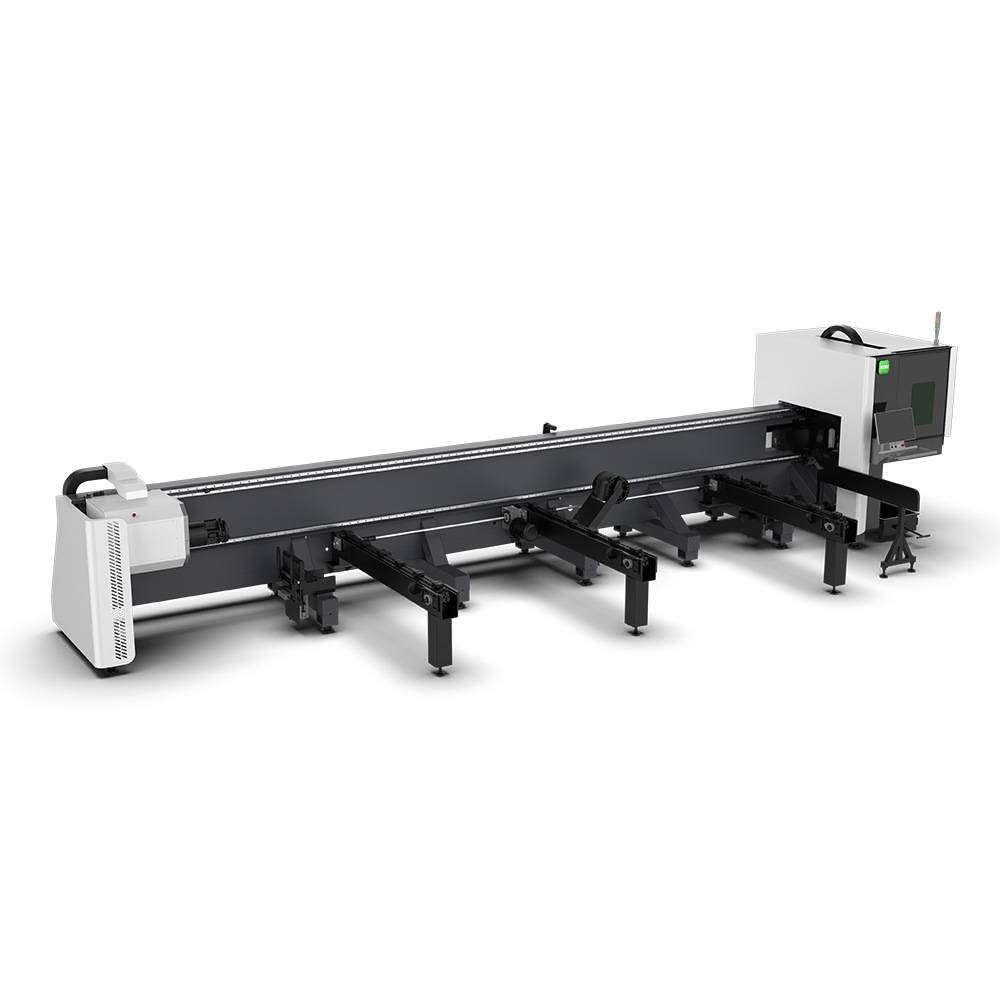
Material waste is another critical cost driver. Standard laser cutters often leave a “tail” of 20cm to 50cm at the end of the beam because the chuck cannot hold the material close enough to the cutting head. Implementation of zero-tailing technology utilizes a multi-chuck pass-through system where the leading and trailing chucks hand off the material. This allows the laser to cut within 10mm of the beam end, effectively saving 10-20cm of material per pipe. In high-grade structural steel used for medical devices, these savings translate to thousands of dollars in annual material cost recovery.
Technical Comparison: Traditional vs. Automated Laser Processing
| Performance Metric | Manual/Mechanical Processing | H-Beam Laser Machine |
|---|---|---|
| Labor Requirement | 3-5 Operators | 1 Operator |
| Material Utilization | 80% – 85% | Up to 95% |
| Tail Material Waste | 200mm – 400mm | 0mm – 10mm |
| Secondary Finishing | Deburring/Drilling Required | Ready for Assembly |
| Process Time (per beam) | 45-60 Minutes | 8-12 Minutes |
Intelligence Layers: Nesting Software and Seam Recognition
The efficiency of the hardware is maximized by specialized nesting software. This intelligence layer analyzes the entire production queue and arranges cuts to minimize rapid-move distances and scrap generation. For complex medical assemblies where various beam lengths are required, the software achieves up to 95% material utilization. It calculates the optimal pathing to ensure the laser head avoids heat-saturated zones, further mitigating the risk of structural warping during long-duration cuts.
Furthermore, medical frames often utilize welded H-beams rather than hot-rolled sections. This introduces the challenge of the weld seam. If a laser pierces directly on a seam, the variance in material density can cause a blow-out, ruining the part. Intelligent machines now feature auto-weld seam recognition. Using visual sensors or inductive profiling, the system identifies the seam location and rotates the part or adjusts the cutting parameters in real-time. This ensures that mounting holes or intricate notches are never positioned on the weld, maintaining the structural certification required for medical device compliance.
Conclusion: Advancing Medical Manufacturing Standards
The integration of H-beam laser machines with Thermal deformation control provides a distinct competitive advantage in the medical equipment sector. By addressing the core mechanical risks of fiber source instability and chuck misalignment, manufacturers ensure a repeatable, high-precision output. The economic benefits of labor consolidation and zero-tailing waste reduction provide a clear path to rapid ROI, while intelligent nesting and seam recognition software elevate the production quality to the standards necessitated by modern healthcare technology.
-

LT240S tube laser cutting machine
-
LT120S tube laser cutting machine
-
Sale

Tank Fillet Welding Machine
Original price was: $1,000.00.$900.00Current price is: $900.00. -
Sale

MAK100 tube laser cutting machine
Original price was: $5,500.00.$5,000.00Current price is: $5,000.00. -

portable plasma air cutting machine
$1,200.00 -

2in1 fiber laser cutting machine
-

Air cooling Laser welding machine
-

HF h beam laser cutting machine
-

LT240 laser cutting machine
-

Laser welding machine
-

Cobotic Welding Station
-

Gantry welding robot solution
-

Tracked Wheeled AGV Welding robot
-

LFH6020 Fiber laser cutting machine
-
LFP6020
-

robotic welidng machine
Advanced Fiber Laser Tube Processing Technology
Our CNC Fiber Laser Tube Cutting systems revolutionize metal fabrication by integrating high-precision cutting, punching, and profiling into a single automated workflow. Designed for versatility, this technology handles a wide array of profiles including Round, Square, Rectangular, and Oval tubes, as well as complex L-shaped and U-shaped channels.
- Precision Punching: High-speed hole punching with micron-level accuracy, eliminating the need for mechanical drilling or die-stamping.
- Complex Profiling: Advanced 3D pathing allows for intricate interlocking joints and specialized notch cuts, ideal for structural frames.
- High Material Efficiency: Intelligent nesting software minimizes scrap, reducing raw material costs across large production runs.
- Clean Finish: Delivers oxide-free, burr-free edges that require zero secondary grinding before welding.

Seamlessly processing multiple profiles with consistent precision.
Global Delivery & Logistics



From our high-tech manufacturing facility directly to your global site. PCL WeldCut ensures secure packaging, professional handling, and reliable international logistics to safeguard your equipment throughout the entire journey.
