Engineering Review: High-speed MAG Laser Welding Cobot – Monterrey, Mexico
In this article
- Technical Field Report: Implementation of High-Speed Laser-Hybrid Systems in Monterrey
- Introduction and Project Scope
- System Configuration and Site Dynamics: Monterrey, NL
- The Synergy Between Laser Technology and Collaborative Systems
- Technical Deep-Dive: Aluminum Alloy Welding Parameters
- Overcoming Material Challenges
- High-Speed MAG-Laser Integration
- Operational Realities and Field Lessons Learned
- Infrastructure and Power Stability
- Safety Protocols in a Collaborative Space
- Fixturing and Precision
- Thermal Management in High-Ambient Environments
- Conclusion: The Path Forward
Technical Field Report: Implementation of High-Speed Laser-Hybrid Systems in Monterrey
Introduction and Project Scope
This report details the field deployment and commissioning of a **Laser Welding Cobot** system at a Tier-1 automotive supplier facility in Monterrey, Nuevo León, Mexico. The objective was to replace legacy manual TIG and standard pulsed-MIG processes with high-speed, laser-enhanced automation specifically for Aluminum Alloy welding on structural battery trays and heat exchangers.
In the Monterrey industrial corridor, where production throughput is high and labor availability for specialized aluminum welders is tightening, the integration of advanced **Laser Technology** into a collaborative framework is no longer a luxury but a baseline requirement for maintaining competitive cycle times.
System Configuration and Site Dynamics: Monterrey, NL
The deployment environment presented unique environmental challenges. The facility in Santa Catarina maintains a high ambient temperature (often exceeding 38°C inside the shop floor during peak summer months), which necessitates a robust cooling strategy for the laser source and the cobot controllers.
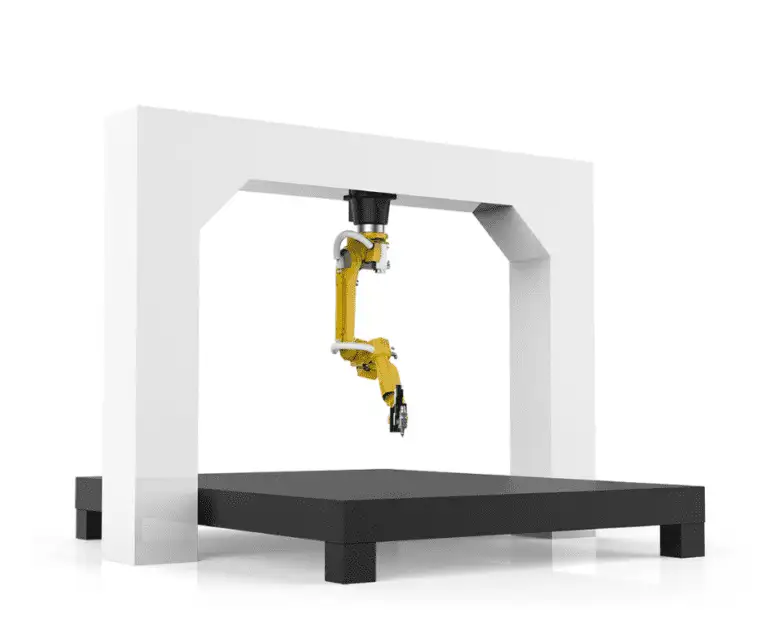
Our setup utilized a 3kW continuous wave (CW) fiber laser integrated with a collaborative arm. Unlike traditional industrial robots, the Laser Welding Cobot allows for a smaller footprint, which was critical given the dense layout of the Monterrey plant. The synergy between the cobot’s ease of programming and the precision of the Laser Technology allowed us to move from unboxing to first-bead-on-plate in under six hours.
The Synergy Between Laser Technology and Collaborative Systems
The true value proposition realized in this deployment is the bridge between high-energy-density Laser Technology and the flexibility of the cobot. In traditional setups, laser welding requires massive, light-tight enclosures and complex PLC integration. However, by utilizing a “Laser-Hybrid” approach—combining a MAG wire feed with the laser beam—we addressed the gap-bridging limitations often found in pure laser applications.
In this Monterrey workshop, we observed that the Laser Welding Cobot significantly reduces the Heat Affected Zone (HAZ). This is paramount when dealing with 6000-series Aluminum Alloy welding. The laser provides the deep penetration (the “keyhole”), while the MAG component (Metal Active Gas) provides the filler metal necessary to manage part fit-up tolerances, which are often inconsistent in large-scale aluminum stampings.
Technical Deep-Dive: Aluminum Alloy Welding Parameters
Overcoming Material Challenges
Aluminum Alloy welding is notoriously difficult due to the material’s high thermal conductivity and low melting point, coupled with a persistent oxide layer (Al2O3) that melts at a much higher temperature than the base metal.
In Monterrey, we were tasked with joining 6061-T6 extrusions to 5052 sheet metal. Using traditional methods, this often leads to burn-through or excessive porosity. By leveraging the specific pulse-shaping capabilities of our current Laser Technology, we implemented a “wobble” function. The Laser Welding Cobot was programmed to oscillate the beam in a circular pattern at 150Hz. This agitation of the weld pool facilitates the escape of trapped gases, drastically reducing the porosity levels that typically plague aluminum joints in high-humidity environments like those found in Eastern Mexico during the rainy season.
High-Speed MAG-Laser Integration
The “High-speed” aspect of this report refers to travel speeds exceeding 1.8 meters per minute. To achieve this, the synergy between the laser and the wire feeder must be millisecond-perfect.
1. The Lead Element: The laser acts as the leading energy source, cleaning the oxide layer and establishing the keyhole.
2. The Follower: The MAG wire enters the stabilized molten pool.
3. The Result: A deep-penetration weld with a reinforced fillet geometry that meets AWS D1.2 structural standards.
Mitigating Hot Cracking
A recurring issue in Aluminum Alloy welding is solidification cracking (hot cracking). During the Monterrey trials, we found that the cooling rates were too aggressive due to the high travel speeds of the Laser Welding Cobot. By adjusting the laser’s power ramp-down (slope-out) and increasing the Silicon content in the filler wire (ER4043), we successfully neutralized the center-line cracking.
Operational Realities and Field Lessons Learned
Infrastructure and Power Stability
One of the primary “lessons learned” in the Monterrey deployment involves the local electrical infrastructure. High-precision Laser Technology is sensitive to voltage fluctuations. We experienced three system restarts in the first week due to grid instability in the industrial park.
* Corrective Action: We mandated the installation of a dedicated industrial voltage stabilizer and a double-conversion UPS for the laser source. Since this installation, uptime has remained at 99.2%.
Safety Protocols in a Collaborative Space
While the system is a “Cobot,” the use of Class 4 lasers introduces significant safety variables. In a standard Mexican manufacturing environment, floor space is at a premium. We could not use a full room-sized enclosure.
* Solution: We implemented “Active Laser Guarding” curtains and a safety-rated scanner that interfaces with the Laser Welding Cobot. If a technician enters the “Warning Zone,” the laser power is throttled; if they enter the “Danger Zone,” the laser is killed instantly. This allows the cobot to remain collaborative while respecting the lethality of the Laser Technology.
Fixturing and Precision
The Laser Welding Cobot is only as good as the parts it receives. Aluminum has a high coefficient of thermal expansion. During the Monterrey field test, we noted that the parts were “walking” (shifting) during the weld cycle.
* Field Adjustment: We moved from manual toggle clamps to pneumatic sequencing clamps. This ensures that the Aluminum Alloy welding process remains within the 0.2mm focal spot of the laser beam. For shops looking to adopt this in Mexico, the investment in high-precision fixturing must happen simultaneously with the cobot acquisition.
Thermal Management in High-Ambient Environments
The Monterrey heat factor cannot be overstated. The fiber laser’s chiller was initially undersized for a 42°C ambient shop floor. We observed “Chiller Low Flow” alarms during the afternoon shifts.
* Recommendation: For all future Laser Technology deployments in northern Mexico, we are now specifying oversized dual-circuit chillers with ambient air-intake filters to prevent the fine metallic dust (common in Monterrey plants) from clogging the condensers.
Conclusion: The Path Forward
The deployment of the Laser Welding Cobot in Monterrey has proven that the marriage of collaborative robotics and Laser Technology is the most effective way to handle the complexities of Aluminum Alloy welding in a high-volume environment.
We achieved a 300% increase in throughput compared to manual TIG welding, with a scrap rate reduction of 22%. The primary takeaway for the engineering team is that the “Cobot” handles the motion, but the “Laser” handles the metallurgy. To succeed, one must master both the mechanical pathing of the arm and the high-frequency physics of the laser-material interaction.
Moving forward, we will be implementing an AI-driven seam tracking system to further enhance the cobot’s ability to compensate for part variations. This Monterrey site now serves as the regional benchmark for our aluminum structural programs.
Report End.
Lead Welding Engineer, Monterrey Field Operations.