Engineering Review: Double Pulse Fiber Laser Cobot – Istanbul, Turkey
In this article
- Field Engineering Report: Implementation of Double Pulse Fiber Laser Cobot in Istanbul’s…
- The Industrial Landscape of Istanbul and the Shift to Advanced Laser Technology
- Technical Challenge: The Metallurgy of Galvanized Pipe Welding
- Field Implementation: Synergy of Fiber Laser Cobot and Process Control
- Operational Data and Lessons Learned
- Technical Specifications for the Istanbul Configuration
- Conclusion: The Future of Turkish Fabrication
Field Engineering Report: Implementation of Double Pulse Fiber Laser Cobot in Istanbul’s Metal Fabrication Sector
This report details the technical commissioning and operational performance of a Double Pulse Fiber Laser Cobot system at a high-volume HVAC and structural support manufacturing facility located in the Dudullu Organized Industrial Zone, Istanbul. The primary objective was to replace traditional Gas Metal Arc Welding (GMAW) for galvanized pipe welding applications, which had been suffering from high reject rates due to porosity and excessive post-weld cleaning requirements.
The Industrial Landscape of Istanbul and the Shift to Advanced Laser Technology
Istanbul remains the heart of Turkey’s metalworking industry, with a dense concentration of Tier 1 and Tier 2 suppliers for the European automotive and construction markets. In these workshops, the pressure to maintain high throughput while meeting stringent ISO quality standards is immense. Traditional welding methods for galvanized materials often lead to a bottleneck: the “zinc problem.”
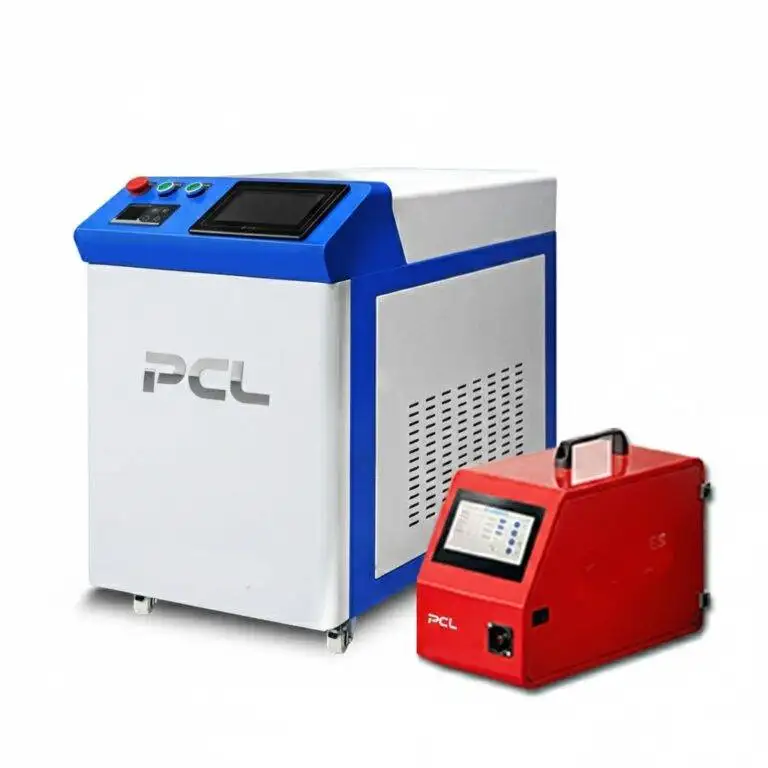
By integrating Laser Technology into the production line, we are not just changing the heat source; we are fundamentally altering the thermal dynamics of the joinery. The shift toward a Fiber Laser Cobot represents a move away from manual inconsistency. In the Dudullu workshop, the manual laser welding attempts were struggling with torch angle consistency, which is critical when dealing with the volatile nature of zinc coatings. The cobot provides the necessary mechanical repeatability to make the laser’s precision viable in a 24/7 production environment.
Technical Challenge: The Metallurgy of Galvanized Pipe Welding
Welding galvanized steel is notoriously difficult because of the massive disparity between the boiling point of zinc (approx. 907°C) and the melting point of steel (approx. 1538°C). When applying heat, the zinc coating vaporizes before the steel melts. In a traditional MIG/MAG setup, this vapor gets trapped in the weld pool, causing “blowholes” or internal porosity. Furthermore, the spatter generated by reacting zinc often adheres to the pipe surface, requiring labor-intensive grinding.
The application in Istanbul involved 2mm wall thickness galvanized pipes joined at 90-degree T-joints. Using standard Continuous Wave (CW) laser settings resulted in the same issues as MIG—trapped gas and erratic bead morphology. This is where the Double Pulse Fiber Laser Cobot became the only viable solution.
The Double Pulse Advantage
The “Double Pulse” feature in modern Laser Technology allows us to modulate the power output at high frequencies. We configured the system to alternate between a “Peak Power” (to penetrate the steel) and a “Base Power” (to allow the weld pool to partially solidify and let zinc vapors escape). This high-speed oscillation creates a “stirring” effect in the molten pool, which is essential for degassing.
Field Implementation: Synergy of Fiber Laser Cobot and Process Control
Deploying a Fiber Laser Cobot in an Istanbul workshop requires more than just unboxing equipment. It requires a synergy between the robotic pathing and the laser’s pulse parameters. During the first week of implementation, we focused on three core technical pillars:
1. Beam Manipulation and Wobble Parameters
Unlike traditional welding, the fiber laser has a very small spot size (typically 100–150 microns). For galvanized pipe welding, a static beam is too narrow to bridge the fit-up tolerances common in Turkish pipe mills. We utilized the “Wobble” function—integrated into the laser head—to oscillate the beam in a circular pattern at 250Hz. By widening the weld path to 2.0mm, we ensured better side-wall fusion while the cobot maintained a constant travel speed of 25mm/s.
2. Cobot Pathing and Torch Angle Consistency
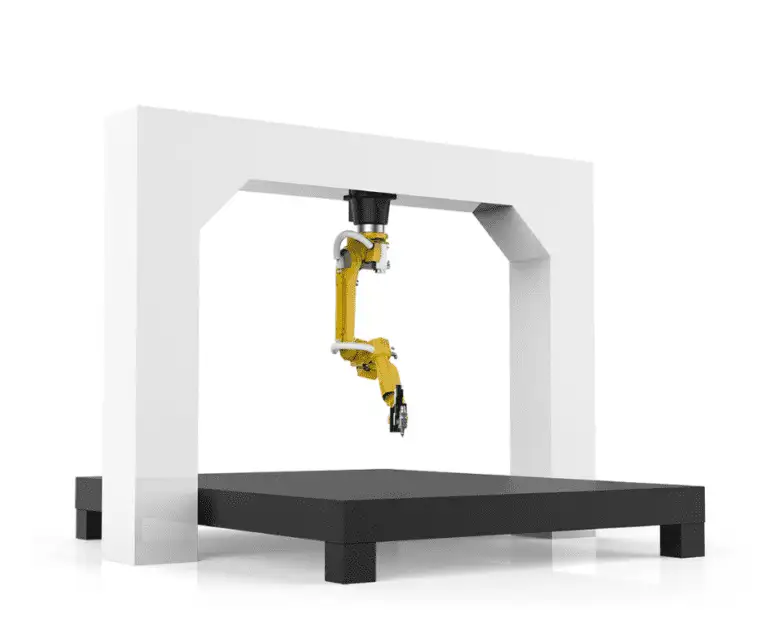
The cobot’s 6-axis articulation allowed us to maintain a consistent 75-degree push angle throughout the circumference of the pipe joint. In manual laser welding, the operator’s hand naturally fluctuates, changing the focus point. The cobot eliminates this variable. We programmed the cobot using a “Lead-Through” method, where the senior welder in the Dudullu shop physically moved the arm to the start and end points, and the software interpolated the circular path. This combined local craft knowledge with robotic precision.
3. Gas Shielding Dynamics
We switched from pure Argon to a Nitrogen/Argon mix for these galvanized joints. Nitrogen acts to slightly increase the surface tension of the melt, preventing the “sagging” of the bead during the high-heat phase of the double pulse. The gas flow was regulated at 15 L/min through a custom-made coaxial nozzle to ensure the zinc vapor was pushed away from the optical lens, protecting the expensive Laser Technology components.
Operational Data and Lessons Learned
After 30 days of operation in the Istanbul facility, the data showed a significant shift in production efficiency.
Cycle Time Reduction
Previously, a single T-joint on a 50mm galvanized pipe took 45 seconds to weld via MIG, plus 2 minutes of post-weld grinding and anti-spatter cleanup. The Fiber Laser Cobot completed the weld in 12 seconds with zero post-weld grinding required. The “Double Pulse” settings resulted in a “fish-scale” aesthetic usually only seen in high-end TIG welding, which the customer’s export partners in Germany found highly desirable.
Thermal Distortion
A major “lesson learned” was regarding heat input. Because the fiber laser is so concentrated, the Heat Affected Zone (HAZ) was reduced by 70% compared to GMAW. This meant the pipes remained dimensionally stable, eliminating the need for expensive post-process straightening jigs. This is a critical factor for Istanbul shops where floor space is at a premium and every extra jig adds to the overhead.
Safety and Environment
Laser safety in a crowded Istanbul workshop is a non-negotiable. We installed a Class 4 laser enclosure with interlocked doors. We also found that the double pulse mode, while cleaner, still produces fine zinc oxide dust. We had to upgrade the local extraction system to a high-efficiency particulate air (HEPA) filter specifically rated for laser fumes. Lesson Learned: Never underestimate the volume of sub-micron particulate matter generated by high-speed laser vaporization of zinc.
Technical Specifications for the Istanbul Configuration
For engineers looking to replicate these results in similar galvanized pipe welding applications, the following parameters were our “sweet spot”:
- Laser Power: 2000W Fiber Source.
- Double Pulse Frequency: 150 Hz.
- Duty Cycle: 60% (Peak/Base ratio).
- Wobble Width: 1.8mm at 200Hz (Circular pattern).
- Travel Speed: 1.5 meters per minute.
- Shielding Gas: 100% Nitrogen (for a cleaner, silver-finish bead on 2mm galv).
Conclusion: The Future of Turkish Fabrication
The integration of the Fiber Laser Cobot in Istanbul has proven that the “zinc barrier” in galvanized pipe welding is no longer an obstacle to automation. By leveraging advanced Laser Technology and the specific control afforded by double pulsing, we have moved from a process defined by “managing defects” to one defined by “precision execution.”
The lessons learned here are clear: the hardware (the cobot) provides the repeatability, but the software (the double pulse modulation) provides the metallurgy. For the Turkish market to remain competitive in European exports, the transition from manual, high-heat processes to automated, low-distortion laser processes is no longer optional—it is a requirement. We will continue to monitor the Dudullu site, but the initial 5,000 units produced indicate a total success in both structural integrity and cosmetic finish.