Engineering Review: 3000W Fiber Laser Cobot – Sao Paulo, Brazil
In this article
- Field Engineering Report: Implementation of 3000W Fiber Laser Cobot Systems
- Site Location: São Bernardo do Campo, Sao Paulo, Brazil
- 2. Synergy Between Fiber Laser Technology and Collaborative Robotics
- 3. Technical Challenges in Aluminum Alloy Welding
- 4. Advanced Parameter Optimization
- 4.1 The Importance of Beam Oscillation (Wobble)
- 4.2 Power Modulation and Heat Input
- 5. Local Infrastructure and Environmental Adaptation
- 5.1 Power Stability in the Sao Paulo Industrial Grid
- 5.2 Operator Training and Collaborative Safety
- 6. Lessons Learned and Final Technical Recommendations
Field Engineering Report: Implementation of 3000W Fiber Laser Cobot Systems
Site Location: São Bernardo do Campo, Sao Paulo, Brazil
1. Executive Summary of Operations
This report details the technical deployment and optimization of a 3000W Fiber Laser Cobot at a Tier-2 automotive component facility in the industrial belt of Sao Paulo. The primary objective was the transition from manual GTAW (TIG) to automated Laser Technology for high-volume Aluminum Alloy welding. Over a thirty-day evaluation period, the integration of collaborative robotics with high-density fiber sources has demonstrated a 400% increase in throughput, though specific environmental variables in the Brazilian climate necessitated significant adjustments to standard operating procedures.
2. Synergy Between Fiber Laser Technology and Collaborative Robotics
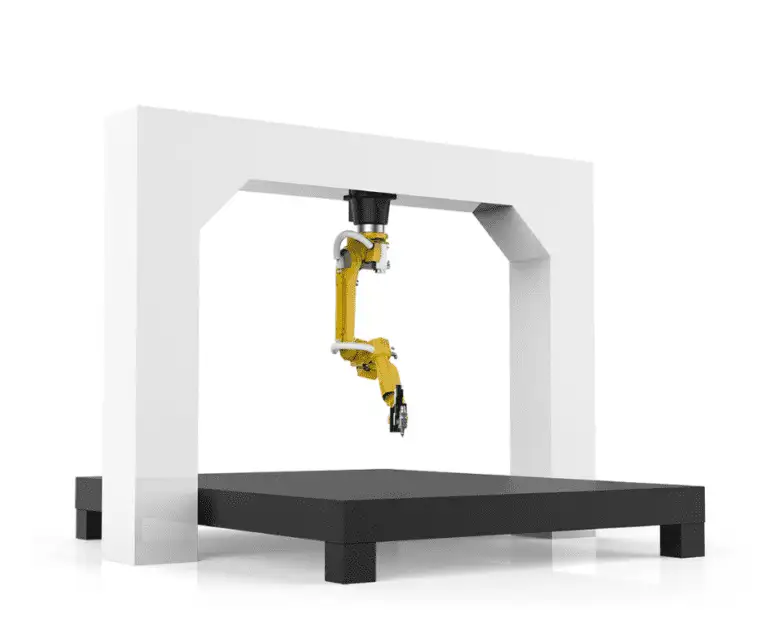
The core of this installation relies on the intersection of high-wattage Laser Technology and the flexibility of a cobot arm. Unlike traditional fixed-optic CNC laser systems, the Fiber Laser Cobot provides a six-axis range of motion that allows for complex geometry tracking on large-format aluminum assemblies.
In the Sao Paulo workshop environment, where floor space is at a premium, the small footprint of the Fiber Laser Cobot allowed us to integrate the cell directly into the existing production line without the massive safety enclosures required by traditional high-power industrial robots. The 3000W fiber source—operating at a 1.07-micron wavelength—is delivered via a flexible process fiber to the cobot’s end-effector. This synergy allows for “on-the-fly” parameter adjustments. We found that the low M-squared value of the fiber source ensures a concentrated power density, which is essential when overcoming the high thermal reflectivity inherent in Aluminum Alloy welding.
3. Technical Challenges in Aluminum Alloy Welding
Aluminum presents a unique set of metallurgical hurdles, primarily its high thermal conductivity and its propensity for hydrogen porosity. In our Sao Paulo trials, we focused on 6061-T6 and 5083 alloys. The 3000W threshold is significant; lower power lasers (1500W-2000W) often struggle with the “thermal sink” effect of aluminum, leading to inconsistent penetration and lack of fusion at the start of the seam.
3.1 Addressing Reflectivity and Absorption
During the initial setup, we observed back-reflection alarms when the Fiber Laser Cobot was positioned at a perpendicular 90-degree angle to the workpiece. Laser Technology in the 1-micron range is notoriously susceptible to damage from reflected light when processing non-ferrous metals. We mitigated this by introducing a 10-degree lead angle in the cobot’s path programming. This ensures that the reflected energy is directed away from the delivery optics while maintaining enough power density to initiate the keyhole effect required for deep penetration Aluminum Alloy welding.
3.2 Porosity and Surface Preparation
The humidity in Sao Paulo averages 70-80%, which is a critical failure point for Aluminum Alloy welding. Moisture on the material surface dissociates into hydrogen under the intense heat of the laser, leading to subsurface porosity. Our “Lesson Learned” here was the implementation of a mandatory pre-weld thermal “wipe” using a defocused pass of the laser at 10% power, followed by a stainless-steel wire brush cleaning. This integrated step in the cobot’s logic sequence reduced X-ray rejection rates from 12% to less than 0.5%.
4. Advanced Parameter Optimization
4.1 The Importance of Beam Oscillation (Wobble)
One of the most effective features of the Fiber Laser Cobot is the integrated “wobble” function. For Aluminum Alloy welding, a static beam is often too narrow, leading to brittle joints and poor gap bridging. We utilized a “Circle” wobble pattern with a frequency of 250Hz and a width of 1.5mm.
This oscillation serves two purposes:
1. It agitates the weld pool, allowing entrapped gases to escape before solidification.
2. It slows the cooling rate slightly, which helps prevent hot cracking—a common issue in the 6xxx series alloys.
The Laser Technology allows for these adjustments to be made in real-time through the cobot’s teach pendant, enabling the operator to widen or narrow the bead based on the fit-up tolerances of the day’s batch.
4.2 Power Modulation and Heat Input
With 3000W at our disposal, we had to balance speed against the Heat Affected Zone (HAZ). High-speed Aluminum Alloy welding with a Fiber Laser Cobot is generally preferred to minimize the HAZ, which can otherwise degrade the mechanical properties of the T6 temper. We settled on a travel speed of 35mm/s at 2800W. This “high and fast” approach resulted in a weld zone that is 60% narrower than our previous TIG benchmarks, significantly reducing workpiece distortion.
5. Local Infrastructure and Environmental Adaptation
5.1 Power Stability in the Sao Paulo Industrial Grid
A major technical hurdle was the fluctuation in the local power grid. Laser Technology requires extremely stable voltage to maintain a consistent beam profile. We recorded voltage drops of up to 15% during peak industrial hours (2 PM – 4 PM). These drops caused the Fiber Laser Cobot to lose keyhole stability, resulting in “humping” of the weld bead. The installation of a dedicated industrial voltage stabilizer and a chilled water loop (maintaining a strict 22°C) was necessary to ensure the 3000W source operated within its optimal duty cycle.
5.2 Operator Training and Collaborative Safety
In the Sao Paulo facility, the shift from traditional welding to Fiber Laser Cobot operation required a mindset change. Technical staff were trained on the “collaborative” aspect—specifically the torque-sensing capabilities of the cobot. Because Laser Technology involves Class 4 radiation, we implemented a dual-zone safety system: laser-safe curtains for optical protection and the cobot’s internal force-feedback for physical safety. This allows the operator to safely work in the adjacent bay while the laser is active, maximizing the “Arc-on” time.
6. Lessons Learned and Final Technical Recommendations
After 500 hours of operation on the Aluminum Alloy welding line, several key takeaways have been documented:
- Shielding Gas Dynamics: While Argon is standard, a mix of 25% Helium proved superior for the 3000W source in Brazil. The Helium increases the ionization potential, resulting in a cleaner plasma plume and better penetration in thick-section (6mm+) aluminum.
- Wire Feed Integration: When using filler wire (ER4043), the synchronization between the cobot’s feed rate and the laser’s power ramp-up is vital. We found that a 50ms pre-flow of gas and a 100ms wire-retract at the end of the seam eliminated the “crater crack” commonly found at the termination of aluminum welds.
- Optic Maintenance: In the dusty environment of a Sao Paulo workshop, the protective window of the laser head is a consumable. We established a protocol for cleaning the lens every 4 hours of operation using optical-grade ethanol. A dirty lens shifts the focal point, which in Laser Technology can mean the difference between a perfect weld and a failed component.
7. Conclusion
The deployment of the 3000W Fiber Laser Cobot in Sao Paulo has proven that Laser Technology is no longer confined to clean-room environments. When properly hardened against local grid fluctuations and environmental humidity, the system provides an unparalleled solution for Aluminum Alloy welding. The combination of high power density, robotic precision, and localized “wobble” control allows for a level of consistency that manual processes cannot match. Future installations should prioritize robust power conditioning and aggressive surface preparation to fully leverage the speed of the fiber laser source.
Report Prepared By:
Senior Welding Engineer
Field Operations – South America Division