Engineering Review: 3000W Fiber Laser Cobot – Cape Town, South Africa
In this article
- Field Engineering Report: Implementation of 3000W Fiber Laser Cobot Systems
- Site Location: Montague Gardens, Cape Town, South Africa
- The Synergy of Fiber Laser Cobot and Modern Laser Technology
- Laser Technology: The 1070nm Advantage
- The Collaborative Factor: Precision and Path Control
- Technical Challenges in Titanium Welding
- Managing the Atmospheric Shield
- Environmental and Infrastructure Considerations in Cape Town
- Power Stability and Load Shedding
- Salt Air and Optical Maintenance
- Comparative Analysis: TIG vs. Fiber Laser Cobot
- Lessons Learned and Best Practices
- Conclusion
Field Engineering Report: Implementation of 3000W Fiber Laser Cobot Systems
Site Location: Montague Gardens, Cape Town, South Africa
This report details the operational deployment and performance evaluation of a 3000W Fiber Laser Cobot unit within a high-precision fabrication facility in Cape Town. The primary objective was to transition from manual GTAW (TIG) processes to automated Laser Technology for the joining of Grade 2 and Grade 5 Titanium components used in the local maritime and aerospace sectors.
In the South African context, specifically the Western Cape, we face unique environmental stressors—high salt-air salinity and intermittent power stability (load shedding). These factors significantly influence the deployment of sensitive Laser Technology. This report outlines the technical synergy between the robotic arm (cobot) and the fiber laser oscillator, focusing on the specific metallurgical requirements of Titanium welding.
The Synergy of Fiber Laser Cobot and Modern Laser Technology
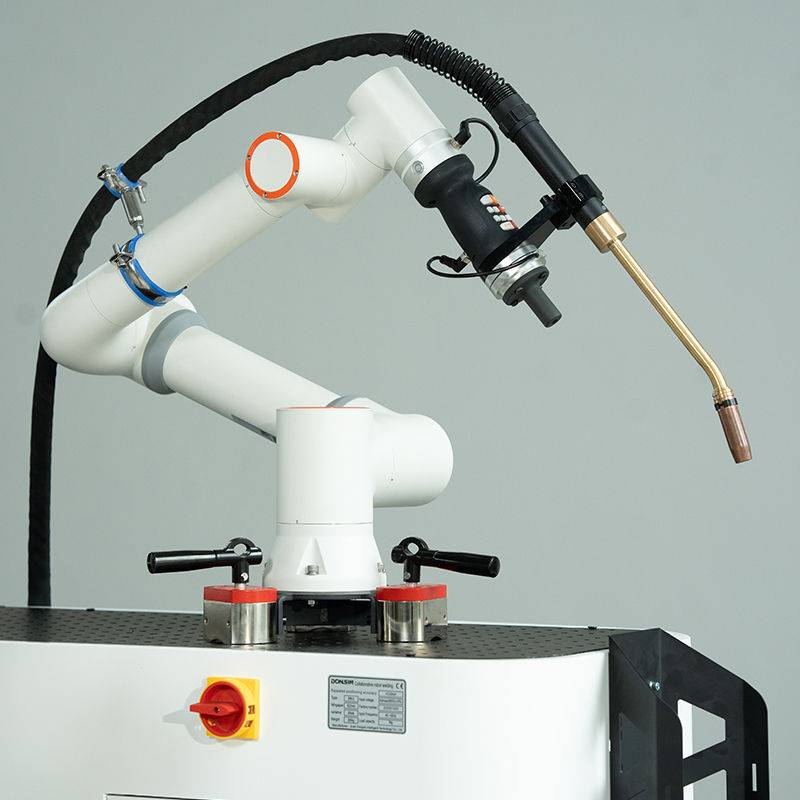
The core of this installation is a 3000W continuous wave (CW) fiber laser source coupled with a 6-axis collaborative robot. While manual laser welding has gained traction, it lacks the repeatability required for ISO 3834-2 certification in critical applications. The Fiber Laser Cobot bridges the gap between manual flexibility and the rigid precision of traditional industrial robots.
Laser Technology: The 1070nm Advantage
The 3000W fiber source operates at a wavelength of approximately 1070nm. This specific Laser Technology allows for high absorption rates in titanium, which is notoriously difficult to manage with CO2 lasers due to reflectivity and thermal conductivity issues. The high power density of a 3000W unit allows for a “keyhole” welding mode at significantly higher speeds than TIG, which is vital for minimizing the Heat Affected Zone (HAZ).
In our Cape Town facility, the Laser Technology was calibrated to deliver a concentrated beam with a spot size of 150μm. This density ensures that the energy is localized, a critical requirement for Titanium welding to prevent the grain growth that leads to embrittlement.
The Collaborative Factor: Precision and Path Control
The “Cobot” element of the Fiber Laser Cobot system provides a level of path consistency that no human operator can replicate. During the welding of 6mm Titanium plates, the cobot maintained a constant travel speed of 25mm/s with a torch-to-workpiece distance variance of less than 0.1mm. This level of control is essential because Laser Technology is highly sensitive to focal point shifts. If the distance fluctuates, the energy density drops, leading to lack of fusion or excessive spatter.
Technical Challenges in Titanium Welding
Titanium welding is an unforgiving process. Titanium’s affinity for oxygen, nitrogen, and hydrogen at temperatures above 400°C requires a rigorous gas shielding strategy. In a coastal environment like Cape Town, atmospheric moisture can introduce hydrogen, leading to porosity and delayed cracking.
Managing the Atmospheric Shield
To successfully integrate the Fiber Laser Cobot for Titanium welding, we engineered a custom trailing shield mounted directly to the cobot’s flange. The shield provides a laminar flow of 99.999% pure Argon over the weld pool and the cooling bead.
Because the Laser Technology allows for such high speeds, the trailing shield must be significantly longer than those used in manual welding. We found that at a travel speed of 20mm/s, a 150mm trailing shield was necessary to keep the titanium under cover until it cooled below the critical 400°C threshold. The cobot’s ability to maintain a perfectly perpendicular orientation to the weld path ensured that the gas envelope was never compromised.
Wobble Parameters and Fit-up
One of the lessons learned in this field deployment concerns part fit-up. Laser Technology typically requires near-perfect joint preparation (gaps < 0.1mm). However, in real-world South African fabrication, these tolerances are hard to maintain. To compensate, we utilized the "wobble" function of the Fiber Laser Cobot. By oscillating the beam in a circular pattern at 150Hz with a width of 2.0mm, we were able to bridge gaps of up to 0.8mm while still maintaining the structural integrity of the Titanium welding joint.
Environmental and Infrastructure Considerations in Cape Town
Deploying high-end Laser Technology in Cape Town presents two major hurdles: the electrical grid and the maritime climate.
Power Stability and Load Shedding
A 3000W Fiber Laser Cobot is sensitive to voltage fluctuations. During the commissioning phase, we observed that sudden frequency shifts in the municipal grid could cause the laser oscillator to trip or, worse, result in a “stutter” in the beam delivery. For Titanium welding, a stutter is catastrophic, as it creates a localized spot of oxidation.
We addressed this by installing a dedicated double-conversion online UPS and a voltage stabilizer. This ensures that even if the facility switches to generator power during load shedding, the Laser Technology maintains a consistent power output, preserving the integrity of the weld pool.
Salt Air and Optical Maintenance
The facility’s proximity to the Atlantic Ocean means the air is laden with salt and humidity. Fiber laser optics are extremely sensitive to contaminants. Any particulate on the protective lens will absorb the 3000W of energy and shatter the lens instantly.
Our protocol now includes a pressurized, filtered air system for the laser head’s “air knife.” This creates a positive pressure barrier that prevents Cape Town’s corrosive dust and moisture from reaching the optics. Furthermore, we implemented a twice-daily optical inspection routine, which has reduced our consumable costs by 40% compared to the first month of operation.
Comparative Analysis: TIG vs. Fiber Laser Cobot
To justify the capital expenditure, we ran a head-to-head comparison on a batch of 50 titanium heat exchanger housings.
Manual GTAW (TIG) Results:
- Total time per unit: 4.5 hours.
- Post-weld cleaning: Extensive (due to large HAZ and oxidation).
- NDT failure rate: 8% (mostly due to tungsten inclusions and porosity).
Fiber Laser Cobot Results:
- Total time per unit: 18 minutes.
- Post-weld cleaning: Minimal (beads were “silver” status, indicating zero oxidation).
- NDT failure rate: <1% (one failure due to a programmed path error, easily corrected).
The synergy between the Laser Technology and the Fiber Laser Cobot resulted in a nearly 15x increase in throughput. More importantly, the Titanium welding quality was significantly higher; the reduced heat input meant that the base metal’s mechanical properties remained closer to their original annealed state.
Lessons Learned and Best Practices
1. Gas Quality is Non-Negotiable: In Titanium welding, even “standard” industrial Argon is often insufficient. We moved to a bulk liquid Argon system with a de-mister to ensure gas purity.
2. Cobot Programming for Curves: When using the Fiber Laser Cobot on curved titanium pipes, standard point-to-point programming results in faceted welds. We switched to “Linear Interpolation” with a high refresh rate to ensure the Laser Technology maintained a constant surface speed.
3. The “Silver” Standard: Any weld that shows even a straw-yellow tint is unacceptable for our aerospace clients. We learned that the Fiber Laser Cobot must be programmed with a “post-flow” dwell time, where the cobot remains at the end of the weld for 10 seconds to allow the crater to cool under the gas shield.
4. Operator Training: The skill shift is significant. Our welders had to stop thinking about “puddle control” and start thinking about “parameter management.” Understanding how the Laser Technology interacts with the material is more important than manual dexterity in this new paradigm.
Conclusion
The implementation of the 3000W Fiber Laser Cobot in Cape Town has proven that high-precision Titanium welding can be successfully automated even in challenging industrial environments. The Laser Technology provides the necessary speed and thermal control to produce high-integrity joints, while the cobot ensures the repeatability required for international certification. As we continue to refine our trailing shield designs and power management strategies, this system will serve as the benchmark for specialized fabrication in the region.





