Intelligent Robotic Welder with 3D Vision positioning for Pressure Vessels
In this article
- The Engineering Shift to Intelligent Pressure Vessel Fabrication
- Overcoming Fit-Up Deviations with 3D Vision positioning
- MAG Welding Parameter Optimization for Thick-Walled Vessels
- Intelligent Weld Path Correction and Multi-Pass Management
- Maintenance Protocols for High-Availability Robotic Cells
- Analyzing the Return on Investment and Labor Economics
- Conclusion: The Future of Pressure Vessel Engineering
The Engineering Shift to Intelligent Pressure Vessel Fabrication
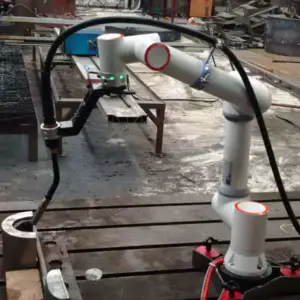
In the high-stakes environment of pressure vessel manufacturing, the transition from manual Gas Metal Arc Welding to intelligent robotic systems is no longer a luxury but a requirement for operational viability. Pressure vessels, which must withstand extreme internal pressures and thermal cycling, require absolute weld integrity. Traditional manual welding methods are increasingly hindered by human fatigue, inconsistency in bead geometry, and a shrinking pool of Tier 1 certified welders. The implementation of 3D-guided robotic cells addresses these variables by providing a repeatable, data-driven methodology for circumferential and longitudinal seams.
Overcoming Fit-Up Deviations with 3D Vision positioning
One of the primary challenges in pressure vessel fabrication is the physical inconsistency of large-scale workpieces. Heavy steel plates, once rolled into cylinders, rarely exhibit perfect circularity or uniform edge preparation. In a traditional robotic setup, these deviations lead to weld defects, as the robot follows a fixed, pre-programmed path regardless of the actual joint location.
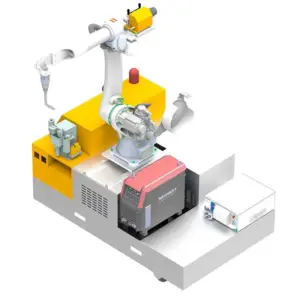
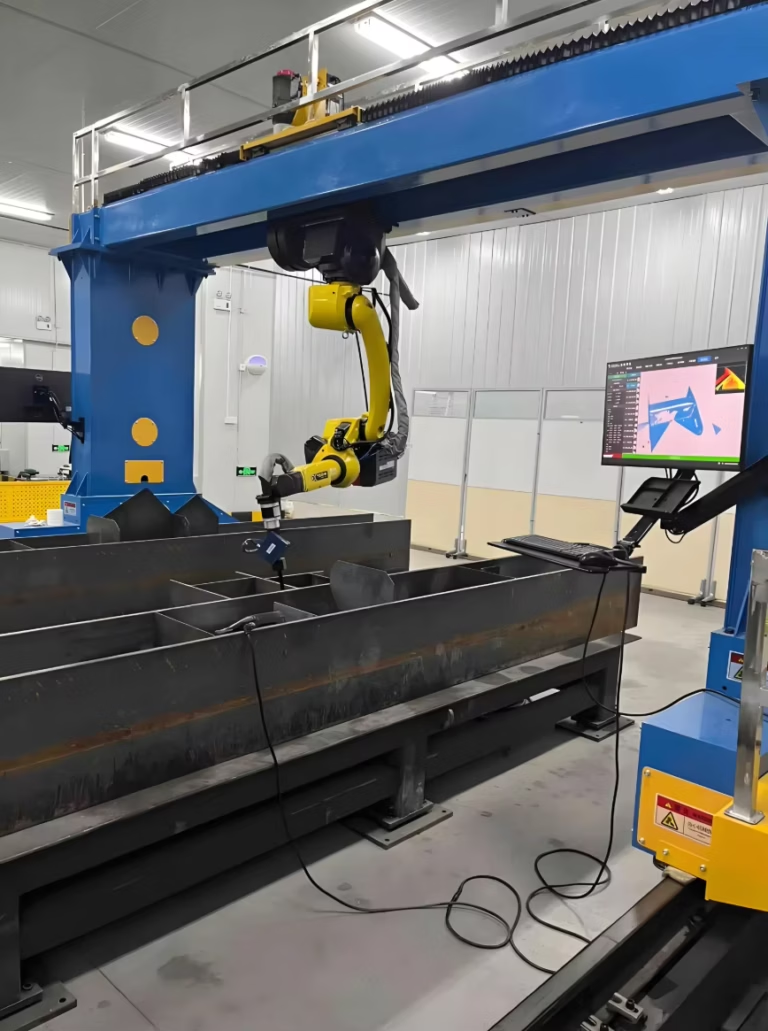
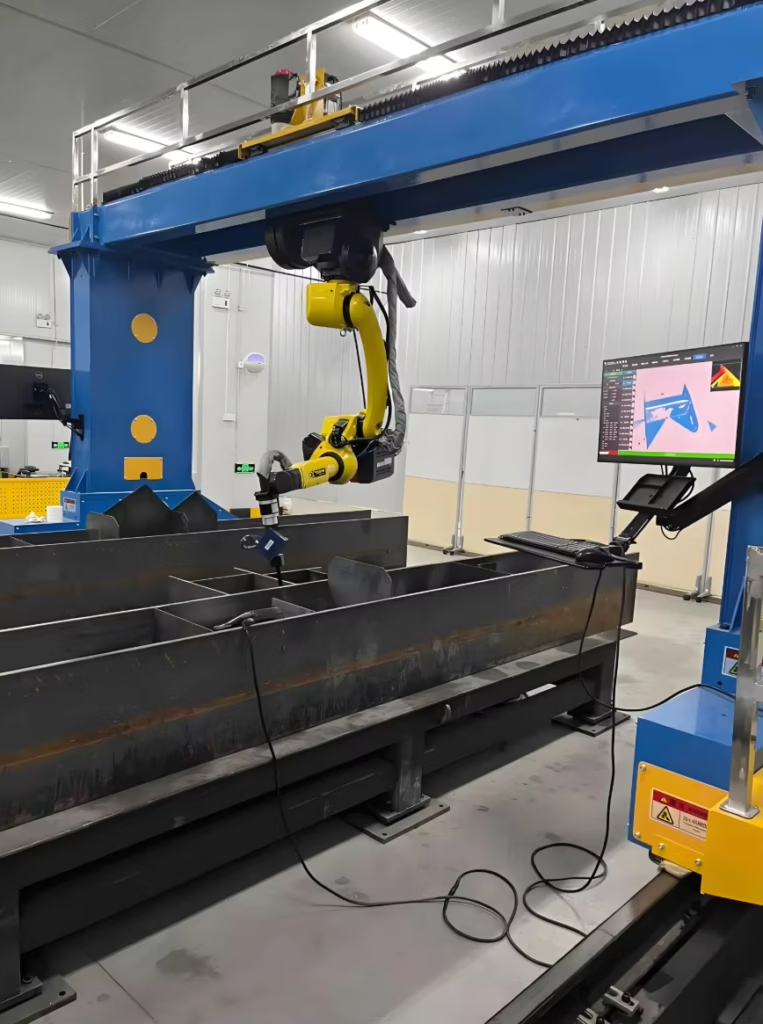
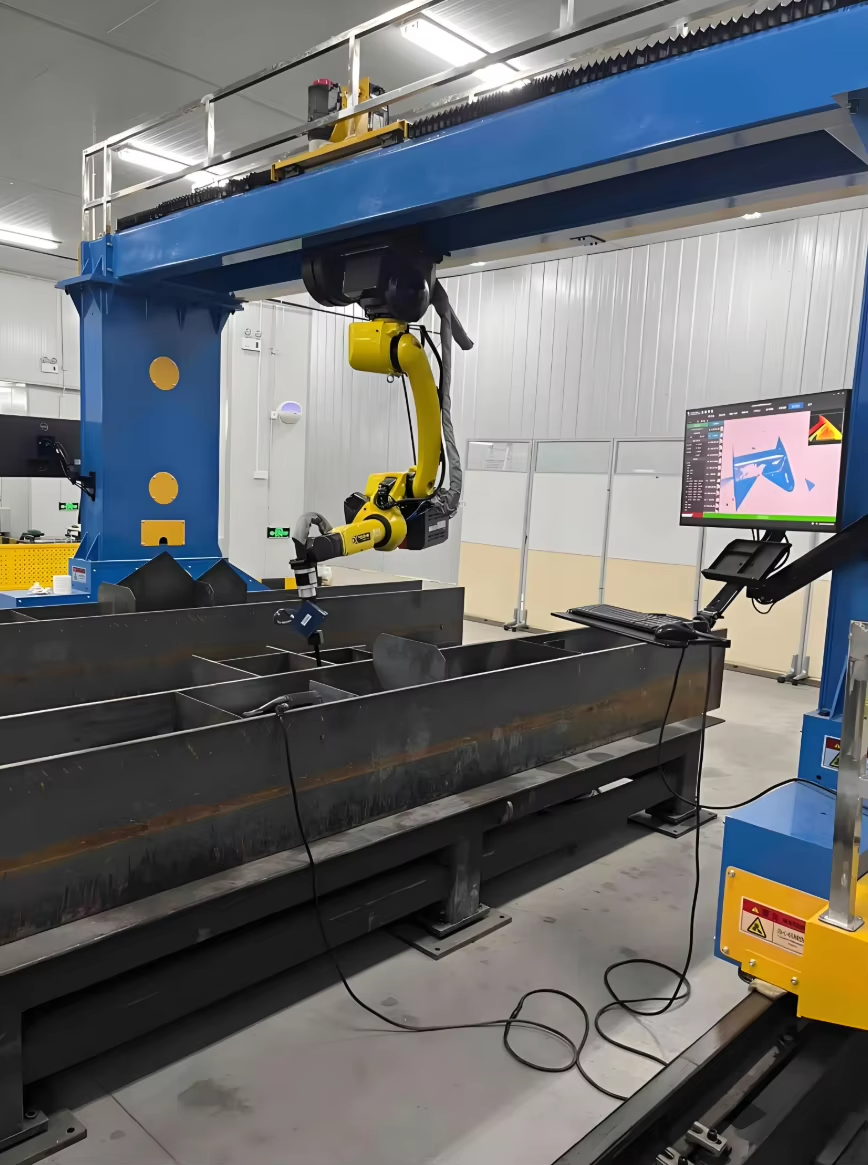
Integrating 3D vision positioning allows the robotic controller to perceive the workpiece in three-dimensional space. Using structured light or laser-triangulation sensors, the system scans the weld joint immediately prior to the arc ignition. This data creates a precise point cloud that identifies the gap width, root opening, and offset between the two plates. The robot’s trajectory is then adjusted in real-time to ensure the wire remains centered in the joint, maintaining the correct torch-to-work distance and travel angle. This capability eliminates the need for expensive, high-precision jigging, as the software compensates for the tolerances inherent in heavy metal fabrication.
MAG Welding Parameter Optimization for Thick-Walled Vessels
The Metal Active Gas (MAG) process is preferred for Pressure Vessels due to its high deposition rates and deep penetration characteristics. When automated, the MAG process can achieve duty cycles exceeding 85%, compared to the 30-40% typically seen in manual operations. For pressure vessel applications, the use of an 80/20 Argon/CO2 shielding gas mixture is standard to achieve a stable spray transfer mode, which minimizes spatter and ensures a smooth fusion line.
Robotic MAG systems allow for the precise control of the heat-affected zone (HAZ). By maintaining a constant travel speed and wire feed rate, the intelligent system ensures that the heat input remains within the limits specified by the Welding Procedure Specification (WPS). This level of control is critical for maintaining the mechanical properties of the base metal, particularly in high-tensile steels used for industrial boilers and storage tanks.
Intelligent Weld Path Correction and Multi-Pass Management
For thick-walled vessels, a single pass is rarely sufficient. Robotic systems equipped with intelligent weld path correction software can manage complex multi-pass sequences autonomously. After the root pass is completed, the 3D vision system can re-scan the surface to determine the remaining volume of the groove. The system then calculates the optimal number of fill and cap passes, adjusting the oscillation width and dwell times to ensure total side-wall fusion. This prevents the formation of slag inclusions or lack-of-fusion defects that are common in manual multi-pass welding where the welder’s visibility might be obscured by the torch nozzle.
Maintenance Protocols for High-Availability Robotic Cells
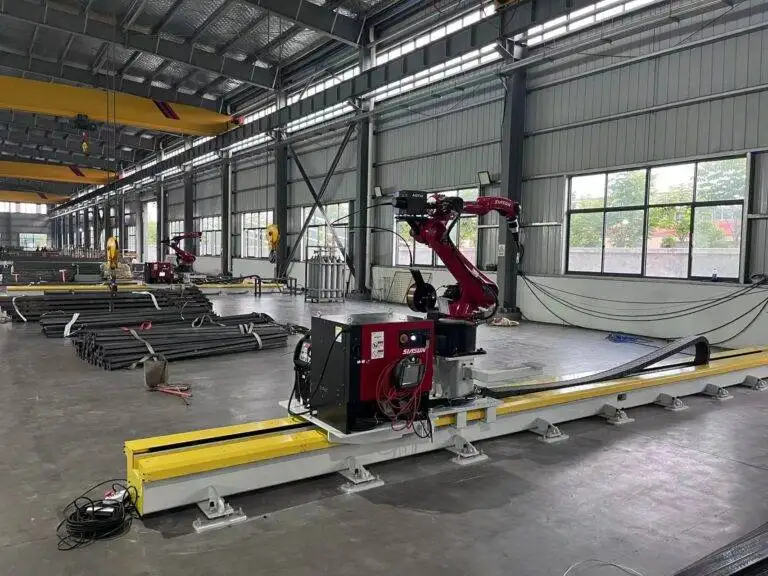
From an industrial engineering perspective, the reliability of the robotic cell is measured by its Mean Time Between Failures (MTBF). To maintain high uptime, a rigorous preventive maintenance schedule must be established. Robotic MAG welding is an inherently harsh process, exposing the hardware to high temperatures, UV radiation, and metallic dust.
- Contact Tip Management: The contact tip is a primary consumable. Intelligent systems now track the total “arc-on” time and wire throughput, signaling the operator to replace the tip before erosion causes arc instability.
- Liner Maintenance: Accumulation of debris within the wire liner can cause erratic wire feeding. Periodic purging with compressed air and scheduled liner replacements are essential to prevent bird-nesting at the wire feeder.
- Torch Reamer Cycles: To ensure consistent gas coverage, the robot should be programmed to visit a cleaning station at set intervals. These stations mechanicaly remove spatter from the nozzle and apply anti-spatter fluid.
- Vision System Calibration: The 3D sensor’s protective lens must be kept clear of smoke and dust. Automated air knives or periodic manual cleaning ensure the sensor maintains its required accuracy for path correction.
Analyzing the Return on Investment and Labor Economics
The financial justification for an Intelligent Robotic Welder is centered on the Return on Investment through labor cost reduction and throughput increase. In the current industrial climate, the cost of employing a certified welder for pressure vessels includes not only the base salary but also insurance, certification renewals, and the overhead associated with rework. A robotic system, while requiring a significant upfront capital investment, operates as a fixed cost over its lifespan.
Consider a facility producing 100 pressure vessels per year. Manual welding may require four certified welders to meet production targets due to the physical limitations of the human body and the need for frequent breaks. A single robotic cell, operated by one technician, can often match or exceed this output. The ROI calculation includes:
- Deposition Efficiency: Robots reduce over-welding. By depositing only the necessary amount of filler metal as dictated by the 3D scan, wire consumption can be reduced by 10-15%.
- Rework Mitigation: Ultrasonic and X-ray testing of pressure vessel welds is mandatory. The failure rate of manual welds often hovers between 3-5% in high-pressure applications. Robotic systems typically reduce this to less than 1%, saving thousands in grinding and re-welding costs.
- Throughput Gains: Because the robot does not suffer from fatigue, the arc-on time is significantly higher. This allows for faster inventory turnover and increased revenue per square foot of shop floor.
Conclusion: The Future of Pressure Vessel Engineering
The integration of 3D vision into robotic MAG welding represents the pinnacle of modern welding engineering for the pressure vessel industry. By removing the variables of human error and compensating for material inconsistencies, these systems provide a level of quality assurance that manual processes cannot match. For the industrial engineer, the focus remains on optimizing the synergy between the vision software, the MAG power source, and the mechanical reliability of the arm. The result is a production environment that is safer, more predictable, and significantly more profitable.