Intelligent Robotic Welder with Magnetic Crawler for Steel Structure

In this article
- Advancing Steel Fabrication with Intelligent Magnetic Crawler Welding
- The Metal Active Gas (MAG) Process in Robotic Systems
- Parameters for High-Deposition Welding
- Locomotion and Magnetic Adhesion Mechanics
- Surface Interaction and Traction
- Intelligent Seam Tracking
- Maintenance Protocols for Robotic Subsystems
- Labor ROI and Economic Impact Analysis
- Cycle Time and Throughput
- Reduction in Labor and Indirect Costs
- Conclusion
Advancing Steel Fabrication with Intelligent Magnetic Crawler Welding
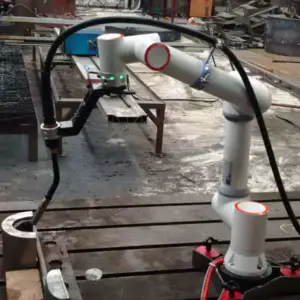
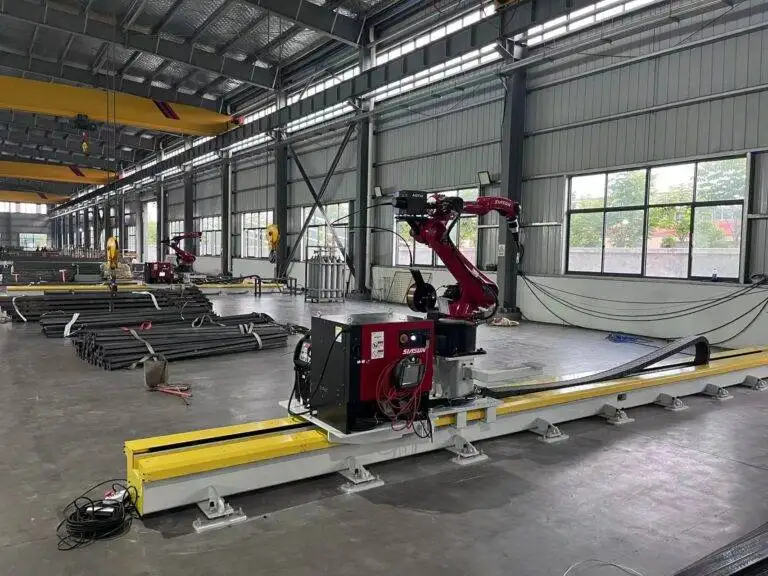
In the field of heavy industrial engineering, the welding of large-scale steel structures—such as ship hulls, storage tanks, and bridge girders—presents significant logistical and ergonomic challenges. Traditional manual welding in these environments often requires extensive scaffolding, high labor costs, and faces variability in weld quality due to operator fatigue. The introduction of the Intelligent Robotic Welder equipped with a magnetic crawler system represents a paradigm shift in structural steel assembly. By automating the Metal Active Gas (MAG) process on vertical and overhead planes, manufacturers can achieve superior throughput while minimizing structural defects.
The Metal Active Gas (MAG) Process in Robotic Systems
The core of the robotic crawler’s utility lies in its optimization of the MAG welding process. Unlike manual applications where the welder must maintain a steady hand across several meters of seam, the robot utilizes precise wire feed mechanisms and stable voltage control to ensure consistency. MAG welding is preferred in these industrial contexts because of its high deposition rate and the ability to work with various steel thicknesses through the use of active shielding gases, typically a mix of Argon and Carbon Dioxide.
Parameters for High-Deposition Welding
To maximize the efficiency of an intelligent welder, industrial engineers must calibrate several critical variables. Robotic systems allow for the fine-tuning of travel speed, wire feed speed (WFS), and torch angle. In structural steel applications, maintaining a consistent arc length is vital for deep penetration and minimal spatter. The crawler’s control system manages the transition between short-circuit, globular, and spray transfer modes based on the material thickness and joint geometry detected by onboard sensors.
Shielding Gas Optimization
The choice of gas significantly impacts the mechanical properties of the weld. For robotic MAG applications, a 80/20 or 90/10 Argon/CO2 mix is common. The robot’s ability to maintain a constant distance between the nozzle and the workpiece ensures a stable gas envelope, protecting the molten pool from atmospheric contamination even in the presence of minor drafts common in large fabrication shops.
Locomotion and Magnetic Adhesion Mechanics
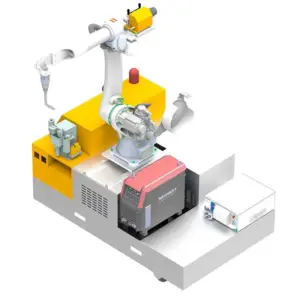
The distinguishing feature of this technology is the magnetic crawler chassis. Using high-strength permanent magnets or switchable electromagnets, the robot can adhere to ferromagnetic surfaces in any orientation—horizontal, vertical, or inverted. This eliminates the need for tracks or guide rails, which are time-consuming to install on large-scale workpieces.
Surface Interaction and Traction
From an engineering standpoint, the traction control of the crawler must overcome the weight of the robot plus the drag caused by the umbilical cable (which carries power, wire, and gas). Advanced crawlers utilize four-wheel or tank-tread configurations with high-friction coatings to prevent slippage on smooth or primed steel surfaces. The intelligent control system monitors motor torque in real-time to detect potential loss of adhesion, providing a safety margin that manual operations lack.
Intelligent Seam Tracking
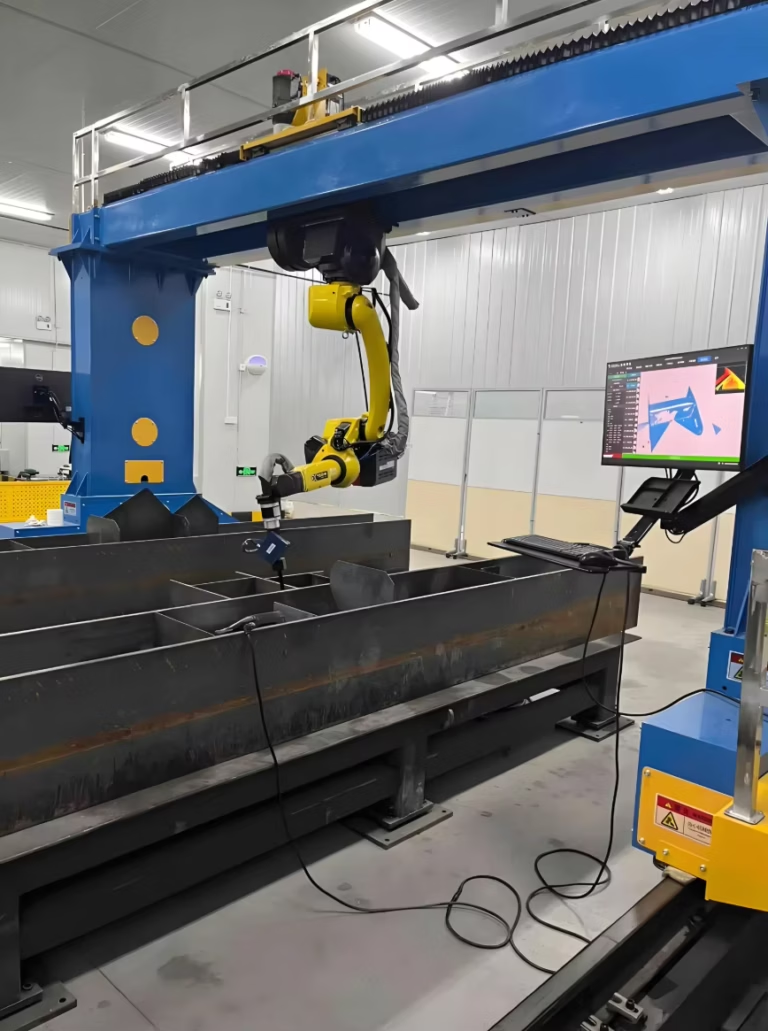
Structural steel is rarely perfectly aligned over long distances. To compensate for fit-up tolerances, the robotic welder employs laser-based seam tracking or “through-the-arc” sensing. The robot calculates the deviation from the programmed path and adjusts the torch position in real-time. This ensures that the weld bead remains centered in the joint, significantly reducing the occurrence of lack-of-fusion or undercut defects.
Maintenance Protocols for Robotic Subsystems
The reliability of an automated welding system is directly tied to its maintenance regimen. In the harsh environment of a steel fabrication yard, metallic dust and weld spatter can degrade mechanical components and sensors. A robust preventive maintenance (PM) schedule is essential to maximize the Mean Time Between Failures (MTBF).
Consumable Management
Robotic torches are subject to extreme heat. Maintenance engineers must regularly inspect and replace contact tips, nozzles, and gas diffusers. Intelligent systems can track the “arc-on” time and alert operators when a tip change is necessary before the weld quality degrades. Furthermore, the wire feed conduit (liner) must be cleaned or replaced periodically to prevent friction-induced wire feeding issues.
Mechanical and Sensor Calibration
The magnetic wheels must be checked for the accumulation of metal filings, which can interfere with the magnetic flux and reduce grip. Similarly, the optical windows of seam-tracking sensors require frequent cleaning. Regular calibration of the robot’s motion axes ensures that the spatial accuracy remains within the tight tolerances required for structural certification (e.g., AWS or ISO standards).
Labor ROI and Economic Impact Analysis
The transition from manual labor to an automated steel welding solution is primarily driven by the Return on Investment (ROI). While the initial capital expenditure (CAPEX) for a magnetic crawler system is higher than manual equipment, the operational savings (OPEX) are substantial when analyzed over the lifecycle of a project.
Cycle Time and Throughput
The primary driver of ROI is the “duty cycle.” A manual welder typically has a duty cycle of 20-30%, as they must stop to reposition, change electrodes, or rest. A robotic crawler can achieve a duty cycle of 70-80%. By maintaining a constant travel speed and eliminating frequent pauses, the time required to complete a 10-meter vertical weld can be reduced by up to 50% compared to manual processes.
Reduction in Labor and Indirect Costs
The shortage of skilled high-pressure welders has driven labor rates upward. A robotic crawler allows a single operator to supervise multiple robots, effectively multiplying the output per head. Furthermore, because the robot can scale the structure, the costs associated with erecting and moving scaffolding are significantly reduced or eliminated. This also improves site safety by keeping personnel on the ground or in stable positions, reducing the actuarial risk of falls.
Cost of Quality (COQ)
Rework is a major drain on profitability in steel fabrication. Every weld that fails Non-Destructive Testing (NDT) must be ground out and re-welded, which can cost three to five times the original weld cost. The consistency of robotic MAG welding minimizes human error, leading to a “first-time right” rate that often exceeds 98%. This reliability simplifies project scheduling and ensures that delivery timelines are met without the buffer time usually required for repairs.
Conclusion
The implementation of an intelligent robotic welder with a magnetic crawler is no longer a luxury for modern steel fabricators; it is a strategic necessity. By integrating advanced MAG process control with autonomous locomotion, the system addresses the critical pain points of manual fabrication: labor scarcity, high overhead, and quality variance. For the industrial engineer, the data is clear: the long-term gains in throughput and the reduction in the cost of quality provide a compelling case for the adoption of Robotic Welding technology in the structural steel industry.