Engineering Review: Single Pulse Industrial Laser Welder – Texas, USA
In this article
- Field Report: Deployment of Single Pulse Industrial Laser Welder in Heavy Fabrication…
- 1. Introduction and Objective
- 2. Equipment Specification and Environmental Context
- 3. The Mechanics of Laser Technology in Deep Penetration
- 4. Technical Synergy: Industrial Laser Welder Meets Thick Plate Steel
- 5. Thick Plate Steel Welding: Challenges and Solutions
- 6. Lessons Learned and Engineering Recommendations
- 7. Conclusion
Field Report: Deployment of Single Pulse Industrial Laser Welder in Heavy Fabrication (Texas, USA)
1. Introduction and Objective
This report summarizes the field performance and technical integration of a high-kilowatt Single Pulse Industrial Laser Welder within a heavy-duty fabrication environment in Houston, Texas. The primary objective was to evaluate the transition from conventional Submerged Arc Welding (SAW) and Gas Metal Arc Welding (GMAW) to advanced Laser Technology for Thick Plate Steel welding applications. In the Texas energy sector, particularly in pressure vessel and structural skid fabrication, the demand for reduced thermal distortion and increased throughput is paramount. This evaluation focuses on the mechanical integrity, beam delivery consistency, and metallurgical outcomes of the single pulse process.
2. Equipment Specification and Environmental Context
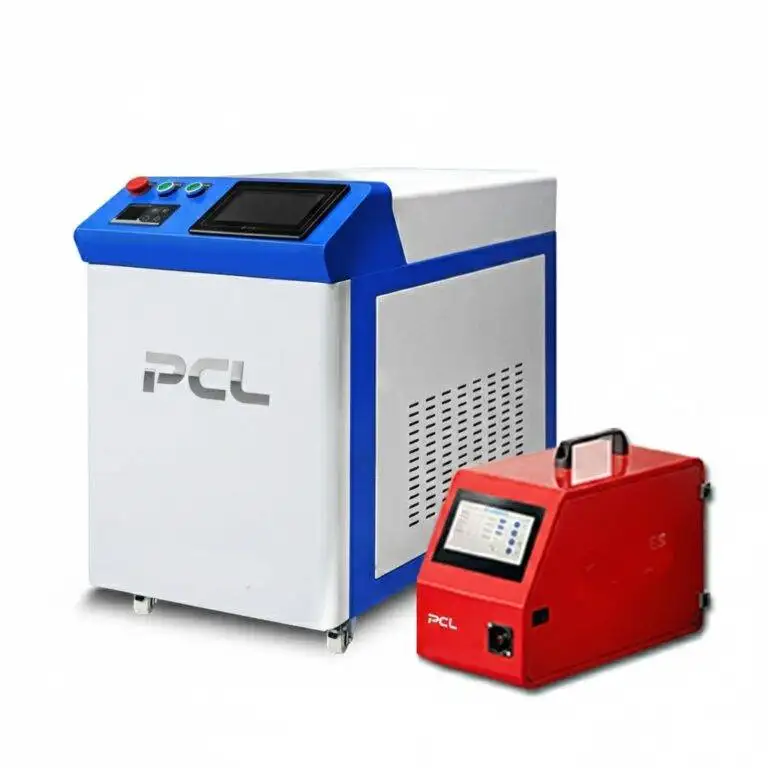
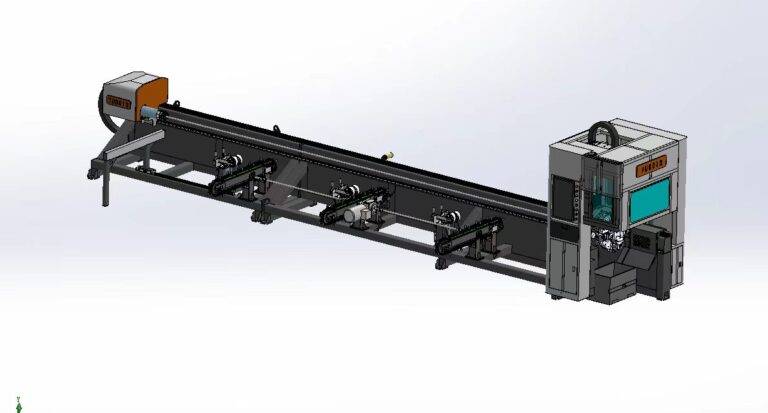
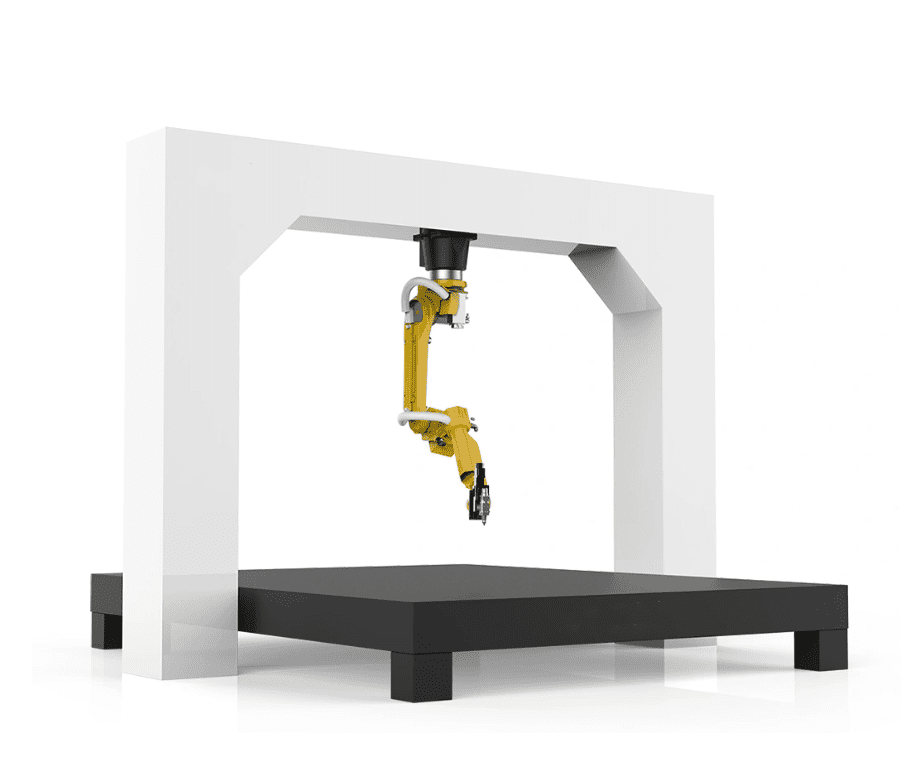
The unit under review is a 20kW fiber-delivered Industrial Laser Welder. Unlike continuous wave (CW) systems typically used for thin-gauge automotive sheet, this single pulse configuration is engineered for deep penetration.
Texas Environmental Variables
Operating high-precision Laser Technology in a Gulf Coast environment presents specific challenges. During the July–August window, ambient shop temperatures frequently exceeded 105°F (40.5°C) with relative humidity hovering near 85%. These conditions necessitated a closed-loop, high-capacity industrial chiller system with precise dew point monitoring to prevent condensation on the protective windows (cover slides). A senior engineering takeaway: in Texas workshops, the cooling infrastructure for the Industrial Laser Welder is as critical as the resonator itself. Failure to manage the ambient-to-chiller delta results in immediate optical degradation.
3. The Mechanics of Laser Technology in Deep Penetration
The core of this deployment relies on the high brightness and power density inherent in modern fiber Laser Technology. By utilizing a single pulse delivery system, we are able to manage the “Keyhole” stability more effectively in thicker sections. In Thick Plate Steel welding, the keyhole—a vapor-filled cavity surrounded by molten metal—is prone to collapse if the energy balance is inconsistent.
Beam Profile and Focus
The system utilizes a 200-micron delivery fiber with a 150mm collimator and a 300mm focal lens. This configuration provides a Rayleigh length sufficient to bridge the slight variations in plate flatness common in heavy industrial stock. The Laser Technology employed here allows for “beam shaping,” which oscillates the beam in a circular or “infinite” pattern (wobble) to widen the fusion zone. This is a critical adjustment for Thick Plate Steel welding, where narrow stringer beads might otherwise miss the root in joints with imperfect fit-up.
4. Technical Synergy: Industrial Laser Welder Meets Thick Plate Steel
The synergy between the Industrial Laser Welder and the specific Laser Technology utilized is most evident during the transition from the “conduction mode” to the “keyhole mode.” In a typical Texas workshop handling A36 or A516 Grade 70 steel, traditional methods require extensive multi-pass layering and massive heat input.
Synergistic Advantages identified in the field:
- Heat Input Reduction: The Industrial Laser Welder provides a concentrated energy source that reduces the Heat Affected Zone (HAZ) by approximately 70% compared to GMAW. For 12mm to 20mm Thick Plate Steel welding, this minimizes the transverse shrinkage that typically plagues large structural skids.
- Single-Pass Capability: Through the precision of Laser Technology, we achieved full penetration on 15mm V-prep joints in a single pass with a cold-wire feed. This effectively replaced a four-pass GMAW procedure, reducing the cycle time per linear foot from 12 minutes to 45 seconds.
- Metallurgical Integrity: The rapid cooling rates associated with Laser Technology can sometimes lead to excessive hardness in high-carbon steels. However, the Single Pulse Industrial Laser Welder allows for a “tailored” pulse decay, effectively providing an in-situ tempering effect that softens the martensitic transformation in the HAZ.
5. Thick Plate Steel Welding: Challenges and Solutions
Thick Plate Steel welding is inherently less forgiving than thin-gauge work. The primary technical hurdle encountered during this field deployment was the “Fit-up Tolerance.”
The Gap Management Problem
In the Texas heavy-fab industry, plates are often flame-cut or plasma-cut, leading to edge deviations. While Laser Technology is precise, it lacks the “gap-bridging” volume of a large SAW puddle. Our solution involved the integration of a tactical “Wobble” head on the Industrial Laser Welder. By oscillating the beam at 150Hz with a 2.5mm amplitude, we successfully bridged gaps up to 1.5mm while maintaining structural integrity in 25mm plate sections.
Shielding Gas Dynamics
For Thick Plate Steel welding, the plasma plume generated by the laser can interfere with the beam delivery. We implemented a high-velocity cross-jet of Nitrogen to protect the optics, while using an Argon/CO2 mix for the trailing shield. In the Houston facility, we found that even minor cross-drafts in the shop could disrupt the shielding gas, leading to porosity. Total enclosure or localized wind-blocking is mandatory for Industrial Laser Welder applications in open-bay Texas shops.
6. Lessons Learned and Engineering Recommendations
After 500 hours of arc-on time with the Industrial Laser Welder, several “hard-won” engineering lessons have emerged:
I. Optical Cleanliness is Non-Negotiable
In heavy industrial environments, airborne particulates (grinding dust, humidity, smoke) are the enemy of Laser Technology. We implemented a “Clean-Zone” protocol for lens changes. A single speck of Texas dust on a 20kW lens acts as an absorber, leading to thermal lensing and catastrophic lens failure within milliseconds. Lesson: Always over-spec the positive pressure air-knife on the laser head.
II. Power Stability and the Texas Grid
During peak summer months, the local power grid can experience voltage sags. These sags can cause the Industrial Laser Welder to trip its internal power supply modules. We recommend installing a dedicated industrial UPS or high-speed voltage regulator to ensure the Laser Technology maintains a consistent output. Inconsistent power leads to “stitching” in Thick Plate Steel welding, where the penetration depth fluctuates, creating hidden root defects.
III. Pre-Heat and Material Chemistry
While the Industrial Laser Welder reduces the need for overall pre-heat, Thick Plate Steel welding on high-carbon equivalents (CE) still requires a localized warm-up (approx. 150°F) to prevent hydrogen cracking. The speed of the laser is such that the hydrogen doesn’t have time to migrate out of the weld pool. Even with advanced Laser Technology, basic welding metallurgy still applies.
7. Conclusion
The integration of the Single Pulse Industrial Laser Welder into the Texas heavy-fabrication landscape is not merely a replacement of the heat source; it is a fundamental shift in production philosophy. The synergy between high-kilowatt Laser Technology and Thick Plate Steel welding offers a path to significantly higher margins through reduced post-weld rework and grinding. However, the success of the Industrial Laser Welder is entirely dependent on the rigor of the “upstream” processes—specifically plate preparation, fit-up accuracy, and environmental control. For Texas engineers, the focus must remain on the marriage of high-tech beam delivery with the grit and reality of heavy steel fabrication.
Report End.
Prepared by: Senior Welding Engineer, Field Operations Division
Location: Houston/Midland Regional Hubs, Texas, USA