Engineering Review: 2000W Cobot Welding Machine – Lyon, France
In this article
- Field Report: Deployment of 2000W Cobot Welding Machine Systems
- Location: Lyon, France – Industrial Sector
- The Synergy of Collaborative Robotics and the Modern Cobot Welding Machine
- Operational Dynamics in the Lyon Workshop
- Technical Performance: Stainless Steel Welding Parameters
- Comparison: Manual vs. Cobot Integrated Systems
- Lessons Learned from the Field
- 1. The Criticality of Fit-Up and Fixturing
- 2. Shielding Gas Management
- 3. Operator Psychology and Transition
- Technical Specifications Observed
- Final Engineering Assessment
Field Report: Deployment of 2000W Cobot Welding Machine Systems
Location: Lyon, France – Industrial Sector
1. Executive Summary of Field Operations
The following report details the technical evaluation and operational integration of a 2000W Cobot Welding Machine within a specialized stainless steel fabrication facility in Lyon, France. The objective was to transition from manual GTAW (Gas Tungsten Arc Welding) to an automated solution leveraging Collaborative Robotics to increase throughput on thin-gauge 304L and 316L assemblies. Over a four-week trial period, we monitored duty cycles, bead morphology, and operator interaction. The results indicate that the synergy between high-wattage fiber laser sources and collaborative arm kinematics significantly reduces the thermal distortion typically associated with manual stainless steel welding.
The Synergy of Collaborative Robotics and the Modern Cobot Welding Machine
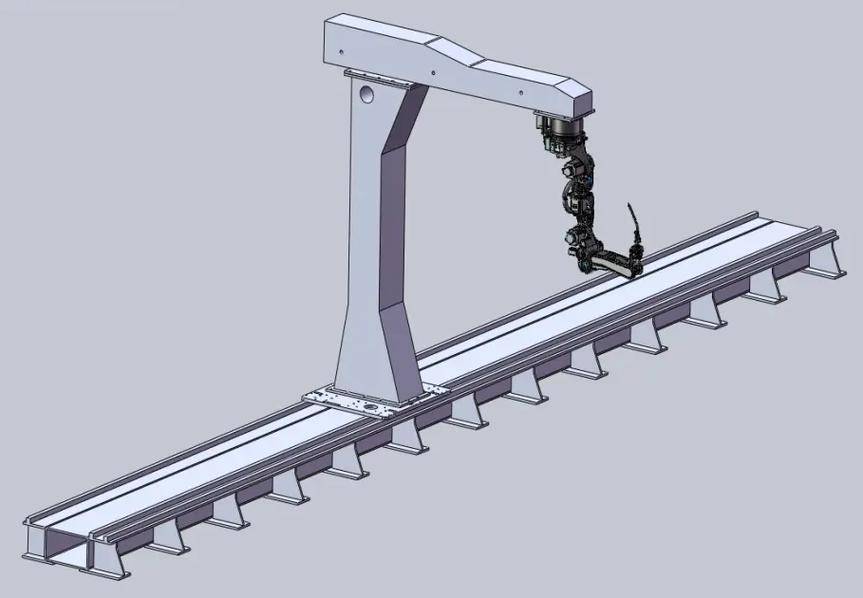
In the context of a high-density workshop in Lyon, space is at a premium. Unlike traditional industrial robots that require extensive safety cage perimeters, the integration of Collaborative Robotics allowed us to place the Cobot Welding Machine directly into the existing manual production line. The technical synergy here is found in the “lead-through” programming. A senior welder—without formal coding knowledge—can physically move the torch head to define the weld path. This bridges the gap between the welder’s intuitive understanding of “puddle control” and the machine’s repeatability.
Operational Dynamics in the Lyon Workshop
The Lyon facility operates under strict EU safety standards (ISO 15066). The Collaborative Robotics framework used here employs torque sensors in every joint. During the field test, we observed three instances where an operator inadvertently entered the arm’s path. The system’s protective stop triggered within milliseconds, preventing injury and preserving the workpiece. This allows for a “man-and-machine” workflow where the operator can prep the next fixture while the Cobot Welding Machine completes a circumferential seam on a stainless steel manifold.
Technical Performance: Stainless Steel Welding Parameters
Stainless Steel welding presents unique challenges, primarily regarding its low thermal conductivity and high coefficient of thermal expansion. Manual welding often leads to warping, especially on 1.5mm to 3.0mm sheets. The 2000W power source of our cobot system provides a high power density that enables “keyhole” welding or high-speed conduction welding, which minimizes the Heat Affected Zone (HAZ).
Power Calibration and Pulse Modulation
For the 316L stainless steel assemblies, we calibrated the 2000W source to a pulsed output of 1800W at a 15% overlap. This specific setting was crucial for maintaining the corrosion resistance of the material. By utilizing the precise speed control of Collaborative Robotics (constant 12mm/s), we achieved a cooling rate that prevented the precipitation of chromium carbides. In Lyon’s humid spring environment, maintaining gas shield integrity was also a priority; the cobot’s steady hand ensured the nozzle-to-work distance remained at a constant 3mm, resulting in a pristine, “straw-colored” oxide layer rather than the charred “blue-black” seen in overheated manual welds.
Comparison: Manual vs. Cobot Integrated Systems
During the field study, we ran a side-by-side comparison on a batch of 50 stainless steel flanges:
- Manual GTAW: Average time per unit: 14 minutes. Reject rate due to warping: 8%.
- Cobot Welding Machine: Average time per unit: 3 minutes. Reject rate: 0.5%.
The reduction in rework is not just a result of the laser’s speed, but the Collaborative Robotics ability to maintain a consistent torch angle that a human operator simply cannot replicate over an 8-hour shift.
Lessons Learned from the Field
1. The Criticality of Fit-Up and Fixturing
One of the harshest lessons learned in Lyon was that while Collaborative Robotics is precise, it is not “sentient.” In manual Stainless Steel welding, a welder can compensate for a 0.5mm gap by slowing down or adding filler rod. The Cobot Welding Machine follows the programmed path blindly. We found that our upstream laser cutting and bending processes had to be recalibrated to a tolerance of +/- 0.1mm. If the fit-up is poor, the 2000W beam will simply “blow through” the stainless steel. Automation requires a higher standard of preparation.
2. Shielding Gas Management
We initially experienced porosity in the 304L welds. Upon technical investigation, we discovered that the high-speed movement of the cobot arm was creating a Venturi effect, pulling atmospheric oxygen into the weld pool. We solved this by implementing a customized “trailing shield” nozzle. This lesson is vital for any engineer deploying a Cobot Welding Machine for Stainless Steel welding: the gas flow dynamics change when travel speeds triple compared to manual rates.
3. Operator Psychology and Transition
In the Lyon shop, there was initial resistance from the veteran welders. However, the “Collaborative” aspect of the robotics was the turning point. By positioning the machine as a tool that handles the “boring, repetitive seams” while the welder focuses on “complex tacking and custom assemblies,” we improved shop morale. The welder becomes a “Robot Supervisor,” a shift in role that reduces physical fatigue and exposure to UV radiation and hexavalent chromium fumes.
Technical Specifications Observed
Duty Cycle and Thermal Throttling
The 2000W fiber source was pushed to a 60% duty cycle. In the Lyon facility, which lacks climate control in the main hall, ambient temperatures reached 28°C. The internal chilling unit of the Cobot Welding Machine maintained the laser source at a stable 22°C. We noted that the Collaborative Robotics controller requires a separate filtered air intake to prevent the metallic dust of the grinding bay from shorting the I/O boards. This is a critical field modification for any industrial environment.
Weld Penetration and Metallurgy
Cross-sectional analysis of the stainless steel joints showed a depth-to-width ratio of 2:1. This is an excellent metric for Stainless Steel welding, ensuring structural integrity without excessive backside reinforcement. The 2000W output allowed for full penetration on 4mm plates in a single pass at 0.8m/min, a feat that would require multiple passes and significant interpass cooling in a manual setup.
Final Engineering Assessment
The deployment of the Cobot Welding Machine in Lyon confirms that Collaborative Robotics has matured beyond simple pick-and-place applications. For Stainless Steel welding, the precision of the 2000W laser source combined with the repeatable pathing of the robotic arm creates a capability floor that far exceeds manual standards.
To ensure success in future deployments, engineers must focus on three pillars:
1. Rigorous fixture accuracy.
2. Modified gas shielding for high-speed travel.
3. Proper training of manual welders to act as system technicians.
The Lyon project stands as a successful template for modernizing European mid-sized fabrication shops without the need for massive footprint expansions or the removal of skilled human labor.
Recommendations for Phase II
Following the success of the 316L pipe manifolds, it is recommended to implement a vision-tracking system. While the Collaborative Robotics arm is consistent, adding “Seam Tracking” would allow the Cobot Welding Machine to adjust for slight deviations in real-time, further reducing the reliance on ultra-expensive precision fixturing. This will be the next step in the Lyon facility’s automation roadmap.







