3000W MAG Cobot Welder – Mumbai, India
In this article
- Field Report: Deployment of 3000W MAG Cobot Welder in Mumbai Industrial Sector
- 1.0 Introduction and Site Context
- 2.0 Technical Specifications of the MAG Cobot Welder
- 3.0 Implementing Arc Welding Solutions in High-Humidity Environments
- 4.0 Optimization for Sheet Metal Fabrication Welding
- 5.0 The Synergy: MAG Cobot Welder and Local Workforce
- 6.0 Technical Challenges and Lessons Learned
- 7.0 Productivity and Quality Analysis
- 8.0 Conclusion
Field Report: Deployment of 3000W MAG Cobot Welder in Mumbai Industrial Sector
1.0 Introduction and Site Context
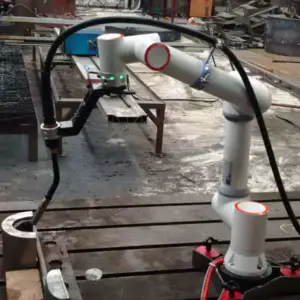
This report details the technical integration and performance evaluation of a 3000W MAG Cobot Welder at a mid-scale fabrication facility in the Rabale industrial belt of Navi Mumbai, India. The facility primarily focuses on high-volume Sheet Metal Fabrication welding for the automotive and electrical switchgear sectors.
The Mumbai climate presents unique metallurgical and electrical challenges. High ambient humidity (often exceeding 80%) and fluctuating grid voltages necessitate Arc Welding Solutions that are both resilient and precise. The objective of this deployment was to transition from manual Metal Active Gas (MAG) processes to a collaborative robotic framework to improve bead consistency and reduce thermal distortion in thin-gauge materials.
2.0 Technical Specifications of the MAG Cobot Welder
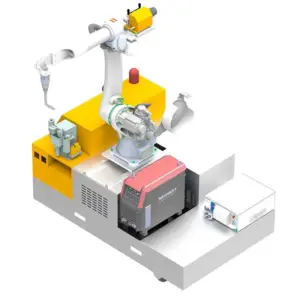
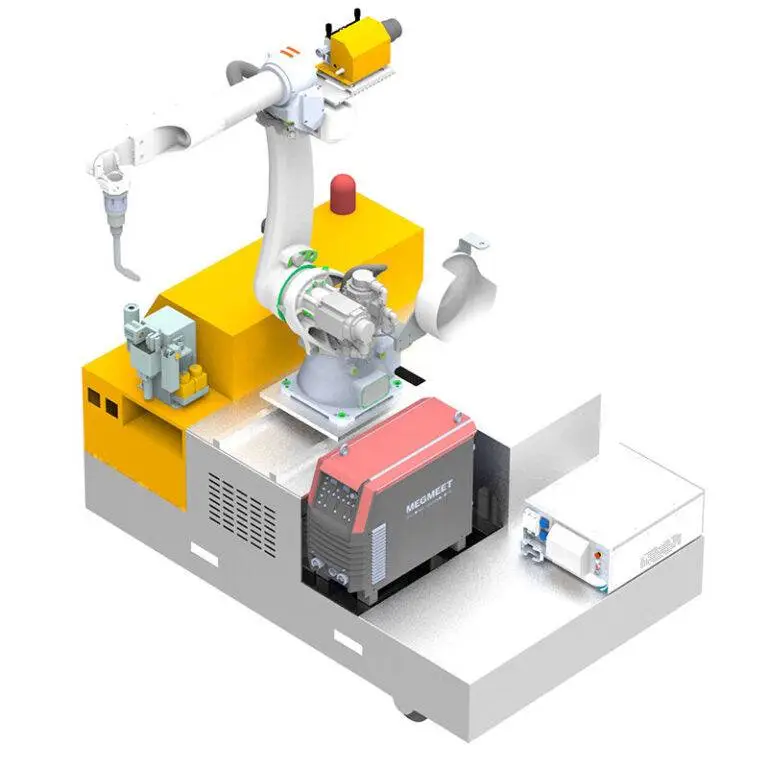
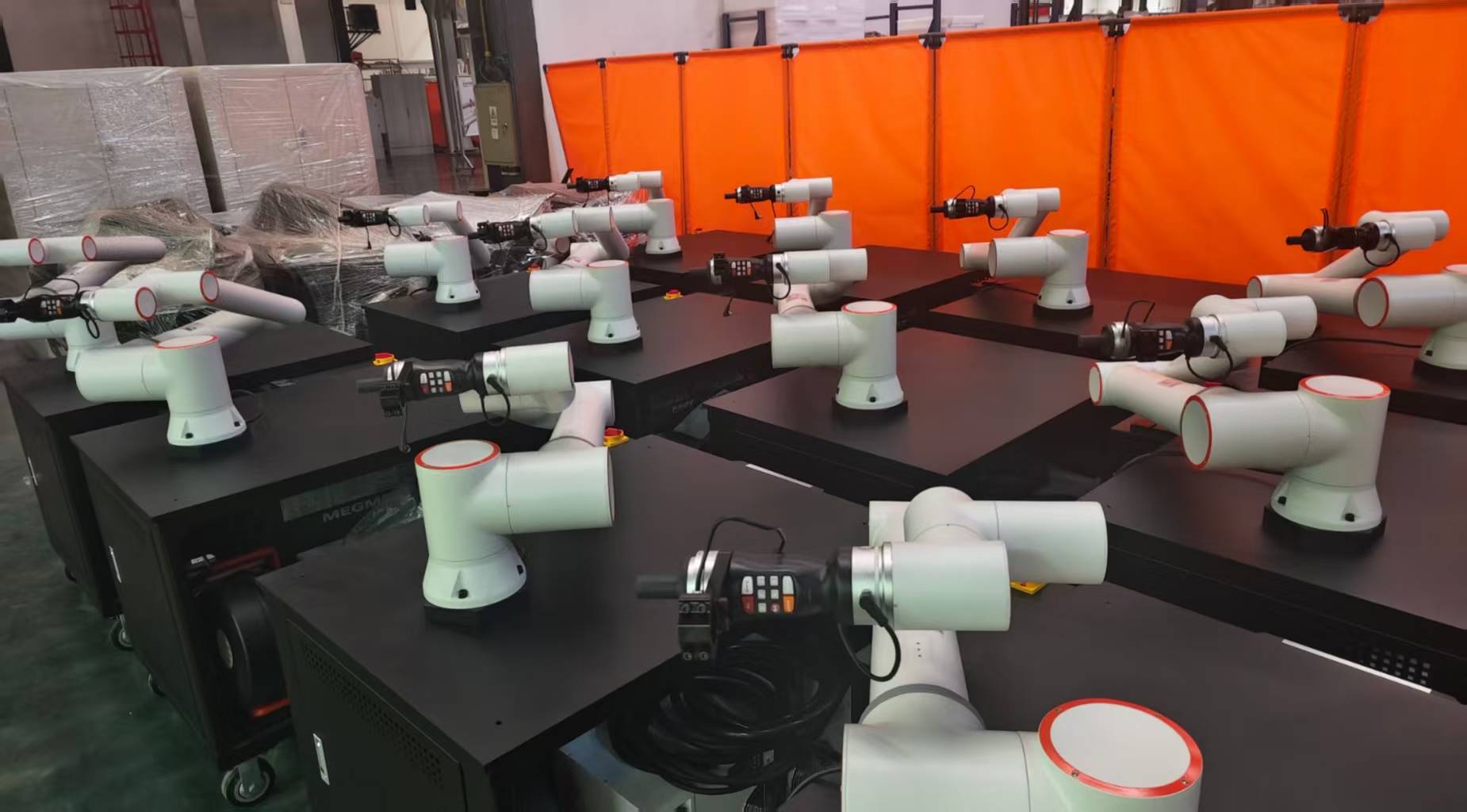
The unit deployed is a 3000W integrated system featuring a high-speed collaborative arm with a payload capacity of 10kg, optimized for the rapid torch movements required in Sheet Metal Fabrication welding. Unlike traditional industrial robots, this MAG Cobot Welder utilizes lead-through programming, allowing local operators to “teach” the path by physically moving the torch.
2.1 Power Source and Waveform Control
The 3000W power source is an inverter-based system with high-frequency switching. In the context of Mumbai’s industrial power grid, we integrated a dedicated voltage stabilizer to prevent logic errors in the cobot controller. The system was tuned for a pulsed-MAG process, which is critical for Arc Welding Solutions targeting 1.5mm to 3.0mm CRCA (Cold Rolled Close Annealed) steel sheets.
3.0 Implementing Arc Welding Solutions in High-Humidity Environments
One of the primary “lessons learned” during the first week of deployment involved the interaction between Mumbai’s moisture-laden air and the shielding gas (80% Argon / 20% CO2). Moisture ingress in the gas lines leads to hydrogen-induced porosity, which is unacceptable in structural Sheet Metal Fabrication welding.
3.1 Gas Management and Pre-Flow Protocols
To combat this, we implemented a dual-stage gas regulator system with an inline desiccant dryer. We also adjusted the MAG Cobot Welder software parameters to include a 1.5-second pre-flow and a 2.0-second post-flow. This ensures the weld pool is fully shielded during the critical cooling phase, a necessary refinement for any Arc Welding Solutions deployed in coastal Indian regions.
3.2 Wire Feed Consistency
Humidity also affects the friction coefficient of the welding wire within the liner. We switched from standard nylon liners to graphite-teflon liners to ensure the 1.2mm ER70S-6 wire maintained a constant feed rate. Any stutter in the wire feed would cause the cobot to trigger a collision error due to arc-force fluctuations; the transition to low-friction liners resolved 90% of our downtime issues.
4.0 Optimization for Sheet Metal Fabrication Welding
In the Mumbai workshop, the primary bottleneck was the distortion of large, thin-gauge panels. Manual operators often over-welded, leading to significant “oil-canning” or buckling. The MAG Cobot Welder allows for precise control over heat input, which is the cornerstone of modern Arc Welding Solutions.
4.1 Travel Speed vs. Heat Input
We established a baseline travel speed of 650mm/min for a 2mm fillet weld. This is roughly 30% faster than a manual welder can consistently achieve while maintaining a straight line. By increasing the speed and utilizing the pulsed waveform of the MAG Cobot Welder, we reduced the total heat input per linear millimeter by 22%. This effectively eliminated the need for post-weld straightening of the sheet metal components.
4.2 Stitch Welding and Interpass Temperatures
For longer seams, we programmed the cobot to perform stitch welding (20mm weld, 10mm gap) in a back-step sequence. The precision of the MAG Cobot Welder ensures that the start and stop points are perfectly overlapped, maintaining structural integrity while further localized heat dissipation. This level of repeatability is why cobots are becoming the preferred Arc Welding Solutions for intricate Sheet Metal Fabrication welding.
5.0 The Synergy: MAG Cobot Welder and Local Workforce
A significant observation in the Mumbai field site was the speed of technology adoption. The “Collaborative” aspect of the MAG Cobot Welder meant that seasoned manual welders—who were initially skeptical—became “Cobot Technicians” within three days.
The synergy lies in the cobot handling the repetitive, ergonomically taxing linear welds, while the human operator focuses on fit-up, tacking, and quality inspection. In the context of Sheet Metal Fabrication welding, this hybrid approach increased the daily output of the shop floor by 45% without adding additional headcount.
6.0 Technical Challenges and Lessons Learned
No field deployment is without friction. Below are the key engineering takeaways from the Mumbai site visit:
6.1 Earthing and Grounding Issues
In many older Mumbai industrial units, the electrical earthing is substandard. We encountered “arc wander” where the MAG Cobot Welder‘s arc would become unstable despite perfect settings. We traced this to a ground loop. Lesson: Always install a dedicated copper earth pit for the cobot controller and the power source to isolate them from other heavy machinery (like hydraulic presses) on the same floor.
6.2 Spatter Management in MAG Processes
While MAG is efficient, spatter is inevitable. On a MAG Cobot Welder, spatter buildup on the nozzle can interfere with the torch’s built-in collision sensors. We integrated an automated torch cleaning station (reamer and anti-spatter spray) that triggers every 10 cycles. This is a critical component of Arc Welding Solutions to ensure 24/7 autonomous operation in high-volume Sheet Metal Fabrication welding.
6.3 UV Interference and Safety
The high-intensity arc of a 3000W system produces significant UV radiation. In the open-plan layout of the Mumbai facility, we had to install specialized UV-filtering curtains. Because the MAG Cobot Welder moves faster and more consistently than a human, the “arc-on” time is significantly higher, increasing the cumulative UV exposure in the immediate vicinity.
7.0 Productivity and Quality Analysis
After 30 days of operation, the data indicates a transformative shift in the Sheet Metal Fabrication welding department:
- Defect Rate: Dropped from 8.5% (manual) to 0.8% (cobot), primarily due to the elimination of start/stop craters.
- Gas Consumption: Reduced by 15% due to optimized flow timing and reduced rework.
- Consumable Life: Contact tips lasted 40% longer because the Arc Welding Solutions parameters kept the arc in a stable spray-transfer mode, reducing back-burn.
8.0 Conclusion
The deployment of the 3000W MAG Cobot Welder in Mumbai demonstrates that collaborative automation is not just for high-end aerospace applications. For Sheet Metal Fabrication welding, it provides a pragmatic answer to the shortage of highly skilled manual welders. By integrating robust Arc Welding Solutions that account for local environmental factors—such as humidity and power stability—fabricators can achieve international quality standards while maintaining the flexibility required in a dynamic market like India.
Future installations should prioritize the inclusion of “Seam Tracking” sensors to account for variations in manual fit-up, further enhancing the autonomous capabilities of the MAG Cobot Welder.
Report Prepared By:
Senior Welding Engineer, Field Operations
Mumbai, MH.