Beam Processing Center with 5-Axis Beveling for Wind Tower fabrication
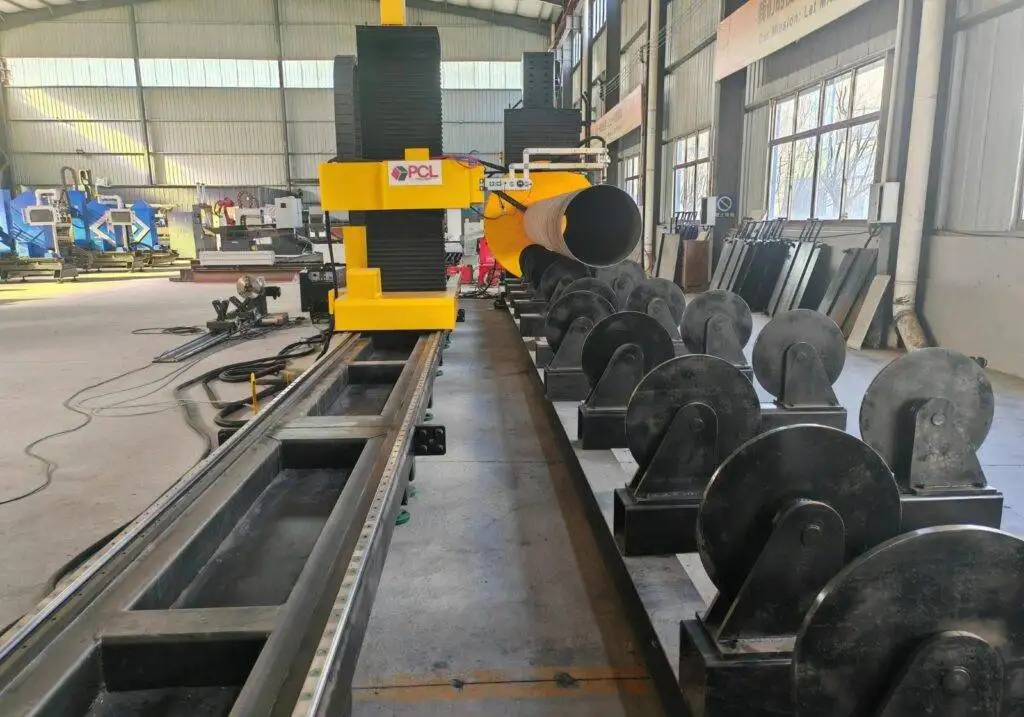
In this article
Strategic Implementation of 5-Axis Plasma in Wind Tower Structural Fabrication
Wind tower fabrication demands rigorous adherence to structural tolerances and material efficiency. As the industry scales toward larger turbines and taller hub heights, the internal structural components—ranging from platforms and ladders to complex flange reinforcements—require precise geometric processing. The deployment of a Beam Processing Center equipped with 5-axis plasma beveling represents a fundamental shift from traditional manual layout and mechanical cutting to high-velocity thermal processing. This transition is driven by the need for multi-planar accuracy and the reduction of secondary finishing operations.
The engineering logic behind selecting plasma as the primary thermal cutting medium in wind energy structural work centers on its ability to handle thick-walled H-beams and heavy plate steel with high duty cycles. Unlike mechanical sawing or drilling, which are limited by linear tool paths and tool wear, a 5-axis plasma system offers the kinematic flexibility required to perform complex notches, holes, and weld preparations in a single pass. This eliminates the cumulative error associated with moving workpieces between multiple stations.
Achieving Micro-Level Intersection Accuracy
Intersection accuracy is the primary metric for evaluating the performance of a CNC beam processor. In wind tower internals, beams often intersect at non-perpendicular angles, requiring “saddle” cuts or complex notches that must fit with zero-gap tolerances. The 5-axis head utilizes a coordinated motion control system that synchronizes the X, Y, and Z linear axes with the A (tilt) and C (rotation) axes. This synchronization is critical for maintaining the focal point of the plasma arc relative to the material surface, especially when traversing the web and flanges of an H-beam.
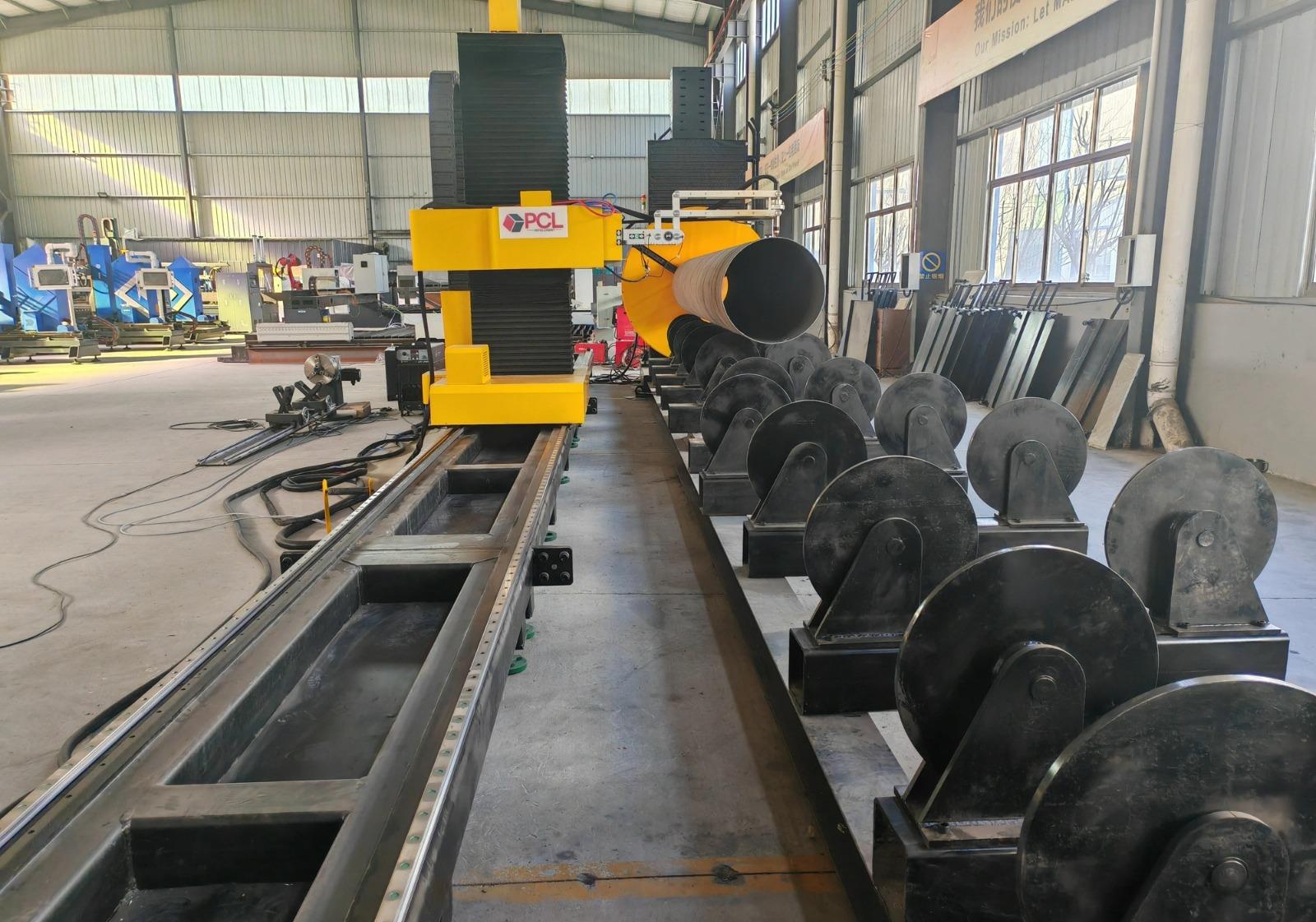
High-definition plasma systems now incorporate advanced kerf compensation algorithms. These algorithms adjust the torch path in real-time to account for the width of the plasma arc, ensuring that the final dimensions of the cut part match the CAD model. For wind tower components, where load distribution is paramount, even a 1mm deviation in intersection fit-up can lead to localized stress concentrations. By utilizing robotic kinematics and high-speed encoders, modern beam processors achieve repeatable tolerances within +/- 0.5mm, a threshold necessary for the automated assembly of internal tower structures.
Mathematical Modeling of the Thermal Arc
The precision of the intersection is also dependent on the gas dynamics within the plasma torch. Using oxygen or nitrogen as the plasma gas, the system must modulate flow rates based on the cutting speed and material thickness. As the 5-axis head tilts to create a bevel, the effective thickness of the material increases. The CNC controller must dynamically adjust voltage and gas pressure to prevent “dross” accumulation and to ensure a clean exit of the arc. This level of control is what allows for the seamless fitting of H-beams to cylindrical tower sections, where the contour of the cut must match the radius of the tower wall perfectly.
H-Beam Processing and Low-Maintenance Operational Profiles
From an industrial engineering perspective, the Total Cost of Ownership (TCO) of a beam processing center is heavily influenced by maintenance schedules and consumable longevity. Plasma systems are inherently low-maintenance compared to mechanical alternatives. There are no drill bits to sharpen, no coolant systems to manage for chip removal, and no saw blades that risk snapping during heavy-duty cycles. The primary maintenance requirements are centered on the torch consumables—nozzles, electrodes, and swirl rings—which can be replaced in minutes without specialized tools.
The structural design of the beam processor itself contributes to this low-maintenance profile. Most high-end units feature a “closed-loop” feedback system for the 5-axis head, which monitors the health of the drive motors. Because Plasma Cutting is a non-contact process, there is no mechanical force exerted on the machine frame. This absence of vibration and torque-related stress extends the lifespan of the rack-and-pinion drives and linear bearings, ensuring that the machine maintains its structural integrity over years of multi-shift operation in a wind tower factory.
Waste Mitigation and Slag Management
Efficient H-beam processing also involves the management of thermal by-products. Modern centers are equipped with integrated fume extraction and slag collection systems. By optimizing the cutting sequence through nesting software, engineers can minimize material waste (remnants) and ensure that the thermal energy is distributed across the beam to prevent warping. The speed of the plasma arc reduces the Heat-Affected Zone (HAZ), which is vital for maintaining the metallurgical properties of the high-strength steel used in wind energy applications. Reducing the HAZ ensures that the steel does not become brittle near the cut edges, which is a critical requirement for parts subject to dynamic wind loads.
Advanced Beveling for High-Strength Weld Preparations
In wind tower fabrication, beveling is not merely an aesthetic requirement; it is a functional necessity for CJP (Complete Joint Penetration) welds. The 5-axis plasma head allows for the creation of V, Y, X, and K-bevels on the edges of H-beams and plates. Traditionally, these bevels would require secondary grinding or a separate beveling machine, adding significant labor costs and cycle time. A 5-axis beam processor performs these bevels as part of the initial cutting program.
The ability to create a “variable bevel”—where the angle of the cut changes along the path—is particularly useful for the complex geometries found in tower transition pieces. The plasma arc stability during these maneuvers is maintained through sophisticated height control sensors that use arc voltage to keep the torch at the optimum distance from the plate, even as the angle of attack reaches 45 or 50 degrees. This level of automation ensures that the weld prep is consistent throughout the entire length of the component, leading to higher pass rates during ultrasonic or X-ray weld inspections.
Optimizing Operational Throughput
The final objective of integrating a 5-axis plasma beam processing center is the maximization of throughput. By consolidating cutting, marking, and beveling into a single automated cycle, manufacturers can significantly reduce the “man-hours per ton” of steel processed. In the context of wind tower production, where lead times are aggressive and material costs are high, the efficiency of the plasma process provides a decisive competitive advantage. The combination of high-speed thermal cutting, low mechanical maintenance, and extreme geometric precision makes the 5-axis plasma system the backbone of modern wind energy structural manufacturing.
By focusing on the technical synergy between CNC motion control and plasma physics, industrial engineers can ensure that the structural components of wind towers meet the 25-year service life requirements of the renewable energy sector. The 5-axis beam processor stands as a testament to the evolution of thermal cutting technology, providing the accuracy and reliability necessary for the next generation of wind energy infrastructure.






