Intelligent Robotic Welder with Laser Seam Tracking for LNG Projects
In this article
Optimizing LNG Fabrications via Robotic MAG Welding
Liquefied Natural Gas (LNG) projects demand uncompromising structural integrity due to the cryogenic temperatures and volatile nature of the medium. The fabrication of storage tanks, heat exchangers, and distribution piping relies heavily on Gas Metal Arc Welding (GMAW), specifically Metal Active Gas (MAG) variations. Traditional manual welding in this sector faces challenges including welder fatigue, inconsistent bead geometry, and the scarcity of certified personnel capable of meeting ASME Section IX standards. The introduction of Intelligent Robotic Welders integrated with Laser Seam Tracking address these bottlenecks by automating the precision required for multi-pass welds on thick-walled vessels.
The Role of Laser Seam Tracking in Precision MAG Welding
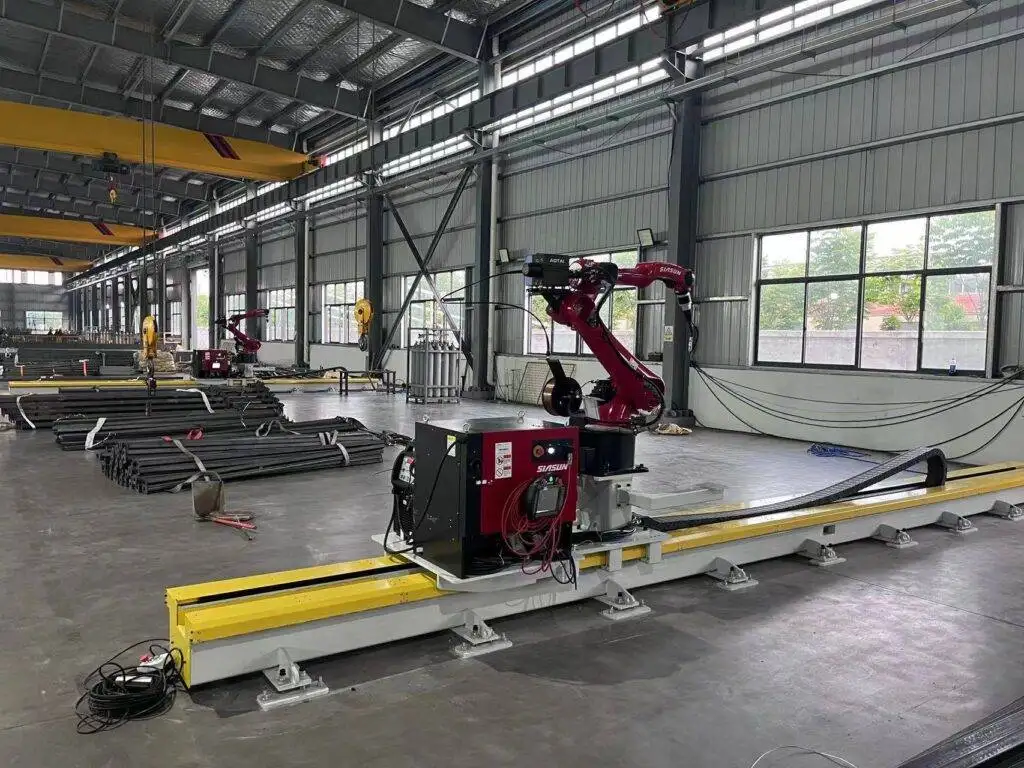
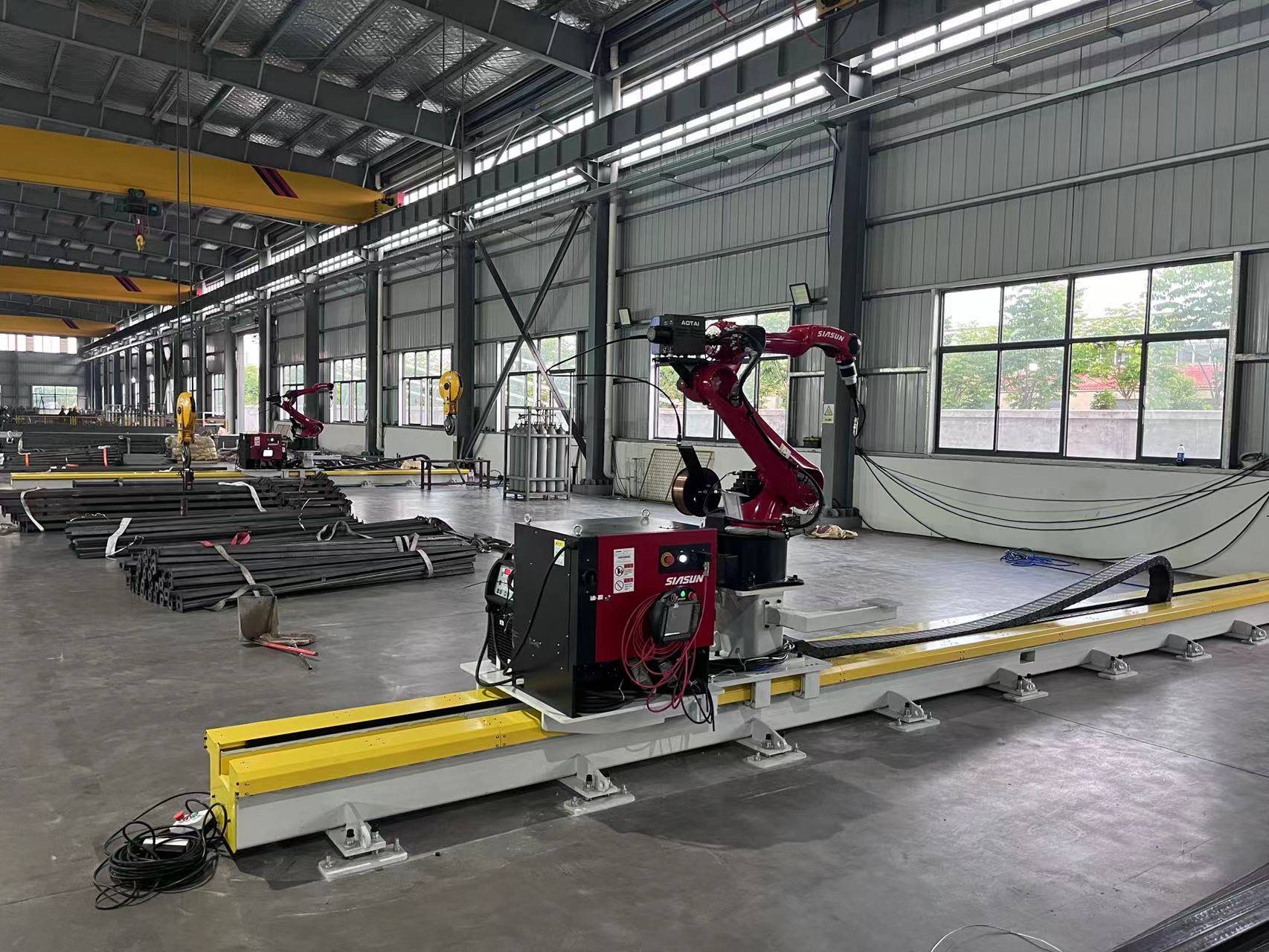
In large-scale LNG construction, perfect fit-up is rarely achievable. Plate deformation and assembly tolerances often result in varying gap widths and offsets. Intelligent robotic systems utilize laser seam tracking sensors to map the joint geometry in real-time, milliseconds before the arc is struck. This sensor data allows the robot controller to adjust the torch position, wire feed speed, and oscillation parameters dynamically.
Unlike fixed-path automation, these systems compensate for thermal distortion during the welding process. For 9% nickel steel commonly used in LNG outer tanks, maintaining a tight heat input range is critical to preserving fracture toughness. The robotic system ensures that the MAG torch maintains the optimal stick-out distance and torch angle, resulting in a uniform heat-affected zone (HAZ) and reducing the risk of lack of fusion or inclusions.
Throughput and Deposition Efficiency
From an industrial engineering perspective, the primary metric for success is the Duty Cycle. Manual welders typically achieve an arc-on time of 20% to 30% due to the need for repositioning, electrode changes, and environmental breaks. Robotic cells increase this to 75% or higher. In LNG pipe spooling, a robotic system can execute continuous circumferential welds without the stops and starts inherent in manual processes. This continuity significantly reduces the probability of defects at tie-in points, which are the most common failure locations during non-destructive testing (NDT).
Furthermore, the use of high-performance MAG power sources allows for pulsed-arc transfer modes. This reduces spatter and enables higher deposition rates in out-of-position welds (vertical or overhead), which are frequently encountered in field-erected LNG tanks.
Calculating Labor ROI in LNG Projects
The Return on Investment (ROI) for Robotic Welding systems in the LNG sector is calculated through three primary vectors: labor cost displacement, consumable efficiency, and rework mitigation. While the initial capital expenditure (CAPEX) for a robotic cell with laser tracking is significant, the payback period is shortened by the high volume of weld metal required for LNG infrastructure.
Direct Labor and Rework Reduction
A single robotic operator can oversee two or more welding cells, effectively doubling or tripling the output per man-hour. However, the most substantial savings come from the reduction in rework. In LNG projects, the cost of repairing a rejected weld—incorporating carbon-arc gouging, grinding, re-welding, and re-testing—can be ten times the cost of the initial weld. Robotic systems typically achieve an NDT pass rate exceeding 98%, compared to the 85-90% industry average for manual field welding.
Consumable Savings
Robotic precision minimizes over-welding. Manual welders often create larger fillets than specified to ensure compliance, consuming 15% to 20% more filler wire than necessary. Intelligent robots follow the programmed leg lengths precisely, leading to significant savings in expensive high-nickel alloy consumables.
Maintenance Protocols for High-Availability Robotic Cells
To maintain the reliability of ASME Section IX compliant welds, a rigorous preventive maintenance schedule is mandatory. Unlike manual equipment, robotic systems are susceptible to mechanical wear that can degrade precision over time. Key maintenance focus areas include:
- Wire Delivery System: Periodic replacement of liners and drive rolls to prevent wire slippage or bird-nesting, which causes arc instability.
- Torch Calibration: Daily verification of the Tool Center Point (TCP). Laser seam trackers must be cross-referenced with the physical torch position to ensure the sensor offset remains accurate.
- Consumable Management: Automated nozzle cleaning stations should be utilized every 30-60 minutes of arc time to remove spatter and ensure consistent shielding gas flow.
- Sensor Protection: The laser tracking optic requires clean air or nitrogen purging to prevent the accumulation of welding fumes and spatter on the lens.
Quality Assurance and Digital Traceability
Modern robotic welding controllers offer data logging capabilities that are vital for LNG project documentation. Every weld bead can be tracked with a digital twin of its parameters: voltage, amperage, travel speed, and gas flow rates are recorded and timestamped. This level of traceability simplifies compliance with international safety standards and provides a data-driven basis for continuous process improvement. If a defect is found during radiographic testing, engineers can review the digital log to identify the exact cause, whether it was a momentary dip in gas pressure or a deviation in the wire feed speed.
Conclusion: The Engineering Mandate
Integrating intelligent robotic welders into LNG workflows is no longer an optional upgrade but a necessity for maintaining competitive margins and meeting strict delivery timelines. The synergy between MAG welding efficiency and laser-guided accuracy provides a robust solution to the volatility of the skilled labor market. By prioritizing high Duty Cycle operations and standardized maintenance, industrial engineers can ensure that LNG infrastructure meets the highest safety standards while optimizing the total cost of ownership.






