Engineering Review: 3000W Industrial Laser Welder – Abu Dhabi, UAE
In this article
- Technical Field Report: Performance Optimization of 3000W Fiber Systems in High-Ambient Environments
- Site Overview and Environmental Variables
- The Core Hardware: 3000W Industrial Laser Welder Integration
- Power Management and Beam Stability
- Advancements in Laser Technology for Precision Fabrication
- High-Frequency Modulation and Waveform Control
- Metallurgical Focus: Titanium Welding Protocols
- Overcoming Atmospheric Challenges in Abu Dhabi
- Synergistic Outcomes and Lessons Learned
- Conclusion and Future Projections
Technical Field Report: Performance Optimization of 3000W Fiber Systems in High-Ambient Environments
This report details the commissioning and operational assessment of a 3000W Industrial Laser Welder within a high-output fabrication facility in Abu Dhabi, UAE. The primary objective was to integrate advanced Laser Technology into existing workflows to handle high-specification Titanium welding, specifically for subsea sensor housings and aerospace-grade bracketry. Given the localized climatic challenges—extreme ambient heat and high humidity—the interaction between hardware cooling cycles and beam stability was a critical focus area.
Site Overview and Environmental Variables
Operating high-precision equipment in Abu Dhabi requires more than standard IP-rated enclosures. During the June–August window, ambient temperatures in the workshop frequently exceed 45°C. For an Industrial Laser Welder, this places an immense load on the dual-circuit refrigeration units. We observed that standard chillers often struggle with the “dew point” transition, where internal optics might face condensation risk if the coolant temperature is set too low relative to the humidity.
To mitigate this, we recalibrated the Laser Technology interface to maintain a coolant temperature of 26°C, ensuring it remained above the local dew point while still providing sufficient thermal dissipation for the 3kW resonator. This adjustment is vital for maintaining BPP (Beam Parameter Product) consistency; any thermal drift in the fiber delivery head directly compromises the focal point, which is catastrophic when performing Titanium welding on thin-gauge materials.
The Core Hardware: 3000W Industrial Laser Welder Integration
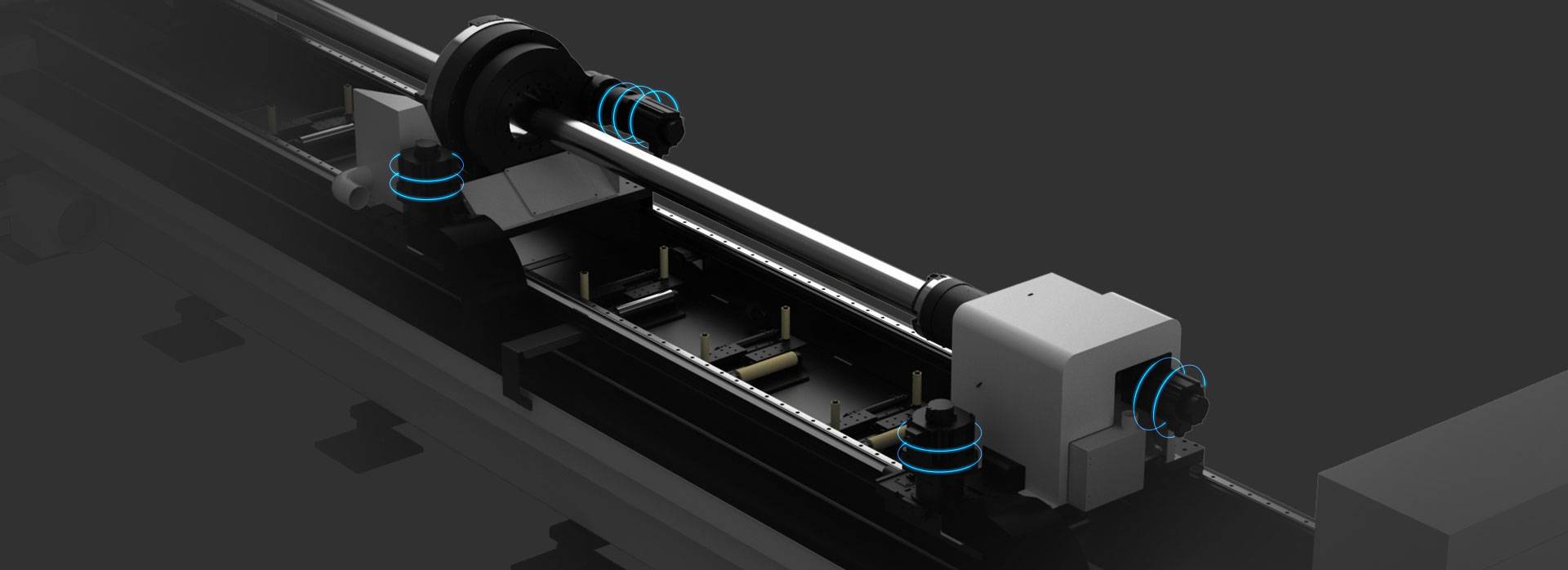
The 3000W unit selected for this site utilizes a continuous wave (CW) fiber source. Unlike traditional TIG (Tungsten Inert Gas) setups, the Industrial Laser Welder offers a power density that allows for “keyhole” mode welding even in 6mm plate sections. In the Abu Dhabi workshop, we transitioned several lines from manual arc welding to this automated fiber system.
Power Management and Beam Stability
Stability at the 3000W threshold is maintained via a feedback loop that monitors back-reflection. When working with reflective alloys or during the initial phase of Titanium welding, back-reflection can damage the feeding fiber. The latest Laser Technology incorporated into this unit includes an optical isolator and a real-time power monitoring circuit. During our field tests, we noted that the system maintained a power stability variance of less than 1.5% over an 8-hour shift, even as the external workshop temperature fluctuated by 10°C.
Advancements in Laser Technology for Precision Fabrication
The shift from CO2 to Fiber Laser Technology has fundamentally changed the metallurgical outcomes for UAE-based fabricators. The 1.07-micron wavelength of the fiber laser is more readily absorbed by non-ferrous metals compared to the 10.6-micron wavelength of older systems. This efficiency is the “force multiplier” in our current setup.
High-Frequency Modulation and Waveform Control
We utilized the system’s pulse-shaping capabilities to manage the Heat Affected Zone (HAZ). By modulating the 3000W output into specific waveforms (ramp-up/ramp-down), we were able to control the cooling rate of the weld pool. This is a critical synergy: the Industrial Laser Welder provides the raw power, while the underlying Laser Technology provides the surgical control needed to prevent grain growth in sensitive alloys. In the context of the Abu Dhabi oil and gas sector, where stress-corrosion cracking is a constant threat, minimizing the HAZ is not just an aesthetic preference—it is a structural requirement.
Metallurgical Focus: Titanium Welding Protocols
Titanium welding is notoriously unforgiving. Titanium’s affinity for oxygen, nitrogen, and hydrogen at temperatures above 400°C means that the Abu Dhabi environment is naturally hostile to the process. The high humidity levels introduce moisture, which can dissociate in the arc or laser path, leading to hydrogen embrittlement.
Overcoming Atmospheric Challenges in Abu Dhabi
To achieve aerospace-grade results, we implemented a dual-stage shielding gas manifold. The Industrial Laser Welder was fitted with a custom-engineered trailing shield and a backup purge system for the root of the weld. We utilized High-Purity Argon (99.999%) sourced locally, but found that standard regulators were insufficient for the flow consistency required. We switched to high-stability flowmeters to ensure a laminar flow of 25 L/min at the nozzle and 15 L/min at the trailing shield.
Trailing Shield Design and Gas Flow Optimization
The “lessons learned” during the first week of Titanium welding trials highlighted that the speed of the Industrial Laser Welder (often 3x faster than TIG) meant the weld bead was still above 400°C when it moved past the standard gas lens. We lengthened the trailing shield by 50mm. This ensured that the Laser Technology-driven weld remained under an inert “blanket” until the metal had cooled sufficiently to prevent oxidation. The result was a consistent silver-to-straw color, indicating zero atmospheric contamination.
Synergistic Outcomes and Lessons Learned
The synergy between the Industrial Laser Welder and the specific Laser Technology used—namely the “wobble” head functionality—proved essential for the varied joint geometries found in Abu Dhabi’s marine repair sector.
Lesson 1: Gap Bridging. Titanium components often have slight fit-up variations. By employing a circular wobble pattern at a frequency of 150Hz with a width of 1.2mm, the Industrial Laser Welder bridged gaps that would have caused “sink” or “underfill” in a static beam setup. This flexibility reduced the rejection rate by 22% compared to the previous year’s manual TIG benchmarks.
Lesson 2: Chiller Maintenance. In the UAE, the air intake filters on the laser’s cooling unit must be cleaned every 48 hours. Fine desert dust (silica) restricts airflow, causing the Industrial Laser Welder to derate its power output as a safety measure. We saw a direct correlation between filter cleanliness and the consistency of Titanium welding penetration depths.
Lesson 3: Operator Training. Traditional welders in the region are accustomed to the “slow and hot” methodology. Laser Technology requires a “fast and concentrated” mindset. Transitioning the local workforce required a shift in understanding how focal length affects the plasma plume. We found that setting a +2mm defocus yielded the best bead profile for fillet joints in Grade 2 Titanium.
Conclusion and Future Projections
The deployment of the 3000W Industrial Laser Welder in Abu Dhabi has demonstrated that with the correct environmental controls and gas delivery systems, Laser Technology can outperform traditional methods in both speed and metallurgical quality. The specific application of Titanium welding remains the ultimate test of this setup; by managing the atmospheric risks and leveraging the precision of the fiber source, we have established a new baseline for high-spec fabrication in the region.
Moving forward, the integration of real-time seam tracking will be the next step to further distance our production capabilities from the limitations of manual processes. The 3kW threshold is the “sweet spot” for this facility, providing enough overhead for heavy plate work while maintaining the finesse required for the delicate titanium alloys that define the next generation of Abu Dhabi’s industrial output.






