Engineering Review: 1000W Cobot Welding Machine – Bursa, Turkey
In this article
- Field Engineering Report: 1000W Cobot Welding Machine Deployment (Bursa, Turkey)
- 1. Introduction and Regional Context
- 2. System Specification: The 1000W Cobot Welding Machine
- 3. The Synergy of Collaborative Robotics and Shop Floor Safety
- 4. Technical Analysis: Mild Steel Welding Performance
- 5. Collaborative Robotics: Programming and Flexibility
- 6. Lessons Learned from the Bursa Field Site
- 7. ROI and Quality Metrics
- 8. Conclusion
Field Engineering Report: 1000W Cobot Welding Machine Deployment (Bursa, Turkey)
1. Introduction and Regional Context
Bursa remains the industrial heartbeat of Turkey, particularly concerning the automotive and heavy machinery sectors located in the Nilüfer and DOSAB industrial zones. This report details the field integration of a 1000W fiber laser Cobot Welding Machine at a Tier-2 automotive supplier. The objective was to replace manual Gas Metal Arc Welding (GMAW) on a high-volume assembly line specializing in mild steel welding.
The transition from traditional fixed automation to Collaborative Robotics was driven by the need for floor space efficiency and the flexibility to handle multiple small-batch SKUs without the overhead of massive safety enclosures. In the Bursa manufacturing environment, where floor space is at a premium and skilled manual welders are increasingly difficult to retain, the cobot represents a pivotal shift in production philosophy.
2. System Specification: The 1000W Cobot Welding Machine
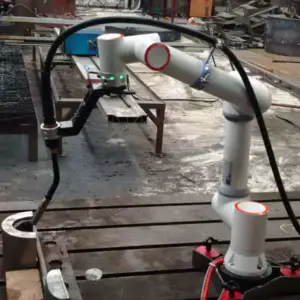
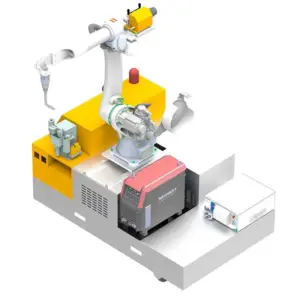
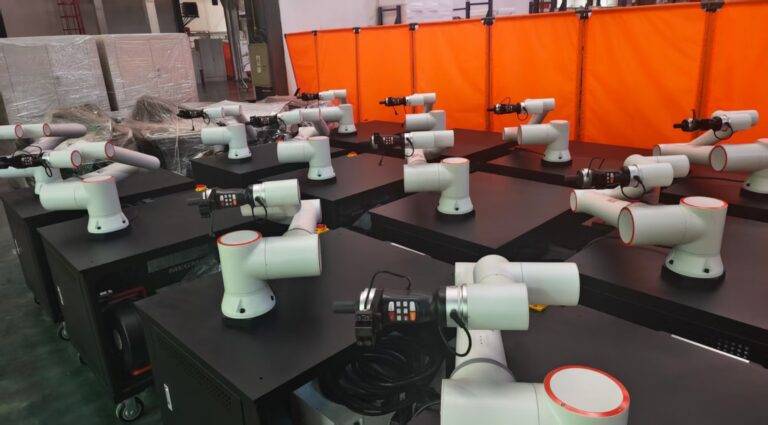
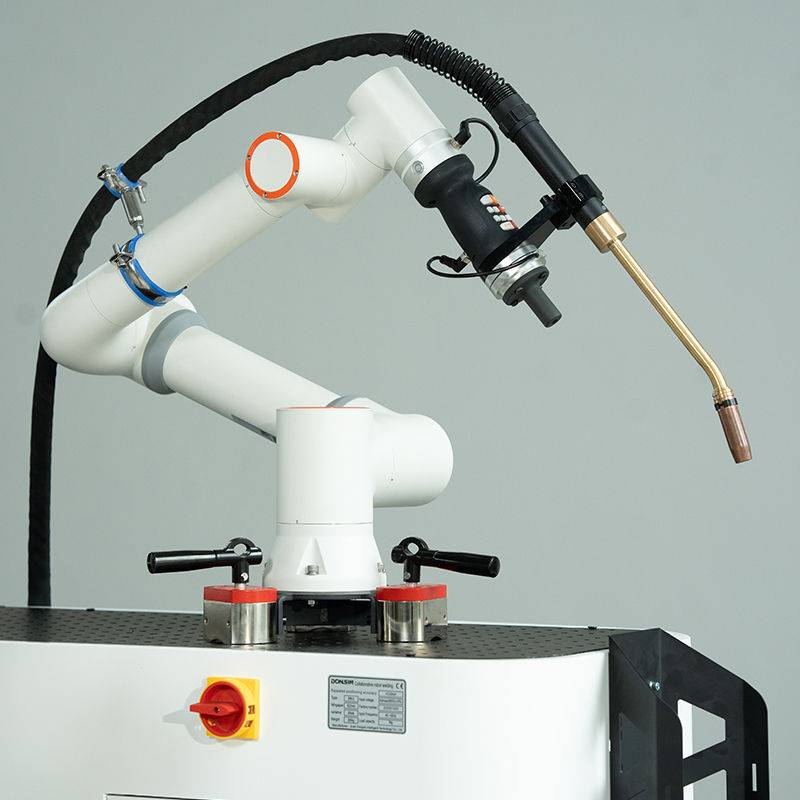
The core of the installation is a 1000W continuous wave (CW) fiber laser integrated into a 6-axis collaborative arm. Unlike traditional industrial robots, this Cobot Welding Machine utilizes high-resolution force-torque sensors at each joint.
2.1 Power Density and Optical Delivery
The 1000W power rating is the “sweet spot” for the thicknesses typically found in Bursa’s automotive bracketry. During the commissioning phase, we calibrated the laser for a 50-micron fiber core, providing sufficient power density to achieve deep penetration in mild steel welding up to 4mm while maintaining a narrow heat-affected zone (HAZ).
2.2 The Collaborative Interface
The integration of collaborative robotics allows the operator to perform “lead-through programming.” This is a significant leap for the local workforce. Instead of writing lines of code, the senior welder in the Bursa shop physically moves the torch through the desired path, recording waypoints. This reduces setup time from hours to minutes.
3. The Synergy of Collaborative Robotics and Shop Floor Safety
One of the primary “lessons learned” during this deployment involves the definition of “collaborative.” Many operators initially feared that a 1000W laser mounted on a robot was inherently unsafe without a cage.
3.1 Risk Assessment in Bursa’s Industrial Environment
We implemented a dual-zone safety protocol. While the Cobot Welding Machine is technically safe to work alongside regarding mechanical impact (due to its force-sensing stops), the 1000W laser radiation remains a Class 4 hazard. Our solution was the use of laser-safe curtains and a “hand-on-switch” collaborative mode. The collaborative robotics element ensures that if the operator enters the immediate workspace, the robot’s speed reduces to 250mm/s, and the laser interlock is ready to trigger if a proximity sensor is tripped.
3.2 Ergonomic Gains
In the Bursa facility, manual welders previously suffered from repetitive strain during the welding of 400+ brackets per shift. The Cobot Welding Machine has taken over the repetitive straight-line and circular paths, allowing the human welder to focus on quality QC and part fit-up—tasks where human intuition still outperforms current AI.
4. Technical Analysis: Mild Steel Welding Performance
Mild steel welding is the bread and butter of Turkish manufacturing. However, mild steel (specifically S235 and S355 grades commonly used in Bursa) presents specific challenges for laser integration, such as surface oxidation and varying carbon content.
4.1 Metallurgical Observations
During the first week of testing, we observed minor porosity in the root of the weld. This was traced back to the mill scale on the mild steel plates.
Lesson Learned: Laser-based mild steel welding is less forgiving than GMAW regarding surface contaminants. We updated the SOP (Standard Operating Procedure) to include a quick abrasive wipe-down. Once the surface was clean, the 1000W source produced a refined grain structure in the HAZ, significantly increasing the fatigue life of the automotive brackets compared to the manual arc welds.
4.2 Wobble Parameters for Gap Bridging
In real-world Bursa workshops, part fit-up is rarely perfect. We utilized the “wobble” function of the Cobot Welding Machine—a technique where the laser beam oscillates in a circular or zig-zag pattern. By setting a 1.5mm wobble width at a frequency of 150Hz, the cobot successfully bridged gaps of up to 0.8mm in mild steel welding, which would have otherwise resulted in burn-through or incomplete fusion.
5. Collaborative Robotics: Programming and Flexibility
The shift to collaborative robotics allowed the Bursa facility to move toward a “High-Mix, Low-Volume” (HMLV) production model.
5.1 Lead-Through Teaching Efficiency
We timed the programming of a complex hexagonal weldment. A traditional industrial robot programmer took 45 minutes to optimize the path. Using the Cobot Welding Machine‘s lead-through teaching, a manual welder with only two days of training completed the path in 6 minutes. This democratization of robotics is essential for Turkish SMEs (Small to Medium Enterprises) that cannot afford a dedicated robotics department.
5.2 Fixturing Requirements
A common mistake in collaborative robotics deployment is underestimating the need for precision fixturing. Because the Cobot Welding Machine follows a programmed path with sub-millimeter repeatability, the “loose” jigs used for manual welding in Bursa had to be replaced with pneumatic clamping systems. Without consistent part positioning, the benefits of the 1000W laser are lost.
6. Lessons Learned from the Bursa Field Site
Over the 30-day installation period, several key technical insights were documented:
6.1 Gas Shielding Optimization
For mild steel welding, we initially used a 75/25 Argon-CO2 mix. However, with the 1000W fiber laser, we found that pure Argon provided a cleaner plasma suppression and better bead aesthetics. In the Bursa market, pure Argon is slightly more expensive, but the reduction in post-weld grinding labor resulted in a 12% net saving per part.
6.2 Thermal Management
Continuous use of a 1000W Cobot Welding Machine on thin-gauge mild steel can lead to heat buildup in the fixture. We had to integrate a water-cooled baseplate for the jigging system to prevent thermal expansion from throwing the parts out of tolerance during long production runs.
6.3 The “Human” Factor
The most successful aspect of the collaborative robotics implementation was the shift in worker morale. By framing the cobot as a “power tool” rather than a “replacement,” the Bursa team embraced the technology. The manual welders are now “Cobot Technicians,” a title change that has assisted the company in retaining its top talent.
7. ROI and Quality Metrics
The data from the Bursa site is conclusive:
- Cycle Time: Reduced by 65% compared to manual mild steel welding.
- Consumable Cost: Wire consumption dropped by 40% as the laser fusion process requires less filler material than GMAW.
- Rejection Rate: Dropped from 4.2% to 0.5% due to the repeatable accuracy of the Cobot Welding Machine.
8. Conclusion
The deployment of the 1000W Cobot Welding Machine in Bursa proves that collaborative robotics is no longer a futuristic concept but a practical necessity for modern mild steel welding operations. The synergy between human adaptability and robotic precision allows for a level of throughput that manual labor alone cannot achieve. For future installations, the focus must remain on rigid fixturing and meticulous surface preparation to fully leverage the power of the fiber laser source.
Report Submitted By:
Senior Welding Engineer, Field Operations
Location: Bursa, Turkey