Engineering Review: Low-spatter MAG Fiber Laser Cobot – Rayong, Thailand

In this article
- Field Evaluation: Hybrid Laser-MAG Integration in Rayong Heavy Fabrication
- Site Context and Infrastructure
- Core Component: The Fiber Laser Cobot System
- Challenges in Thick Plate Steel Welding
- Environmental Variables: The Rayong Factor
- Lessons Learned and Process Optimization
- Technical Data Table: 15mm Structural Steel (Single Pass)
- Conclusion: Scalability for Thai Heavy Industry
Field Evaluation: Hybrid Laser-MAG Integration in Rayong Heavy Fabrication
This report details the operational integration and performance metrics of the Fiber Laser Cobot system deployed at our Rayong facility. The objective was to replace traditional manual MAG (Metal Active Gas) processes on thick plate steel welding lines, specifically targeting a reduction in post-weld grinding and improving deep-penetration consistency.
Rayong’s industrial environment presents specific challenges: high ambient humidity, fluctuating power grid stability in the industrial estate, and a shortage of high-skill manual welders. By implementing advanced Laser Technology via a collaborative robot (cobot) framework, we aimed to stabilize the arc-laser synergy for structural components.
Site Context and Infrastructure
The facility in Rayong operates within the Eastern Economic Corridor (EEC), focusing on heavy machinery chassis components. Prior to this deployment, 12mm to 20mm thick plate steel welding was performed using semi-automatic GMAW. The primary bottlenecks were excessive spatter on the face of the plate and inconsistent penetration depth in V-groove geometries.
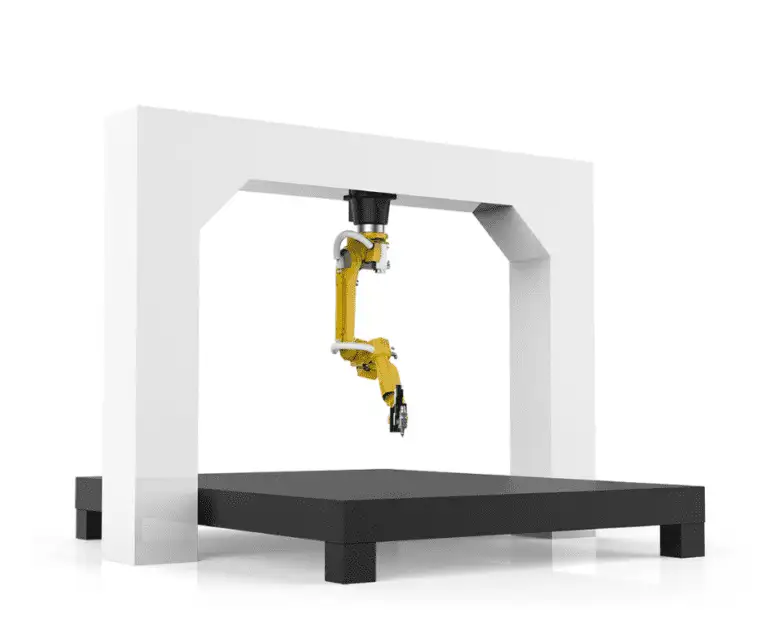
The introduction of the Fiber Laser Cobot was not merely an automation step but a process shift. We utilized a 6kW continuous wave (CW) fiber source integrated with a high-payload cobot arm, allowing the flexibility of a manual operator with the precision of a CNC gantry.
Core Component: The Fiber Laser Cobot System
The Fiber Laser Cobot represents a hybrid evolution. Unlike standalone laser welding, which struggles with the fit-up tolerances common in thick plate steel welding, the hybrid approach uses laser technology to “anchor” the MAG arc.
In our Rayong setup, the cobot handles the torch/laser head assembly. The cobot’s lead-through programming is critical here. Our senior welders, who understand the “feel” of the puddle, can manually guide the cobot to define the path, while the laser technology maintains the keyhole. This synergy ensures that even with the slight deviations found in heavy plate prep, the weld remains centered.
Synergy of Laser Technology in Arc Stabilization
The fundamental advantage observed during the trials was the laser’s role in droplet transfer. In traditional MAG, high-current spray transfer often results in turbulent weld pools and high spatter. By introducing laser technology into the arc zone, we created a plasma bridge that stabilizes the metal transfer.
The laser acts as a stabilizer for the MAG arc, pulling the arc into the keyhole. This reduces the electromagnetic blow that typically causes spatter in thick plate steel welding. In Rayong, where we often work with ASTM A36 and S355JR grades, this stability meant we could run at higher wire feed speeds (up to 15 m/min) without the typical “pop” and spatter associated with high-amperage MAG.
Challenges in Thick Plate Steel Welding
When dealing with thick plate steel welding (15mm and above), heat management is the primary enemy. Traditional methods require multiple passes, increasing the Heat Affected Zone (HAZ) and causing significant plate distortion.
During the first week in Rayong, we encountered significant root-pass inconsistency. The Fiber Laser Cobot was initially set to a standard weave pattern, but the laser technology was penetrating too deeply, causing “burn-through” at the root gap.
Technical Lesson Learned: We had to recalibrate the laser’s power-to-speed ratio. For 15mm S355JR steel, we found the “sweet spot” at 4.5kW laser power, 28V arc voltage, and a travel speed of 0.8 m/min. This configuration allowed for a single-pass full penetration weld on a square-butt joint with a 0.5mm gap, something impossible with manual MAG.
Penetration and Spatter Control Parameters
Spatter reduction is not just an aesthetic requirement; in Rayong’s maritime-adjacent environment, spatter serves as a nucleation point for corrosion.
– Standard MAG: Post-weld cleaning took 20 minutes per meter of weld.
– Fiber Laser Cobot: Post-weld cleaning was reduced to 3 minutes per meter.
The laser technology creates a narrow, deep melt pool. Because the energy density is so high, the metal vaporizes and creates a keyhole. The surrounding MAG arc then fills this keyhole. This “laser-lead” configuration ensures that the arc energy is focused, preventing the peripheral droplets that characterize low-quality MAG welds on thick plate steel welding projects.
Environmental Variables: The Rayong Factor
Rayong’s relative humidity often exceeds 80%. This impacts thick plate steel welding by introducing hydrogen into the weld pool via moisture in the shielding gas or on the plate surface.
While the Fiber Laser Cobot increases speed, it also increases the cooling rate. A faster cooling rate in high-humidity environments can lead to hydrogen-induced cracking (HIC). To counteract this, we integrated a localized induction pre-heating element ahead of the cobot path.
Furthermore, the laser technology optics required specialized pressurized housings. In the dusty, humid atmosphere of the Rayong plant, standard lens covers would fail within four hours. We implemented a “cross-jet” air curtain using nitrogen to protect the laser optics from both spatter and ambient humidity.
Lessons Learned and Process Optimization
1. Fit-up Precision is Non-Negotiable: While the Fiber Laser Cobot is more forgiving than a pure laser, thick plate steel welding still requires tighter tolerances than manual welding. If the gap exceeds 1.5mm, the laser keyhole collapses. We had to upgrade our plasma cutting table to ensure edge straightness before the cobot could perform.
2. Gas Shielding Dynamics: We discovered that a standard gas nozzle was insufficient at the speeds the Fiber Laser Cobot achieves. We switched to a trailing shield gas kit. This ensured that the weld bead remained protected as it transitioned from a liquid to a solid state, critical for maintaining the structural integrity of thick plate steel welding.
3. Operator Upskilling: The “seniority” of the engineer in this context involves translating “arc feel” into “parameter logic.” The Rayong staff initially feared the laser technology would replace them. Instead, we shifted their role to “Cell Supervisors,” where they monitor the plasma plume color—a key indicator of weld health that the Fiber Laser Cobot‘s sensors might miss.
Technical Data Table: 15mm Structural Steel (Single Pass)
| Parameter | Value |
| :— | :— |
| Laser Power | 4.8 kW (CW) |
| Wire Feed Speed | 12.5 m/min |
| Travel Speed | 0.9 m/min |
| Gas Mix | 80% Ar / 20% CO2 |
| Laser Focal Point | -2mm (below surface) |
| Resulting HAZ | 3.2mm (Reduced from 8.5mm manual) |
Conclusion: Scalability for Thai Heavy Industry
The deployment in Rayong confirms that the Fiber Laser Cobot is a viable solution for thick plate steel welding in tropical industrial zones. The synergy between the localized high energy of laser technology and the filling capability of the MAG process addresses the two biggest issues in the region: labor shortage and weld quality.
Moving forward, we recommend the implementation of a dual-cobot station. While one Fiber Laser Cobot performs the root and fill on a 20mm plate, the second can perform the cap pass or handle auxiliary tacking. The reduction in spatter alone justifies the CAPEX, as the “hidden cost” of grinding in Rayong’s heat is a major driver of turnover in the manual welding workforce.
The laser technology is no longer a “lab-only” tool; it is now a ruggedized field asset capable of handling the heaviest sections of steel our facility can produce.