
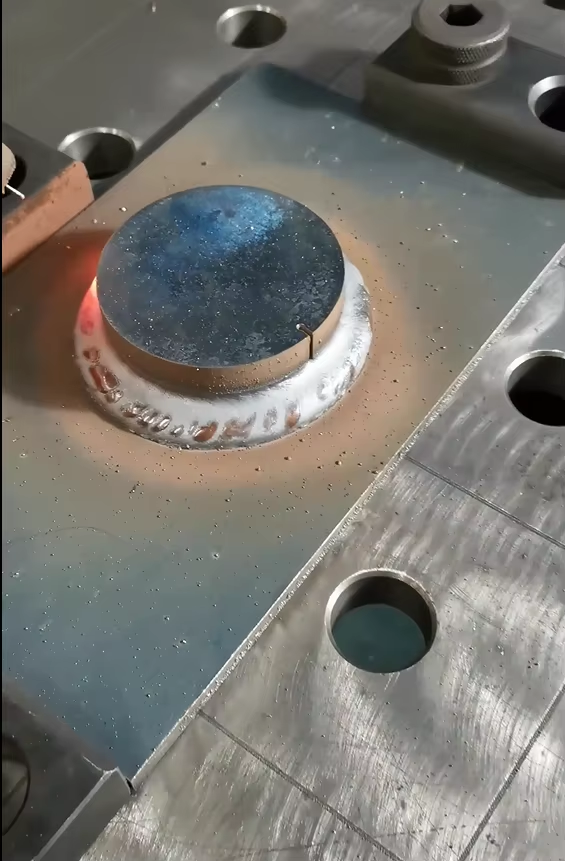
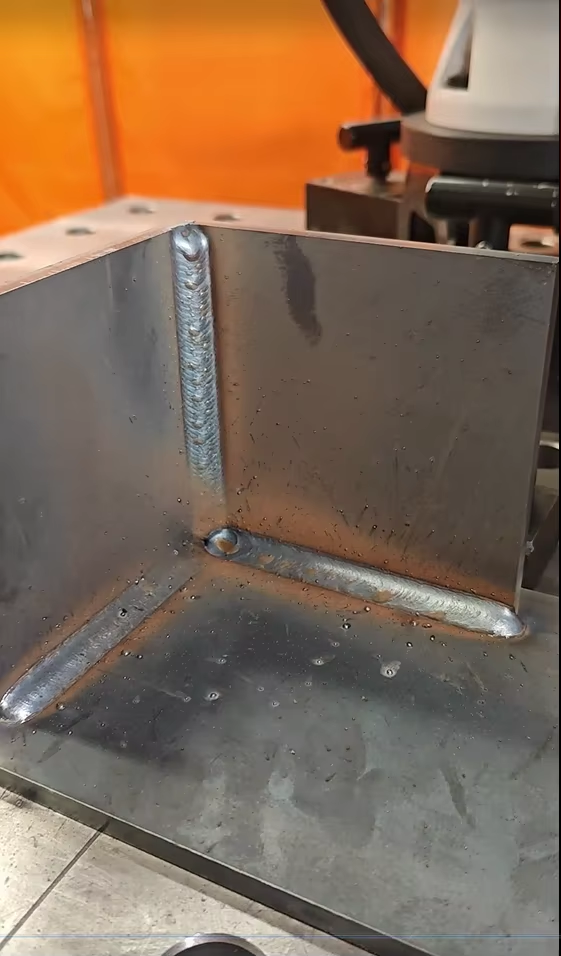
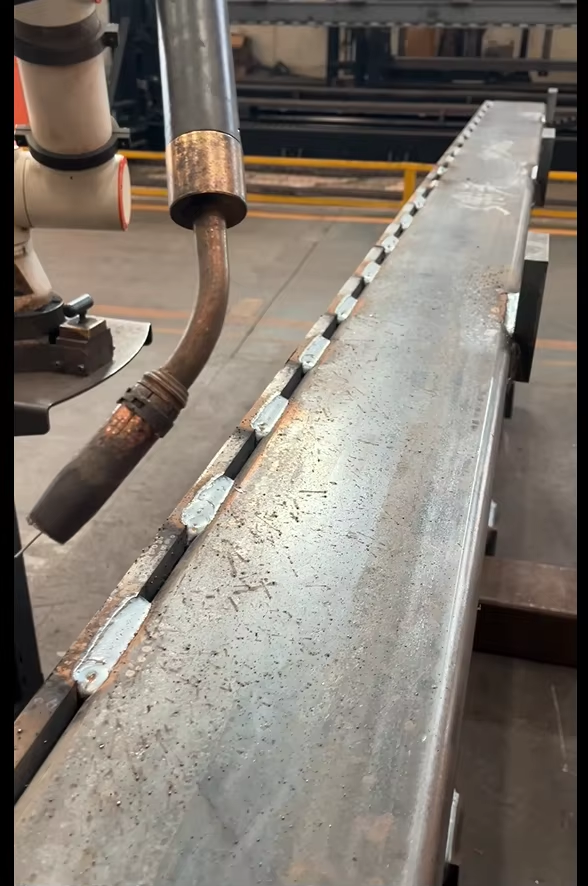
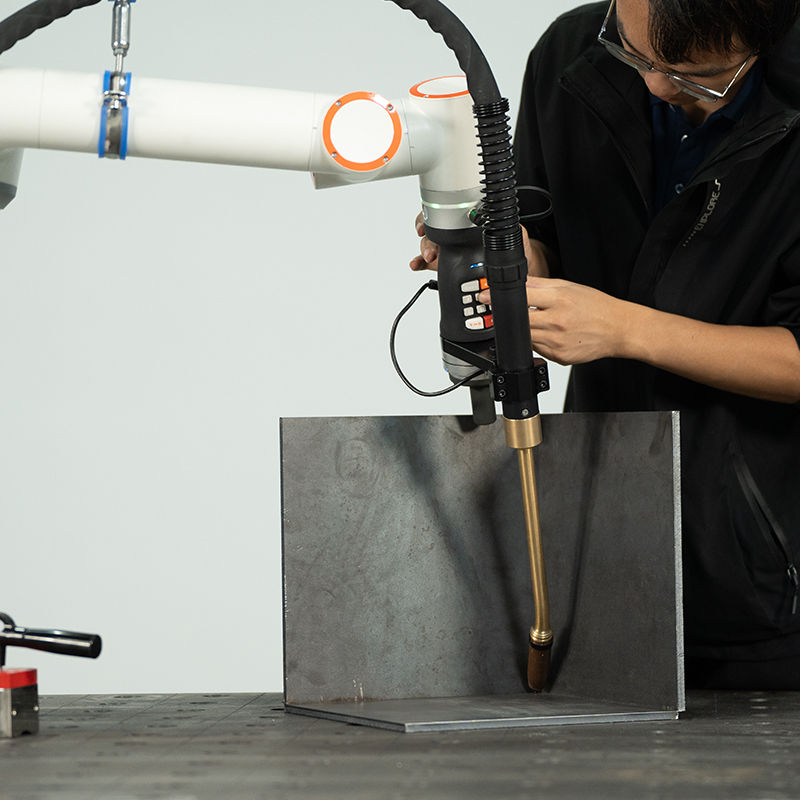

Introducing our Industrial Collaborative Robotic Welding Station, specifically designed for the efficient and precise welding of steel structures. This advanced station seamlessly integrates collaborative robotics technology, enabling safe and effective human-robot interaction while enhancing productivity in industrial environments. With its robust construction and user-friendly interface, this welding station is ideal for manufacturers seeking to optimize their operations and improve weld quality.

The PCL Cobot Welding Machine is the ultimate solution for Small and Medium-Sized Enterprises (SMEs) looking to automate their production. Unlike traditional industrial robots, our Collaborative Robots (Cobots) are lightweight, space-saving, and require zero coding experience. With intuitive hand-guided teaching, your skilled welders can program complex paths in minutes, solving labor shortages and ensuring consistent weld quality for high-mix, low-volume production.
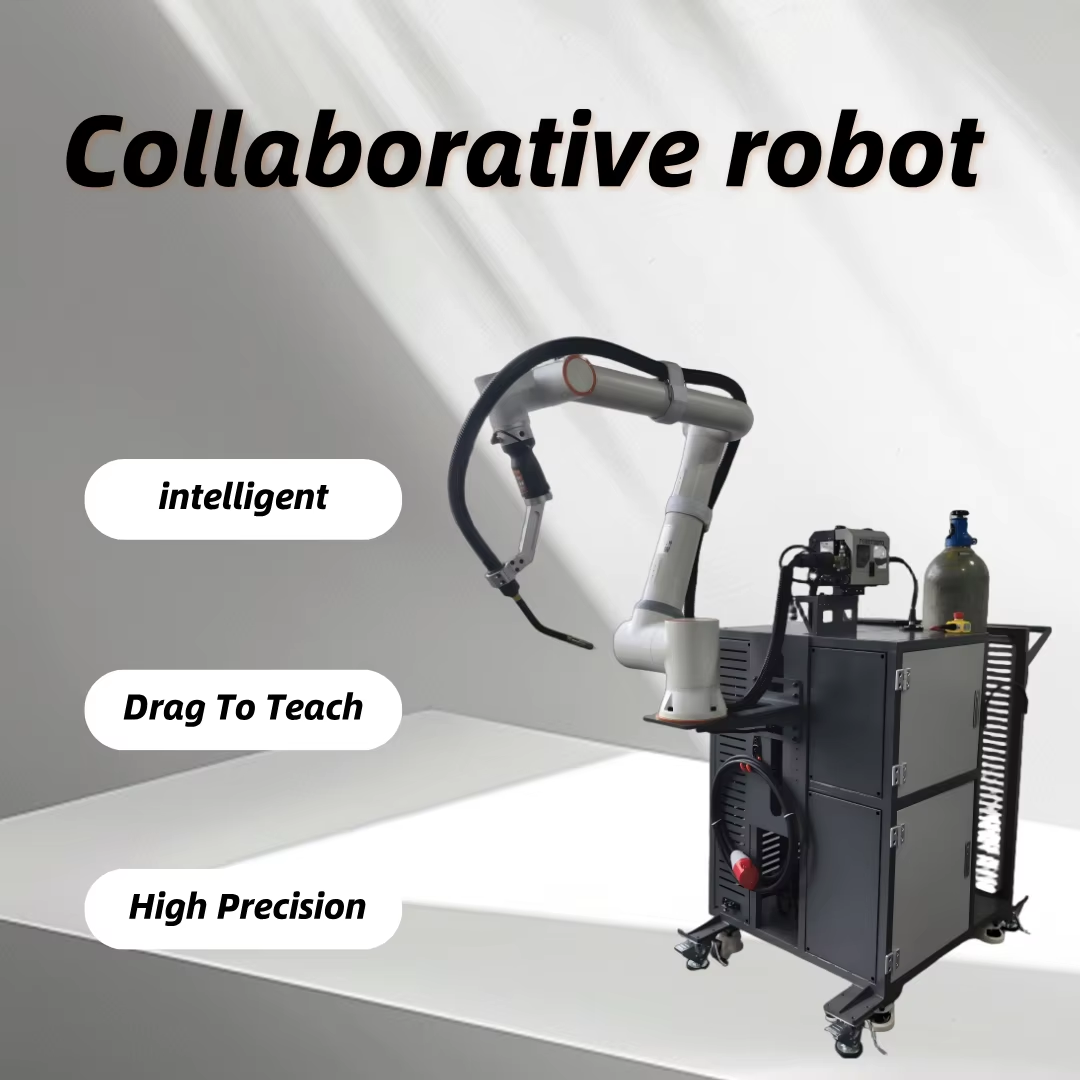
cobot welding

Technical Specifications

Payload Capacity 5kg / 10kg / 20kg Options
Working Reach 900mm – 1300mm+
Welding Process MIG / MAG / TIG / Laser Welding
Programming Method Direct Hand-Guiding / Tablet App
Safety Certification ISO 10218-1 & ISO/TS 15066

Operational Advantages

Hand-Guided Teaching

Eliminate the need for complex robot coding. Simply move the cobot arm to the desired points by hand and save the path on the intuitive touch-screen interface. It’s as simple as using a smartphone.

Fence-Free Operation

Equipped with advanced force-feedback sensors, the cobot stops instantly upon contact with an operator. This safety feature allows for a “fence-free” environment, saving up to 70% of floor space compared to traditional cells.

Rapid Deployment

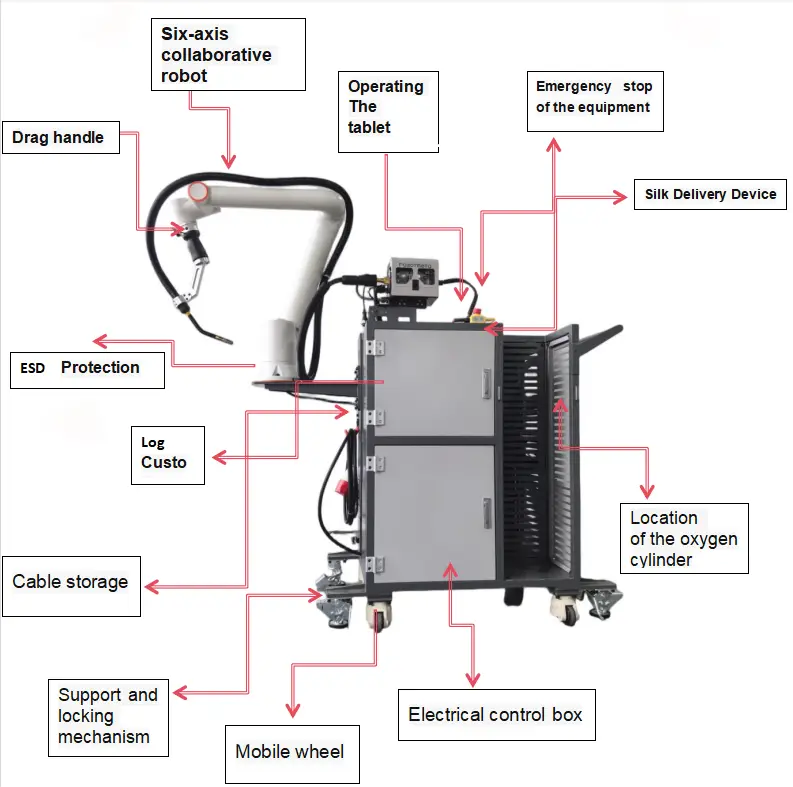
Our cobot system is mounted on a mobile industrial cart. Move the entire welding station across your factory floor as production needs change. Plug into a standard power outlet and start welding the same day.

Programming Efficiency Comparison
Method Programming Speed Best Use Case
Hand-Guided Teaching Fast (Physical Input) Small batches, simple joints
Offline Programming (OLP) Very Fast (CAD-Based) Complex geometries & simulations
Teaching-Free (3D Scanning) Instant (Vision-Based) One-off custom parts & repairs

cobot welding machine configuration

Frequently Asked Questions

Q1: Do I need a software engineer to operate the cobot?

No. Our system is designed for welders, not programmers. If you can weld manually, you can learn to operate the PCL Cobot in less than half a day.

Q2: What materials and thicknesses can it weld?

The cobot is compatible with various power sources to weld Carbon Steel, Stainless Steel, and Aluminum, ranging from 0.5mm to 20mm depending on the configuration.


PCL GROUP Intelligent Equipment CO.,LTD

casper
casper

Advanced Programming: OLP vs. Teaching-Free System

For large-scale gantry welding, manual "point-to-point" teaching is inefficient. PCL offers two cutting-edge solutions to minimize downtime and maximize precision. Understanding the difference is key to choosing the right automation level for your factory.

SOFTWARE-BASED

Off-line Programming (OLP)

OLP allows engineers to create welding paths in a 3D virtual environment using CAD data (STEP/IGES).

  • Zero Downtime: Program the next job on a PC while the robot is still welding.
  • Collision Detection: Simulates the gantry movement to prevent accidents in a virtual space.
  • Best For: Complex workpieces with high repeat rates and detailed weld joints.
AI & SENSOR BASED

Teaching-Free Welding System

Uses 3D laser scanning or vision sensors to "see" the workpiece and generate paths automatically without any CAD data.

  • Instant Setup: No manual coding or 3D modeling required; just scan and weld.
  • High Flexibility: Ideal for "One-off" parts where every workpiece is slightly different.
  • Real-time Adaptation: Automatically compensates for thermal distortion and fit-up gaps.
  • Best For: Custom fabrication, repairs, and low-volume/high-mix production.
Feature Off-line Programming (OLP) Teaching-Free System
Input Required CAD 3D Models 3D Laser Scanning
Programming Time Minutes to Hours (Off-site) Seconds (On-site)
Ideal Production Mass Production / Batch Work Custom / Single Unit Work

Frequently Asked Questions

Q1: What is the maximum workpiece size a gantry robot can handle?

The primary advantage of a gantry system is its scalability. Unlike fixed-base robots, the gantry rail length can be extended from 6 meters to over 30 meters. We customize the X, Y, and Z travel strokes based on your specific components, such as trailer chassis or large pressure vessels.

Q2: How does the robot handle material deviations or heat deformation?

For large workpieces, we recommend integrating Laser Seam Tracking or Arc Sensors. These technologies allow the robot to detect the actual weld joint position in real-time and adjust the torch path automatically, compensating for thermal distortion or fit-up tolerances.

Q3: Which robot brands are compatible with the PCL Gantry System?

Our gantry structures are highly flexible and can be integrated with leading international brands including Fanuc, ABB, Yaskawa, and KUKA, as well as our proprietary PCL robotic arms. We provide the full integration including the synchronized 7th or 8th external axes.

Q4: Is it difficult to program a gantry robot for complex large structures?

Not at all. We offer Off-line Programming (OLP) software. This allows your engineers to simulate the welding process and generate code on a PC using CAD data, significantly reducing machine downtime and preventing potential collisions before the physical welding starts.

Q5: Can one gantry system manage multiple welding stations?

Yes. A common configuration is a dual-station setup. While the robot is welding at Station A, operators can safely load or unload workpieces at Station B. This maximizes the robot's "Arc-on Time" and ensures continuous production flow.



