Automatic Girth Seam Welder with Laser Seam Tracking for Shipbuilding
In this article
- Optimization of Shipbuilding Throughput via Automatic Girth Seam Welding
- The MAG Process: Technical Parameters in Large-Scale Assembly
- Laser Seam Tracking: The Precision Component
- Maintenance Framework for High-Utilization Systems
- ROI Analysis: Labor Displacement and Throughput Gains
- Safety and Ergonomic Improvements
- Conclusion: The Future of Modular Construction
Optimization of Shipbuilding Throughput via Automatic Girth Seam Welding
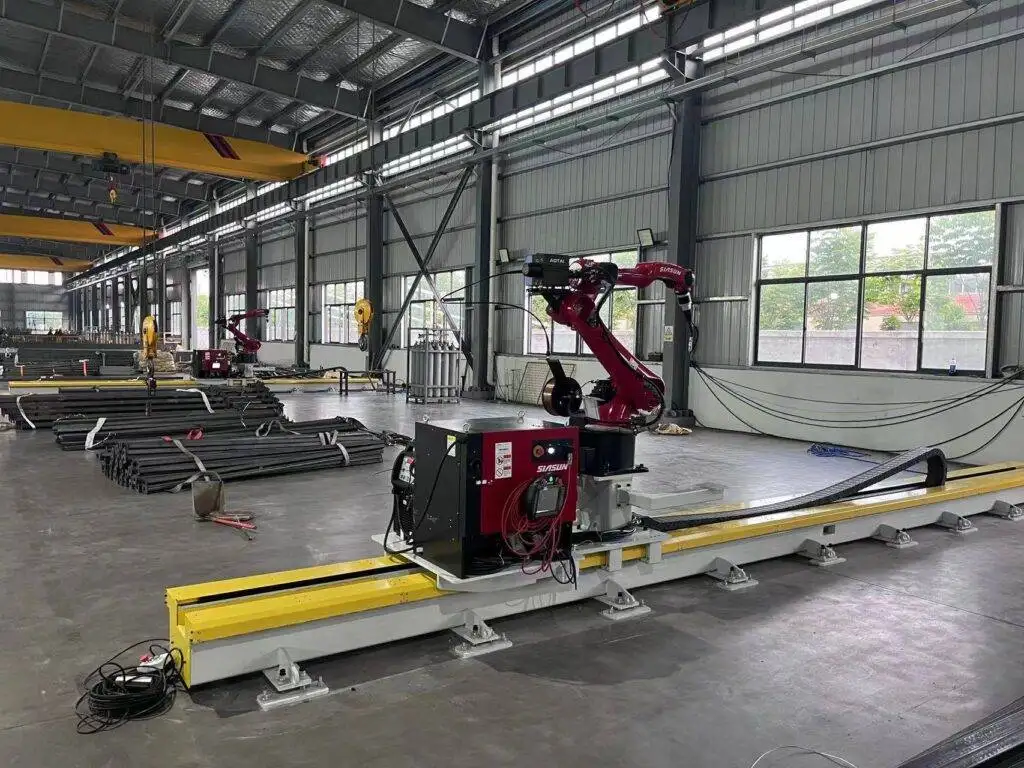
In the contemporary shipyard environment, the pressure to reduce lead times while maintaining stringent structural integrity standards has led to the rapid adoption of Automatic Girth Seam Welder technology. Girth welding, or the joining of large cylindrical or flat ship sections (blocks), represents one of the most labor-intensive phases of maritime construction. Traditionally, these seams required highly skilled manual operators to work in ergonomically challenging positions, often resulting in inconsistent bead profiles and variable penetration depths. The shift toward robotic MAG systems addresses these bottlenecks by providing a stabilized, high-duty-cycle alternative that operates with mathematical precision.
The MAG Process: Technical Parameters in Large-Scale Assembly
The Metal Active Gas (MAG) process, specifically using Gas Metal Arc Welding (GMAW) principles with active shielding gases like CO2 or Argon-CO2 blends, is the engine behind girth seam automation. Unlike manual metal arc welding (MMAW), the Automatic Girth Seam Welder utilizes a continuous wire feed system. This allows for significantly higher deposition rates. In shipbuilding, where plate thicknesses often exceed 25mm, the ability to maintain a consistent spray transfer mode is critical.
From an industrial engineering perspective, the MAG process in a robotic configuration allows for precise control over the Heat Affected Zone (HAZ). By modulating travel speed and wire feed speed in synchronization, the system minimizes thermal distortion across the hull plates. This is particularly vital in girth welding where the circumference or length of the seam can lead to cumulative stresses. Robotic integration ensures that the arc voltage remains constant, compensating for the voltage drops typically seen in long cable runs found on shipyard floors.
Laser Seam Tracking: The Precision Component
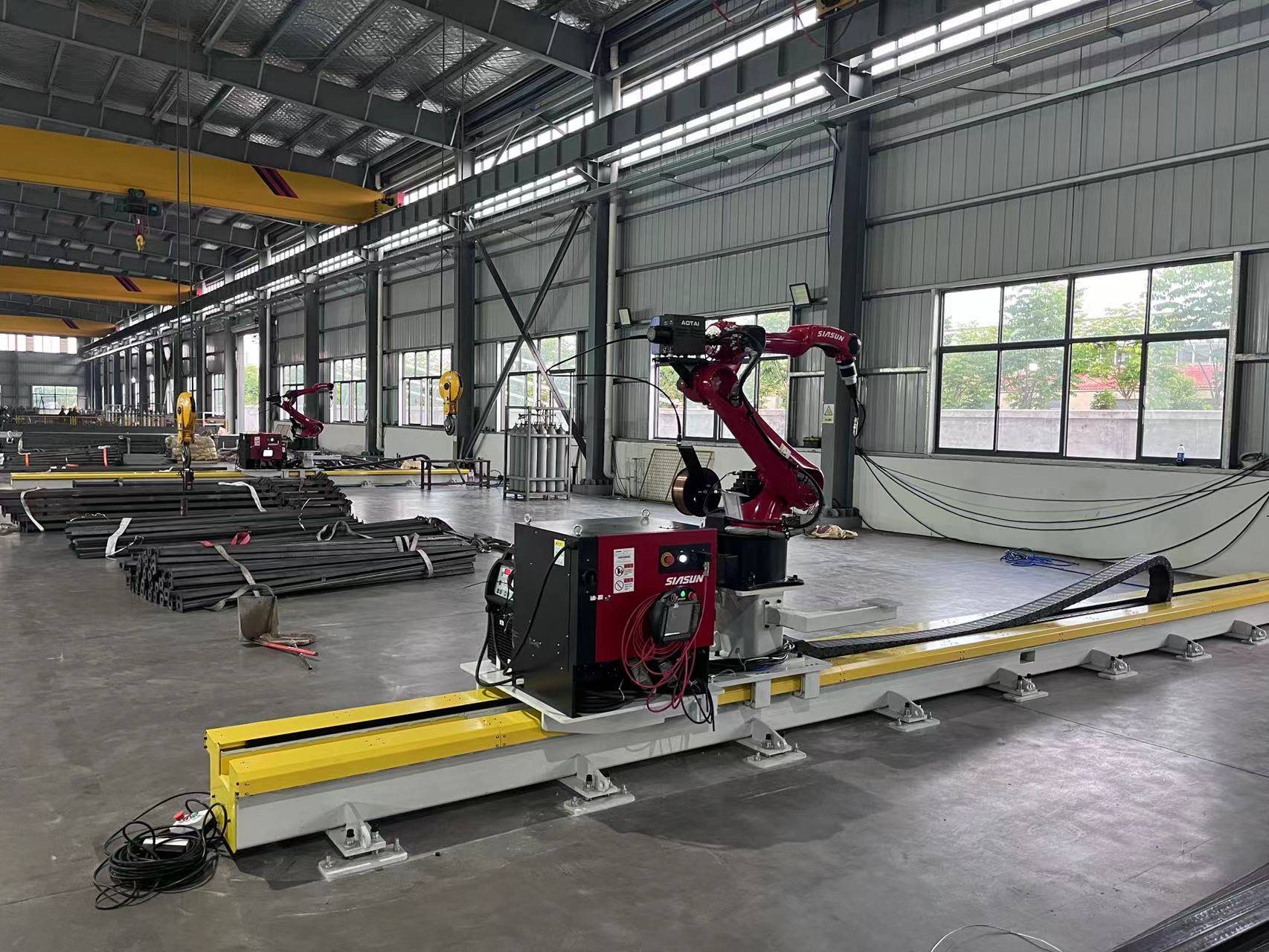
While the welding torch provides the mechanical union, the laser seam tracking system provides the “vision” necessary for autonomy. Ship blocks are rarely perfectly aligned; thermal expansion, gravity-induced sagging, and fabrication tolerances create “V” or “U” groove variations that a fixed-path robot cannot handle. The laser sensor, mounted ahead of the MAG torch, scans the joint geometry in real-time.
This data is processed via high-speed algorithms to adjust the torch position across the Y and Z axes. If the gap widens, the system can automatically adjust the oscillation width or travel speed to ensure full fusion. This eliminates the need for “stop-and-start” corrections that plague manual operations. In the context of Robotic Welding, this adaptive capability is the difference between a 98% first-pass success rate and a costly rework cycle. By maintaining the arc in the center of the root opening regardless of plate irregularities, the system ensures metallurgical consistency throughout the entire 360-degree or longitudinal traverse.
Maintenance Framework for High-Utilization Systems
To realize the projected gains in efficiency, a rigorous preventative maintenance (PM) schedule must be enforced. Unlike manual machines, a robotic girth welder is a precision instrument. The primary failure points in these systems are typically the wire delivery path and the optical integrity of the tracking sensor.
Consumable Management
Contact tips and gas nozzles must be inspected every shift. In high-amperage MAG welding, copper contact tips experience “keyholing,” where the wire wears an elliptical path through the orifice, leading to arc instability. Industrial standards suggest replacement based on wire throughput (e.g., every 200kg of wire) rather than waiting for failure. Furthermore, the wire liners must be purged with compressed air to remove copper flaking, which can cause friction increases and erratic motor load on the wire feeder.
Optical Sensor Calibration
The laser seam tracker operates in a harsh environment characterized by spatter, smoke, and intense UV light. The protective glass or “spatter shield” of the laser unit is a critical maintenance item. A dirty lens leads to signal attenuation, resulting in tracking drift. Daily cleaning with approved solvents and weekly calibration checks against a known gauge block are mandatory to maintain the +/- 0.1mm accuracy required for deep-penetration hull seams.
ROI Analysis: Labor Displacement and Throughput Gains
The financial justification for an Automatic Girth Seam Welder is rooted in the Labor ROI calculation, which extends far beyond simple hourly wage comparisons. In a manual shipyard setting, a welder’s “arc-on” time or duty cycle is typically between 20% and 30% due to fatigue, repositioning, and environmental factors. A robotic system, conversely, operates at a duty cycle of 70% to 85%.
Consider a standard 50-meter girth seam on a VLCC (Very Large Crude Carrier). A manual team might require four welders working multiple shifts to complete the root, fill, and cap passes, accounting for roughly 160 man-hours. A single robotic girth welder, managed by a single technician, can often complete the same task in 40 hours. This 4:1 labor compression ratio allows the shipyard to reallocate its most skilled human assets to complex “out-of-position” joints that robots cannot yet access.
Furthermore, the reduction in “Repair Rate” provides a secondary but significant ROI stream. In manual welding, the defect rate (porosity, slag inclusions, lack of fusion) often hovers around 3-5% in heavy plate applications. Each repair requires gouging, re-cleaning, and re-welding, which costs roughly 10 times the amount of the original weld. Robotic systems with laser tracking typically bring the defect rate below 0.5%. When calculating the Total Cost of Ownership (TCO), the payback period for a high-end robotic girth welder in a busy shipyard is frequently under 18 months.
Safety and Ergonomic Improvements
Beyond the balance sheet, the industrial engineer must account for the reduction in Long-Term Disability (LTD) claims. Girth welding exposes humans to high concentrations of manganese fumes and sustained infrared radiation. By utilizing an automated carriage, the operator is moved away from the immediate plume zone. The robotic system handles the physical burden of the heavy MAG torch and lead cables, significantly reducing the incidence of musculoskeletal disorders. This leads to better workforce retention and lower insurance premiums, which are essential components of a sustainable shipyard operation.
Conclusion: The Future of Modular Construction
The integration of Automatic Girth Seam Welder units signifies a departure from “craft-based” shipbuilding toward a “manufacturing-based” model. By focusing on the MAG process’s high deposition capabilities and the corrective precision of laser seam tracking, shipbuilders can achieve levels of scale previously impossible. The ROI is substantiated not just by faster welding, but by the systemic elimination of rework and the optimization of human capital. As global maritime standards become more stringent, the shift toward robotic precision is no longer an elective upgrade but a competitive necessity.






