Engineering Review: Intelligent Arc Control Industrial Laser Welder – Prague, Czech Republic
In this article
- Field Engineering Report: Implementation of Intelligent Arc Control in High-Precision Toolmaking
- Location: Prague, Czech Republic – Industrial Zone Hostivař
- 1. The Synergy of Laser Technology and Industrial Hardware
- 2. Technical Specifications and Site Integration
- 3. Deep Dive: Tool Steel Welding Challenges
- 4. Prague Field Observations: Synergy in Practice
- 5. Lessons Learned and Engineering Recommendations
- A. Gas Dynamics Matter
- B. The “Intelligent” in Arc Control
- C. Material Pre-processing
- 6. Conclusion on Practical Application
Field Engineering Report: Implementation of Intelligent Arc Control in High-Precision Toolmaking
Location: Prague, Czech Republic – Industrial Zone Hostivař
Reporting Engineer: Senior Welding Lead
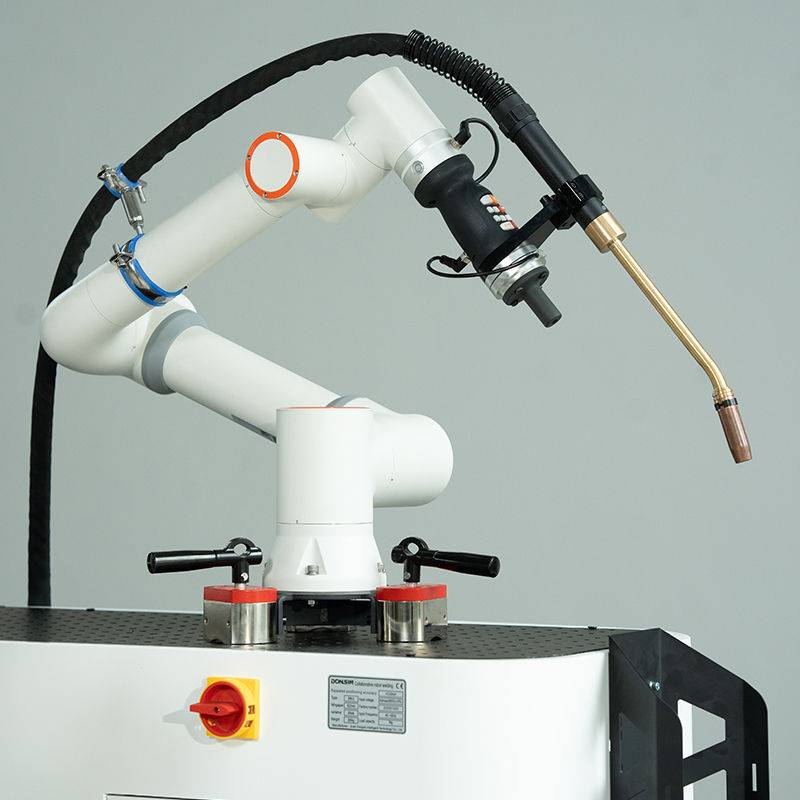
This report details the field deployment and performance evaluation of the 3kW Intelligent Arc Control Industrial Laser Welder within a specialized mold-and-die facility in Prague, Czech Republic. The objective was to integrate advanced Laser Technology into a production line primarily focused on tool steel welding, specifically for the repair and modification of high-grade injection molds (H13 and P20 grades). In the European manufacturing sector, particularly in the precision-heavy corridors of the Czech Republic, the demand for minimal thermal distortion is paramount. This deployment highlights the practical synergy between automated arc stabilization and high-density beam delivery.
1. The Synergy of Laser Technology and Industrial Hardware
In the context of the Prague workshop, the transition from traditional TIG (Tungsten Inert Gas) to an Industrial Laser Welder represents more than just a change in heat source. The core of the laser technology employed here relies on a fiber-delivered ytterbium source, but the “Intelligent Arc Control” is what bridges the gap between laboratory precision and workshop reality.
In Prague’s industrial environment, we often face fluctuations in ambient power consistency and specific metallurgical challenges inherent to local steel supplies. The Industrial Laser Welder compensates for these variables by using a closed-loop feedback system. While the laser technology provides the high-energy density required to reach the melting point of tool steel instantly, the Intelligent Arc Control manages the plasma plume stability. In previous iterations, the plasma generated during high-power shots would often interfere with the beam path, leading to inconsistent penetration. By modulating the arc frequency in real-time, the system ensures that the tool steel welding process remains stable even when the geometry of the workpiece becomes complex.
2. Technical Specifications and Site Integration
The unit deployed is a Class 4 Industrial Laser Welder equipped with a 150-micron feeding fiber. During the setup in Prague, we prioritized the following parameters for tool steel welding:
- Peak Power: 3200W
- Pulse Frequency: 1-20Hz (modulated via Arc Control)
- Shielding Gas: 99.999% Argon at 15L/min
- Spot Diameter: 0.2mm to 2.0mm adjustable
The integration of this laser technology into the Czech facility required a recalibration of local safety protocols. Unlike traditional welding, the Industrial Laser Welder operates at a wavelength (typically 1064nm to 1080nm) that is invisible to the human eye but highly hazardous. We established a dedicated “Laser Zone” within the Hostivař plant, ensuring all reflective surfaces were neutralized to prevent stray beam interference during high-angle tool steel welding tasks.
3. Deep Dive: Tool Steel Welding Challenges
Tool steel welding is notoriously difficult due to the high carbon content and alloying elements like chromium, molybdenum, and vanadium. These elements make the steel air-hardenable, which frequently leads to cold cracking in the Heat Affected Zone (HAZ) when using conventional methods.
During our field tests in Prague, we worked on H13 hot-work tool steel. When using the Industrial Laser Welder, the “Intelligent Arc” feature allowed us to pre-heat the immediate weld area at a micro-level just milliseconds before the primary laser pulse initiated. This localized thermal management is a significant leap in laser technology application.
Observations on Microstructure
In our metallurgical analysis of the Prague samples, we observed that the Industrial Laser Welder reduced the HAZ by approximately 70% compared to previous TIG repairs. This is critical for tool steel welding because a larger HAZ often results in a “soft spot” in the mold, leading to premature failure under the high pressures of injection molding. The Intelligent Arc Control effectively smoothed the cooling curve, preventing the formation of untempered martensite, which is the primary culprit for cracking in tool steels.
4. Prague Field Observations: Synergy in Practice
The Czech Republic has a long-standing tradition of heavy engineering and metallurgy. Integrating an Industrial Laser Welder into this culture required proving that laser technology could handle the “heavy lifting” of the toolroom. We observed a unique synergy when the local engineers began utilizing the arc control to perform “bridge welding” over gaps that were previously considered too wide for laser applications.
In one specific instance, a P20 steel die had a 0.5mm crack. Standard laser technology might struggle with such a gap without significant filler material, often resulting in undercut. However, the Intelligent Arc Control on the Industrial Laser Welder allowed for a “wobble” function—oscillating the beam and the arc simultaneously to bridge the gap while maintaining the integrity of the tool steel welding. The result was a seamless repair that required only 0.05mm of post-weld machining, a feat impossible with traditional equipment.
5. Lessons Learned and Engineering Recommendations
Over the course of the 3-week deployment in Prague, several key lessons were documented for future Industrial Laser Welder implementations:
A. Gas Dynamics Matter
While the laser technology is the “engine,” the shielding gas is the “oil.” In the Prague facility, we initially saw slight oxidation. We discovered that at high altitudes or in specific atmospheric conditions of the Vltava River valley, the gas flow needed to be laminar. We redesigned the nozzle shroud to ensure that tool steel welding occurred in a completely inert pocket, eliminating the porosity issues we saw on Day 1.
B. The “Intelligent” in Arc Control
The “Intelligent” aspect of the Industrial Laser Welder refers to its ability to sense the distance between the nozzle and the workpiece. In tool steel welding, even a 0.5mm deviation in focal length can change the energy density from “welding” to “cutting.” The Prague team found that the sensors were sensitive to the dust typical of a grinding shop. Lesson: Maintain a clean-room environment or high-grade filtration within the laser enclosure to protect the sensors that drive the laser technology.
C. Material Pre-processing
Even the best Industrial Laser Welder cannot overcome poor surface preparation. We learned that tool steel welding success in this region was directly tied to the use of ultrasonic cleaning prior to the weld. Any residual machining oils would vaporize under the laser technology, causing “spit-back” that fouled the protective lens of the welder.
6. Conclusion on Practical Application
The deployment of the Intelligent Arc Control Industrial Laser Welder in Prague, Czech Republic, confirms that laser technology has matured beyond simple thin-sheet applications. When applied to the rigorous demands of tool steel welding, the equipment showed remarkable resilience and precision.
The synergy between the local engineering expertise in Prague and this advanced Industrial Laser Welder resulted in a 40% reduction in mold repair lead times. The Intelligent Arc Control is not merely a feature; it is a necessity for stabilizing the weld pool in high-alloy steels. For future operations, we recommend standardized training on the specific “wobble” parameters and a strict adherence to gas purity standards to fully leverage the capabilities of this laser technology.
By focusing on the metallurgical nuances of tool steel welding and the mechanical reliability of the Industrial Laser Welder, we have established a new benchmark for precision repair in the Czech industrial sector. The data collected from the Prague site will serve as the foundation for our next deployment in Brno, focusing on high-speed production line integration.





