Welcome to the PCL Group Blog

Stay informed with the latest industry trends, product updates, and expert insights from PCL Group. Your source for all things cutting and welding.

Latest Articles

Discover our newest insights and updates on industrial machinery.
Robotic Welding

Robotic Welding Cell with Laser Seam Tracking for for Bridge Trusses

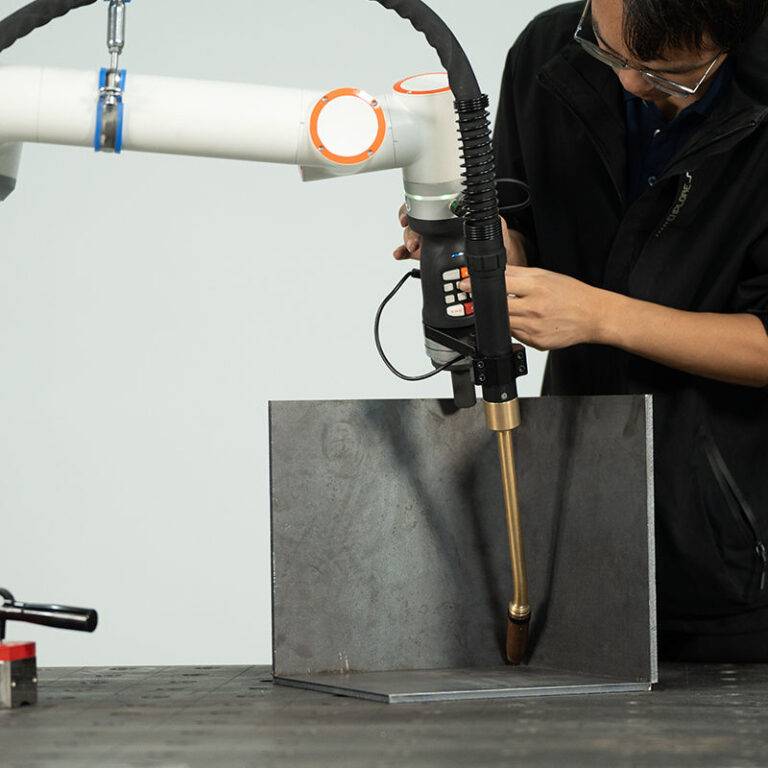
This technical analysis examines the deployment of high-capacity robotic welding cells for bridge truss fabrication, specifically focusing on the integration of MAG (Metal Active Gas) welding systems with real-time laser seam tracking. By analyzing the intersection of filler metal deposition rates, maintenance protocols, and labor ROI, this report provides an industrial engineering perspective on automating structural steel joins. The study highlights how adaptive sensing compensates for thermal distortion and material variances, ensuring structural integrity while significantly reducing the total cost of ownership compared to manual fabrication methods.

Read More
Robotic Welding

Robotic Welding Cell with Laser Seam Tracking for for Bridge Trusses

This technical analysis explores the implementation of a robotic MAG welding cell equipped with laser seam tracking specifically for heavy bridge truss fabrication. We examine the shift from manual labor to automated systems, focusing on deposition rates, maintenance cycles for high-duty torches, and the measurable ROI derived from eliminating rework and maximizing arc-on time. The integration of real-time sensing allows for compensation of thermal distortion, ensuring structural integrity in high-stress infrastructure components.

Read More
Robotic Welding

Robotic Welding Cell with Laser Seam Tracking for for Bridge Trusses

This technical analysis examines the implementation of automated robotic welding cells equipped with laser seam tracking for the fabrication of structural bridge trusses. By transitioning from manual MAG welding to high-duty cycle robotic systems, manufacturers can achieve superior weld penetration, consistent bead geometry, and a significant reduction in rework. The document outlines the mechanical requirements of the MAG process, maintenance schedules for high-volume cells, and a detailed labor ROI framework for industrial engineering departments.

Read More