Comprehensive Global H-Beam Standards & Dimensions Comparison Guide
Executive Summary: Cross-Standard H-Beam Analysis
Structural H-beams (Wide Flange Beams) serve as the backbone of modern infrastructure. This database analyzes the three primary international regulatory frameworks: Chinese GB/T 11263, American ASTM A6, and European EN 10365.
Key Divergences: While the geometric "H" profile is universal, standard variations occur in sectional height-to-width ratios, flange thickness tolerances, and unit measurements (Metric vs. Imperial). For instance, Chinese HW sections focus on square profiles for columns, American W-sections utilize a designation based on nominal depth and weight-per-foot, while European HEB/HEA series offer tiered weight classes for specific load requirements. Understanding these deviations is critical for international procurement, weld design, and structural integrity.
1. Chinese National Standard (GB/T 11263-2017)
| Series | Standard Model | H (Height mm) | B (Width mm) | t1 (Web mm) | t2 (Flange mm) | Weight (kg/m) |
|---|---|---|---|---|---|---|
| HW | HW 100 × 100 | 100 | 100 | 6 | 8 | 16.9 |
| HW | HW 150 × 150 | 150 | 150 | 7 | 10 | 31.1 |
| HW | HW 200 × 200 | 200 | 200 | 8 | 12 | 49.9 |
| HW | HW 300 × 300 | 300 | 300 | 10 | 15 | 93.0 |
| HW | HW 400 × 400 | 400 | 400 | 13 | 21 | 172.0 |
| HM | HM 250 × 175 | 244 | 175 | 7 | 11 | 43.6 |
| HM | HM 350 × 250 | 340 | 250 | 9 | 14 | 78.1 |
| HM | HM 450 × 300 | 440 | 300 | 11 | 18 | 121.0 |
| HN | HN 200 × 100 | 198 | 99 | 4.5 | 7 | 17.8 |
| HN | HN 400 × 200 | 400 | 200 | 8 | 13 | 65.1 |
| HN | HN 600 × 200 | 596 | 199 | 10 | 15 | 93.1 |
| HN | HN 800 × 300 | 800 | 300 | 14 | 26 | 207.0 |
| HN | HN 900 × 300 | 912 | 302 | 18 | 34 | 282.0 |
2. American Standard (ASTM A6 / W-Beams)
| Series | W-Designation | Depth (mm) | Width (mm) | Web (mm) | Flange (mm) | Weight (lb/ft) |
|---|---|---|---|---|---|---|
| ASTM | W8 × 31 | 203 | 203 | 7.2 | 11.0 | 31 |
| ASTM | W10 × 49 | 253 | 254 | 8.6 | 14.2 | 49 |
| ASTM | W12 × 26 | 310 | 165 | 5.8 | 9.7 | 26 |
| ASTM | W12 × 65 | 307 | 305 | 9.9 | 15.4 | 65 |
| ASTM | W14 × 90 | 356 | 369 | 11.2 | 18.0 | 90 |
| ASTM | W16 × 100 | 411 | 261 | 14.9 | 21.0 | 100 |
| ASTM | W18 × 76 | 462 | 280 | 10.8 | 17.3 | 76 |
| ASTM | W18 × 192 | 519 | 291 | 20.8 | 33.9 | 192 |
| ASTM | W24 × 162 | 635 | 329 | 18.0 | 31.0 | 162 |
| ASTM | W30 × 211 | 785 | 384 | 19.7 | 33.4 | 211 |
| ASTM | W36 × 300 | 933 | 423 | 24.0 | 42.7 | 300 |
3. European Standard (EN 10365 - HEA/HEB/HEM)
| Type | Designation | Height (mm) | Width (mm) | Web (mm) | Flange (mm) | Weight (kg/m) |
|---|---|---|---|---|---|---|
| HEA | HEA 100 | 96 | 100 | 5.0 | 8.0 | 16.7 |
| HEA | HEA 200 | 190 | 200 | 6.5 | 10.0 | 42.3 |
| HEA | HEA 400 | 390 | 300 | 11.0 | 19.0 | 125.0 |
| HEA | HEA 600 | 590 | 300 | 13.0 | 25.0 | 178.0 |
| HEB | HEB 100 | 100 | 100 | 6.0 | 10.0 | 20.4 |
| HEB | HEB 200 | 200 | 200 | 9.0 | 15.0 | 61.3 |
| HEB | HEB 400 | 400 | 300 | 13.5 | 24.0 | 155.0 |
| HEB | HEB 800 | 800 | 300 | 17.5 | 33.0 | 262.0 |
| HEM | HEM 100 | 120 | 106 | 12.0 | 20.0 | 41.8 |
| HEM | HEM 200 | 220 | 206 | 15.0 | 25.0 | 103.0 |
| HEM | HEM 400 | 432 | 307 | 21.0 | 40.0 | 256.0 |
| HEM | HEM 1000 | 1040 | 315 | 31.0 | 64.0 | 438.0 |
Frequently Asked Questions: Global H-Beam Standards
Q1: Can Chinese GB/T HW-beams be used as direct substitutes for American ASTM W-sections?
While they share a similar "H" profile, they are not always direct substitutes. ASTM W-sections often use imperial-based nominal depths, whereas GB/T HW sections are strictly metric. Always verify the sectional properties (Moment of Inertia and Section Modulus) before substituting, as flange thicknesses often differ by 1-3mm.
Q2: What is the primary difference between European HEA and HEB beams?
The HEB series is the "Normal" or standard weight version, while the HEA series is the "Light" version. For a given height (e.g., 200mm), an HEB 200 will have thicker webs and flanges than an HEA 200, providing higher load-bearing capacity at the cost of increased weight.
Q3: How do these standards affect automated plasma or oxy-fuel cutting?
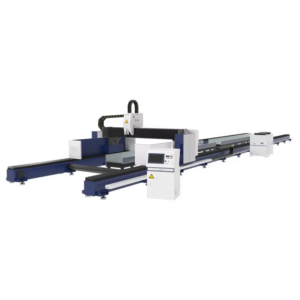
Standardized dimensions are critical for robotic welding and CNC cutting systems. Systems like those provided by PCLCUTWELD rely on these precise mill tolerances to calibrate torch height and bevel angles. Using the correct standard ensures 100% accuracy in fit-up and structural welding.
Q4: What are the common steel grades for these H-beams?
Common grades include Q355B (GB), ASTM A572 Grade 50 (USA), and S355JR (EN). These are generally considered weldable structural steels with a yield strength of approximately 345-355 MPa.