Welcome to the PCL Group Blog
Latest Articles
Robotic Welding Cell with Laser Seam Tracking for for Shipbuilding
This technical analysis examines the implementation of robotic welding cells equipped with laser seam tracking in the shipbuilding sector. By focusing on the transition from manual MAG welding to automated systems, we evaluate the impact on deposition rates, thermal management, and long-term labor ROI. The integration of real-time sensing technology addresses the inherent tolerances of large-scale maritime fabrication, while a robust maintenance framework ensures the longevity of high-duty-cycle equipment.
Engineering Review: 1500W All-in-one Cobot Station – Rotterdam, Netherlands
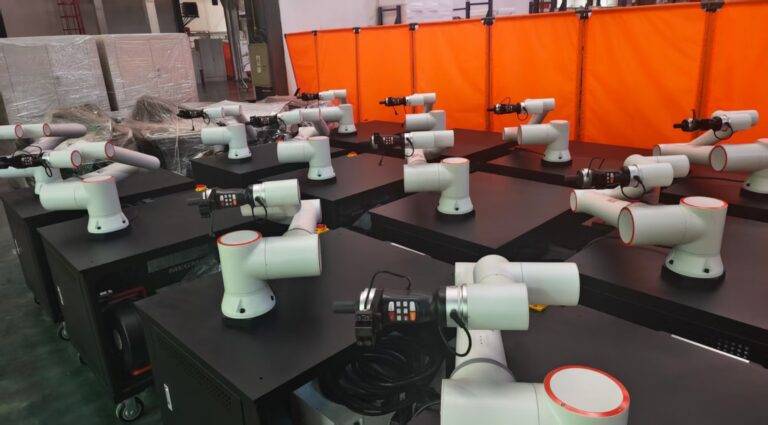
Rotterdam site: 1500W All-in-one Cobot Station stabilized the C11000 busbar run. Collaborative robotics solved the heat dissipation/pathing bottleneck.
Robotic Welding Cell with Laser Seam Tracking for for Shipbuilding
This technical analysis evaluates the implementation of robotic welding cells equipped with laser seam tracking for heavy-duty shipbuilding. By transitioning from manual processes to automated MAG welding, shipyards can significantly enhance deposition rates, mitigate labor shortages, and achieve a superior Return on Investment (ROI) through increased duty cycles and reduced rework. The focus remains on the engineering requirements for maintenance and the quantitative benefits of laser-guided precision in large-scale steel fabrication.
Robotic Welding Cell with Laser Seam Tracking for for Shipbuilding
This technical analysis evaluates the implementation of robotic welding cells equipped with laser seam tracking for the shipbuilding industry. By focusing on the Metal Active Gas (MAG) process, the document details how automated integration addresses the structural tolerances inherent in maritime fabrication. Key areas of focus include the optimization of arc-on time, the reduction of weld defects through real-time feedback loops, and a comprehensive breakdown of labor ROI and maintenance requirements. This report serves as a roadmap for industrial engineers looking to scale production throughput while maintaining high structural integrity standards.