Technical Evolution of Dynamic Motion Control
The 2026 benchmark for bevel tube laser cutting is defined by a shift toward ultra-high-speed dynamic response and structural damping. Modern systems utilize a high-speed fiber laser oscillator paired with a lightweight, high-rigidity gantry constructed from aerospace-grade aluminum alloys or carbon-fiber composites. This material selection allows for acceleration rates exceeding 1.5G, ensuring that the laser head maintains optimal feed rates even during complex 5-axis beveling paths. Central to this performance is the bus CNC system, which facilitates real-time communication between the drive motors and the laser source at microsecond intervals.
Rotational dynamics have undergone a significant overhaul. The pneumatic full-stroke chuck systems in the latest models support variable clamping forces, preventing thin-walled tube deformation while maintaining rotation speeds of up to 150 RPM for smaller diameters. To counteract centrifugal forces and vibration during high-speed rotation, servo-driven support mechanisms provide active following, adjusting their height and pressure dynamically based on the tube’s instantaneous cross-sectional profile. This level of synchronization ensures that the focal point remains consistent, even when processing asymmetrical or eccentric profiles.
Precision Engineering and Zero-Tailing Architecture
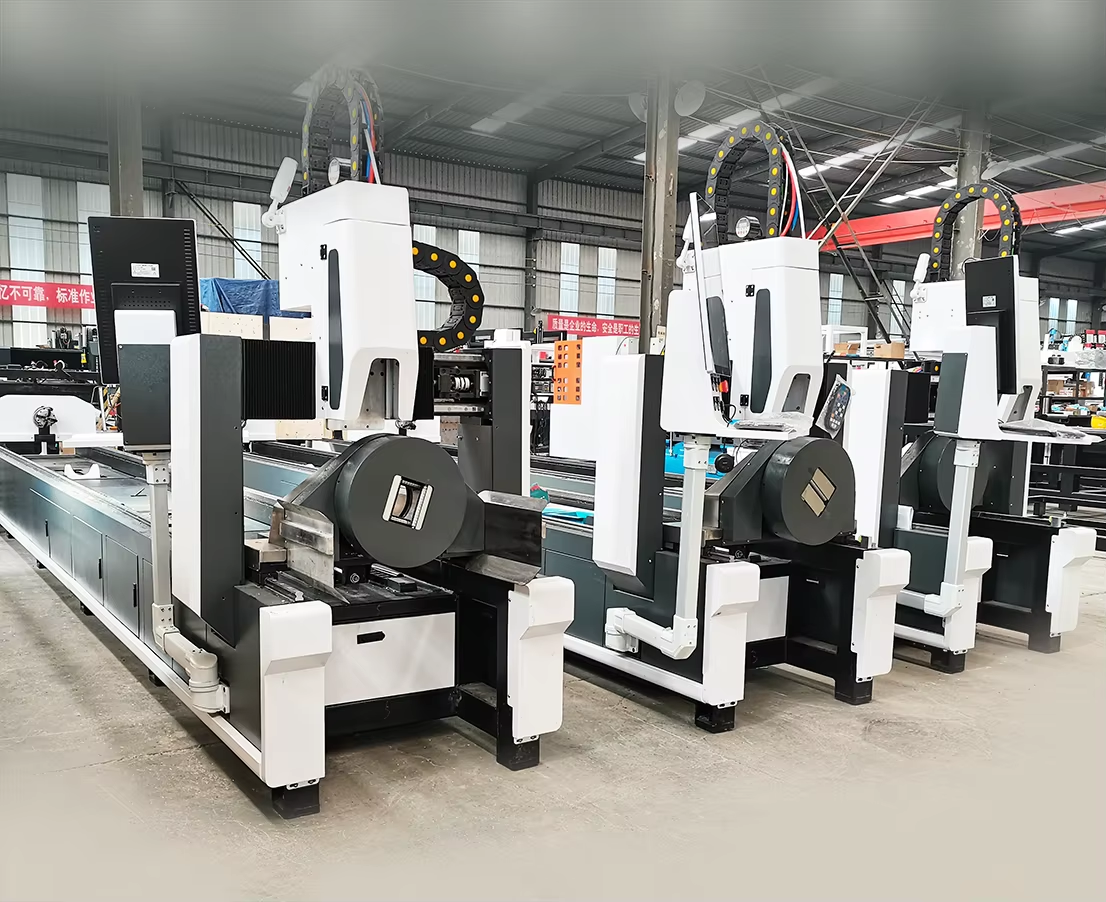
Achieving high-precision bevel cuts requires more than just mechanical speed; it demands sophisticated spatial compensation algorithms. Advanced CNC nesting optimization software now incorporates 3D kerf compensation, which adjusts the laser path based on the tilt angle of the cutting head. As the bevel angle increases, the effective thickness of the material changes; the 2026 systems automatically modulate the power output and frequency of the fiber laser resonator to maintain a consistent cut quality across the entire cross-section.
The implementation of 3-chuck zero-tailing technology represents the pinnacle of material efficiency. By utilizing a triple-chuck configuration—comprising a feeding chuck, a middle chuck, and a rotating discharge chuck—the system can transition the workpiece through the cutting zone without losing structural support. This allows for cutting at the very end of the tube, effectively reducing the remnant length to zero. The middle chuck plays a critical role in eliminating “tube sag” during the transition, which is vital for maintaining the angular accuracy of bevels. Furthermore, the integration of real-time sensing allows the machine to detect material deviations and adjust the nozzle height to mitigate the effects of the heat-affected zone (HAZ), ensuring that the metallurgical integrity of the edge remains intact for subsequent welding processes.
Material Adaptability and Beam Modulation
The versatility of 2026 tube lasers is anchored in their ability to process a diverse range of alloys with varying thermal conductivities. For carbon steel, the use of high-pressure oxygen cutting remains standard, but the latest machines utilize modulated pulse technology to minimize the HAZ, resulting in a cleaner edge that requires no secondary grinding. When processing stainless steel, nitrogen-shielded cutting at high pressures ensures an oxide-free finish, which is critical for sanitary and aesthetic applications.
Reflective materials, such as aluminum, brass, and copper, have historically posed challenges due to back-reflection risks to the laser source. Modern high-speed fiber laser oscillators are now equipped with enhanced optical isolators and beam-shaping technology. These systems can alter the beam profile—switching between a high-intensity “needle” for piercing and a wider “donut” shape for stable cutting—to optimize energy absorption in reflective states. This adaptability is managed through a comprehensive material library within the bus CNC system, which automatically calibrates gas pressure, nozzle standoff, and focal position based on the specific grade and wall thickness of the workpiece.
Automation Integration and Lifecycle ROI
The economic viability of a bevel tube laser in 2026 is measured by its “green-light time”—the percentage of time the machine is actually cutting. An integrated automated tube loading system is no longer an optional peripheral but a core component of the production cell. These systems utilize hydraulic or electric lifting bundles that singulate tubes and verify their dimensions before feeding them into the chucks. This reduces the labor burden and eliminates the risk of human error in material handling.
Efficiency is further enhanced by CNC nesting optimization. By utilizing advanced algorithms that can “common-line” cut or nest parts within parts, manufacturers can see material utilization rates increase by 10% to 15%. When combined with 5-axis beveling, which prepares the tube for immediate assembly and welding, the reduction in downstream labor costs is significant. The ROI is realized not just through faster cutting speeds, but through the elimination of secondary processes like manual beveling, deburring, and complex jigging.
Finally, the shift toward predictive maintenance through the bus CNC system allows for real-time monitoring of the fiber laser resonator’s health and the pneumatic full-stroke chuck’s clamping pressure. By identifying wear in components like the protective windows or ceramic rings before they fail, the system ensures maximum uptime. In a high-volume industrial environment, these incremental gains in automation and reliability represent the difference between a standard production line and a market-leading facility.
Advanced Fiber Laser Tube Processing Technology
Our CNC Fiber Laser Tube Cutting systems revolutionize metal fabrication by integrating high-precision cutting, punching, and profiling into a single automated workflow. Designed for versatility, this technology handles a wide array of profiles including Round, Square, Rectangular, and Oval tubes, as well as complex L-shaped and U-shaped channels.
- Precision Punching: High-speed hole punching with micron-level accuracy, eliminating the need for mechanical drilling or die-stamping.
- Complex Profiling: Advanced 3D pathing allows for intricate interlocking joints and specialized notch cuts, ideal for structural frames.
- High Material Efficiency: Intelligent nesting software minimizes scrap, reducing raw material costs across large production runs.
- Clean Finish: Delivers oxide-free, burr-free edges that require zero secondary grinding before welding.

Seamlessly processing multiple profiles with consistent precision.
Global Delivery & Logistics



From our high-tech manufacturing facility directly to your global site. PCL WeldCut ensures secure packaging, professional handling, and reliable international logistics to safeguard your equipment throughout the entire journey.
